
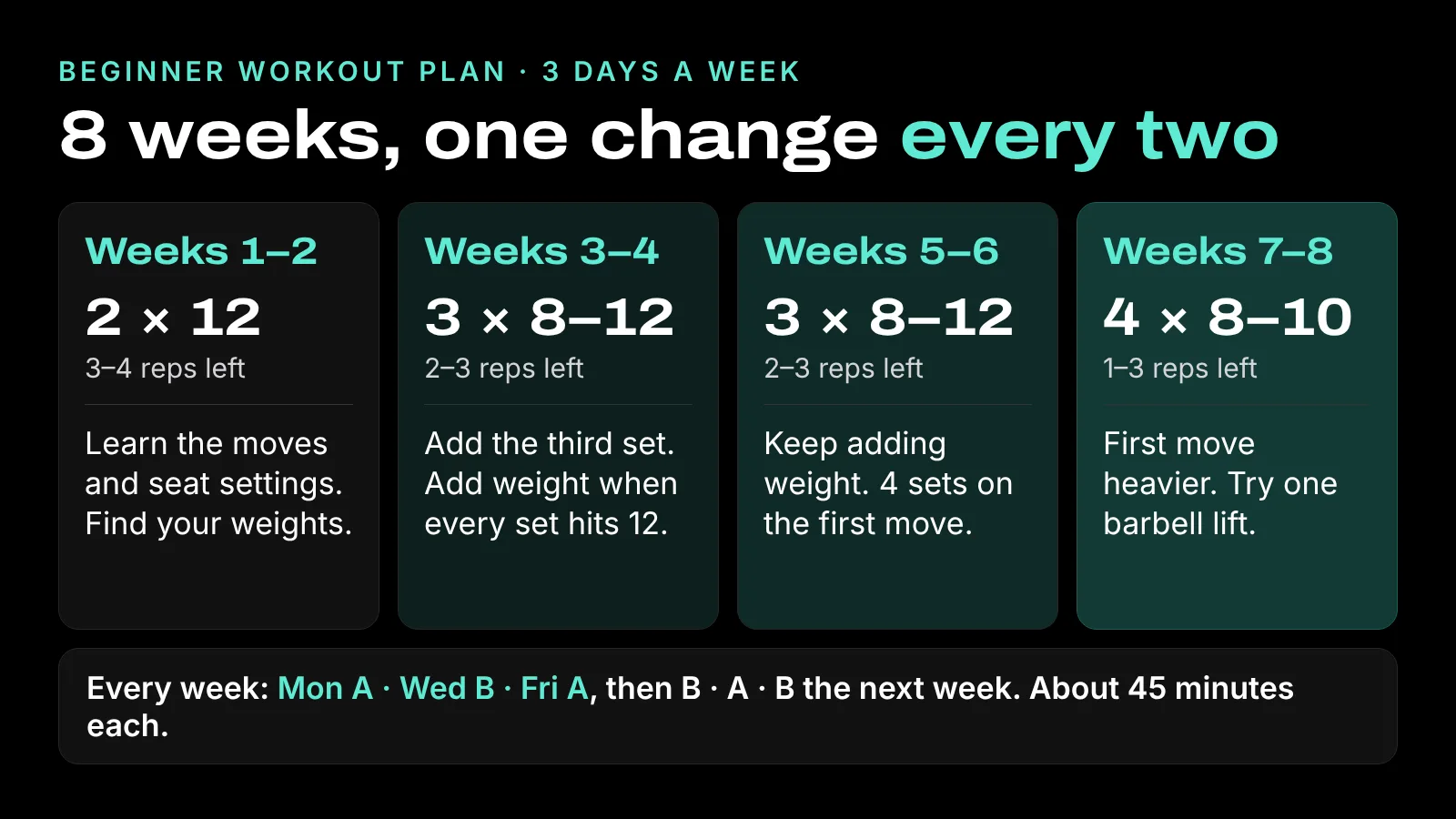
A good beginner workout plan is three full-body gym days a week, built on machines and dumbbells, with two workouts that take turns. You start light with 2 sets of 12, move to 3 sets of 8 to 12 in week 3, and add weight only when every set reaches 12 clean reps. Below are both workouts, the 8-week progression, a full sample week and what to do after it.
Start your first week with a plan built for you. Say you're new, pick your days, and build your week: Nuvela chooses simple moves, sets your starting weights and raises them as you log. Get Nuvela on Google Play.
Days
Mon, Wed, Fri
Two workouts, A and B, take turns.
Gear
Machines + dumbbells
Easy to learn, easy to set up.
Weeks 1–2
2 sets × 12
Light weights, learn the moves.
Weeks 3–8
3 sets × 8–12
Add weight when every set hits 12.
Time
About 45 minutes
Warm-up included.
The plan
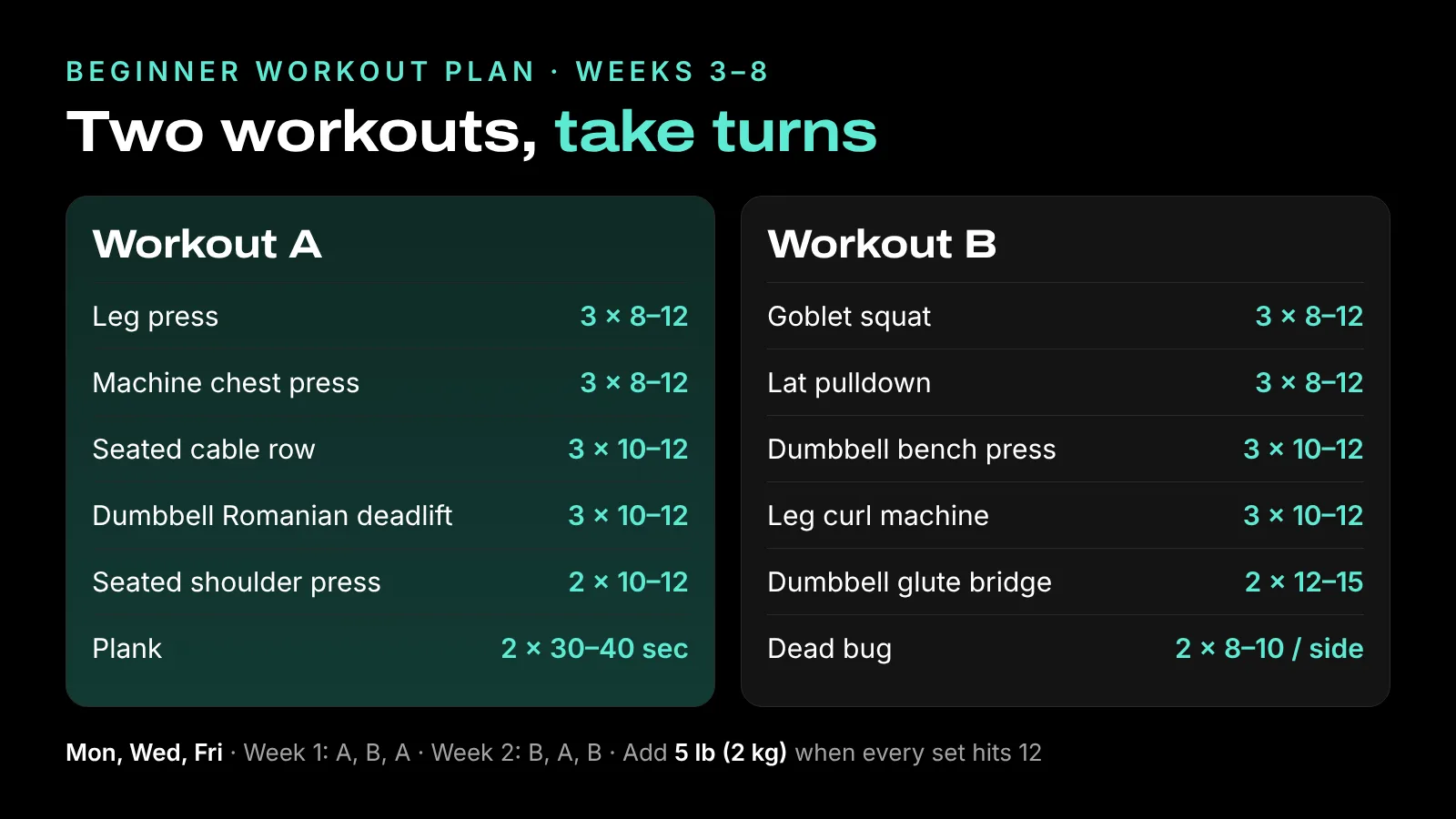
Train three days a week, for example Monday, Wednesday and Friday, and take turns between workout A and workout B. Week 1 is A, B, A. Week 2 is B, A, B. Every session trains your whole body.
The 2009 ACSM position stand recommends 2 to 3 days a week and loads you can lift 8 to 12 times for people new to lifting. This plan sits right in that range, with mostly machines and dumbbells, because they are quick to set up and the path of the weight is easy to learn.
Workout A
| Exercise | Sets × reps (weeks 1–2) | Sets × reps (weeks 3–8) | Rest |
|---|---|---|---|
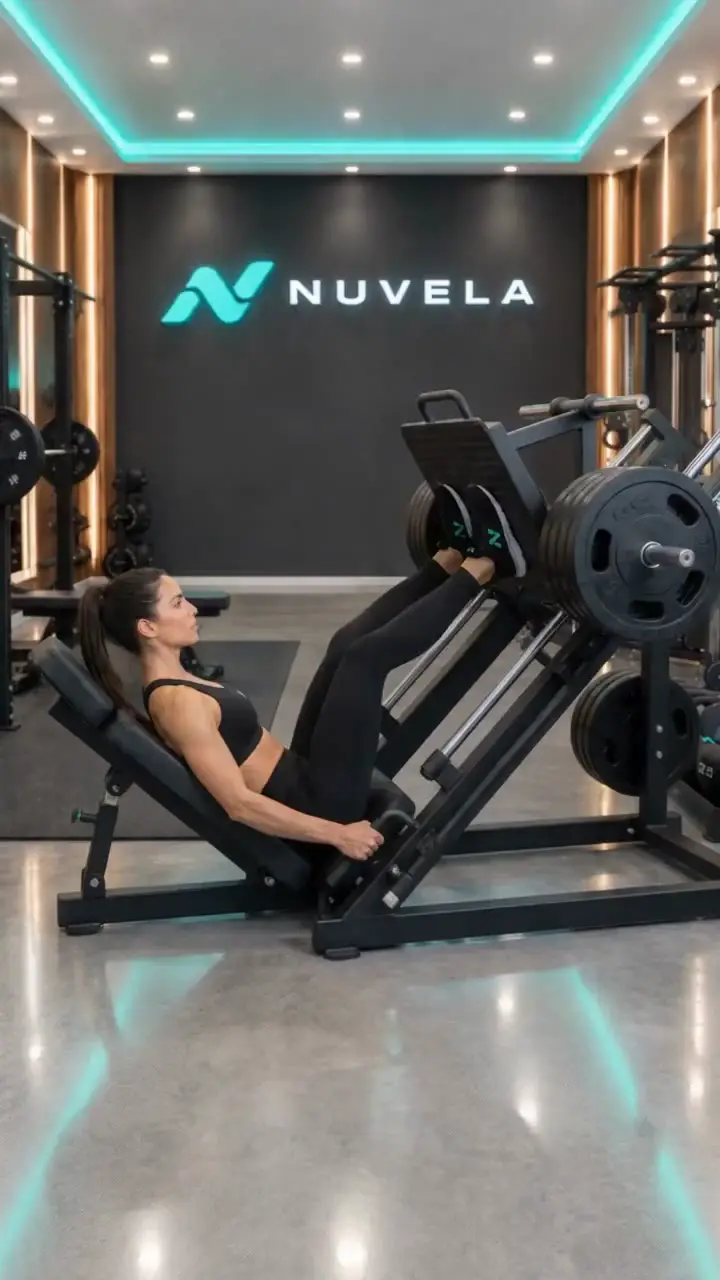
| Leg press | 2 × 12 | 3 × 8–12 | 2 min |
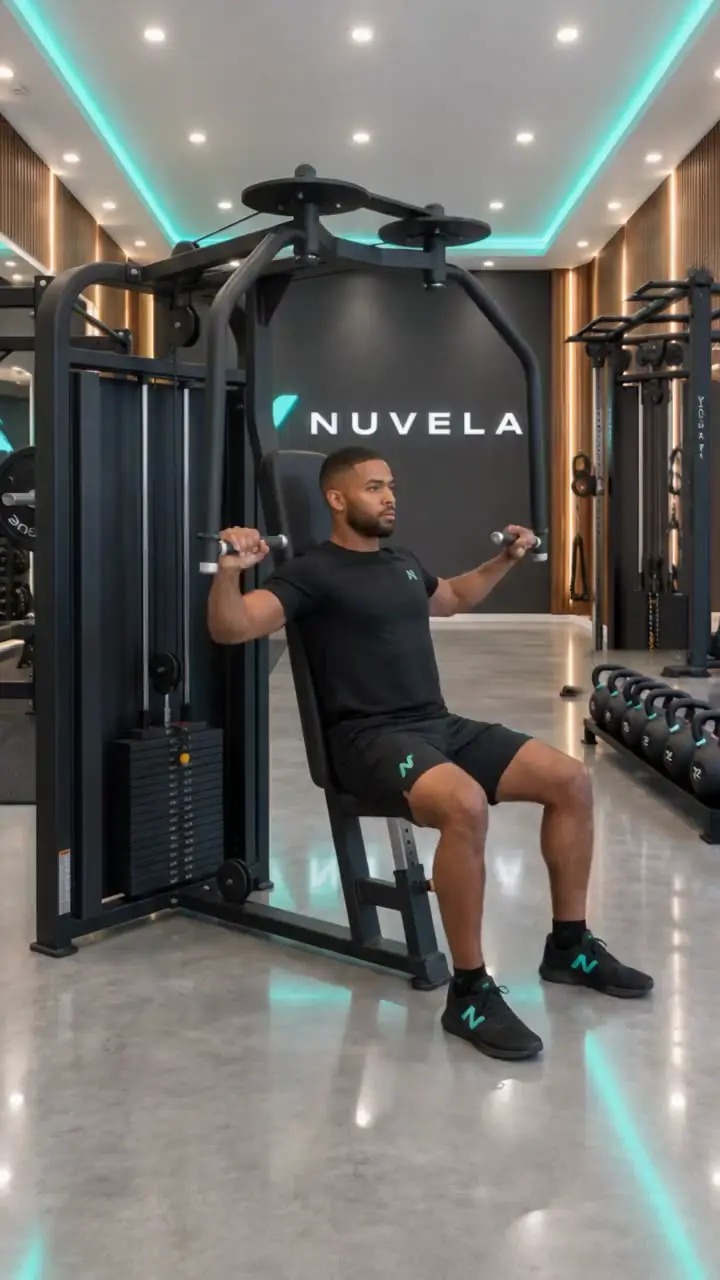
| Machine chest press | 2 × 12 | 3 × 8–12 | 2 min |
| Seated cable row | 2 × 12 | 3 × 10–12 | 90 sec |
| Dumbbell Romanian deadlift | 2 × 12 | 3 × 10–12 | 90 sec |
| Dumbbell shoulder press, seated | 2 × 12 | 2 × 10–12 | 60 sec |
| Plank | 2 × 20 sec | 2 × 30–40 sec | 60 sec |
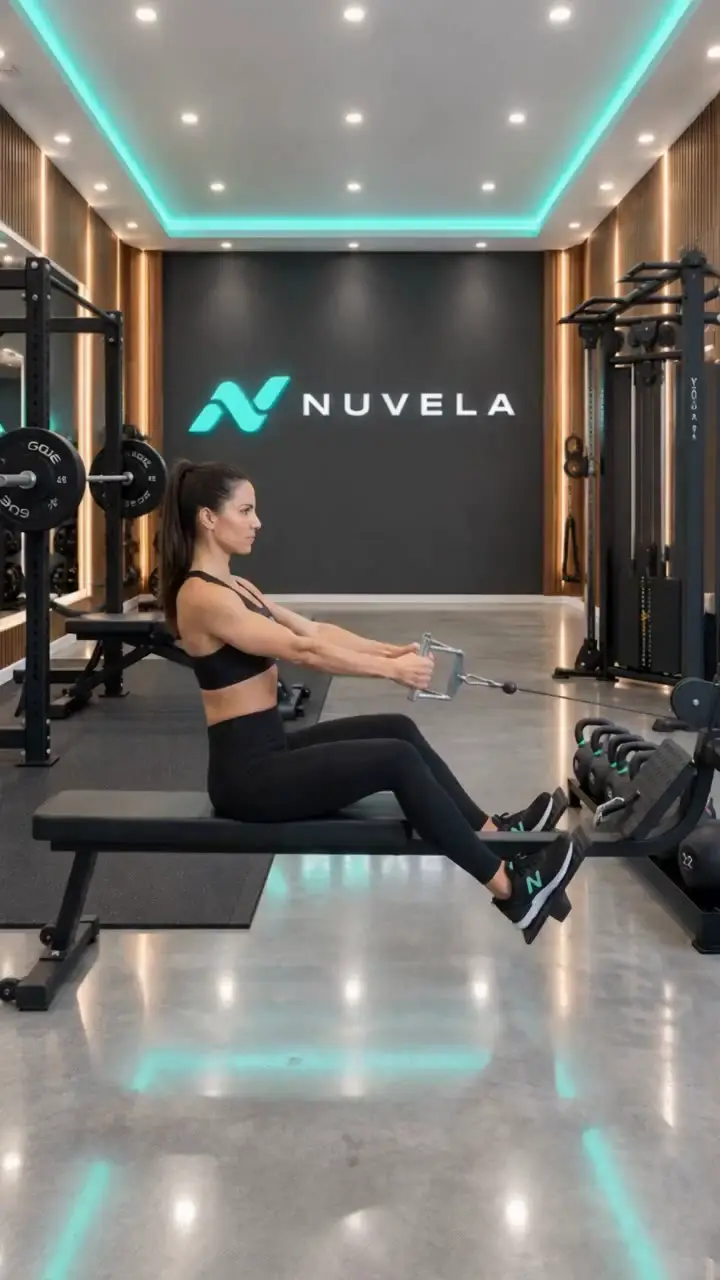
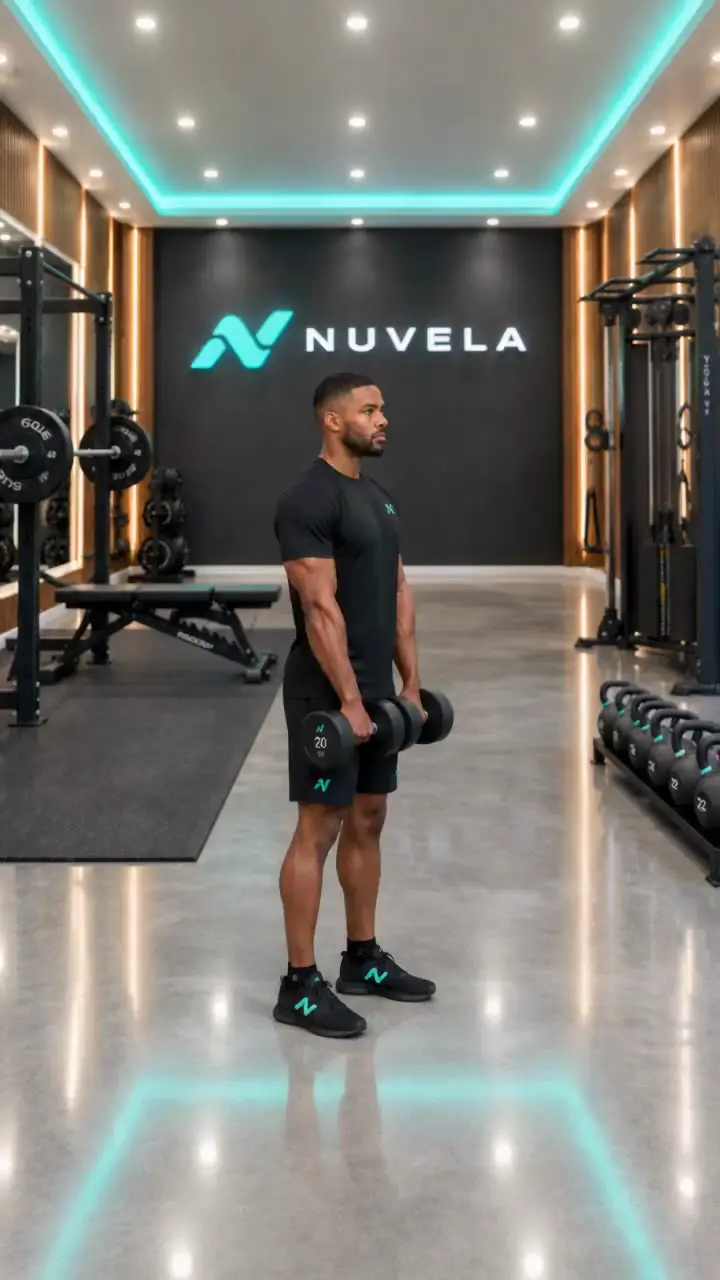
Workout B
| Exercise | Sets × reps (weeks 1–2) | Sets × reps (weeks 3–8) | Rest |
|---|---|---|---|
| Goblet squat | 2 × 12 | 3 × 8–12 | 2 min |
| Lat pulldown | 2 × 12 | 3 × 8–12 | 2 min |
| Dumbbell bench press | 2 × 12 | 3 × 10–12 | 90 sec |
| Leg curl machine | 2 × 12 | 3 × 10–12 | 90 sec |
| Dumbbell glute bridge | 2 × 12 | 2 × 12–15 | 60 sec |
| Dead bug | 2 × 6 per side | 2 × 8–10 per side | 60 sec |
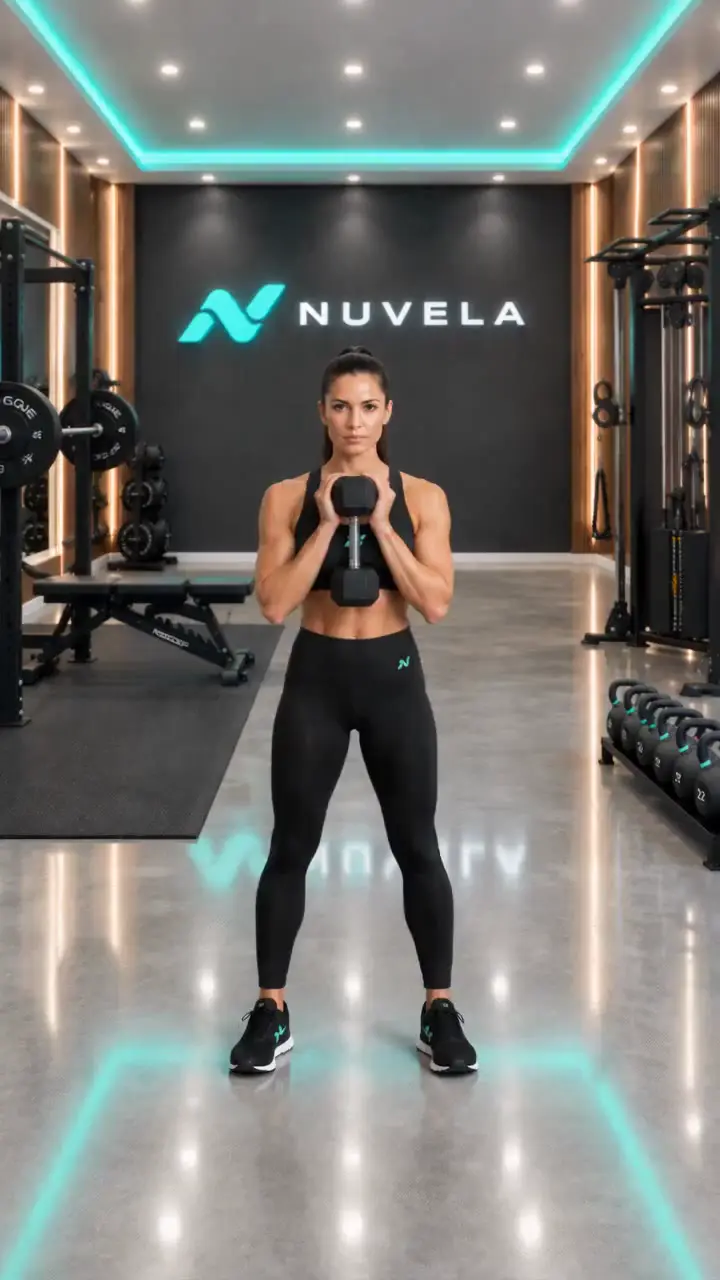
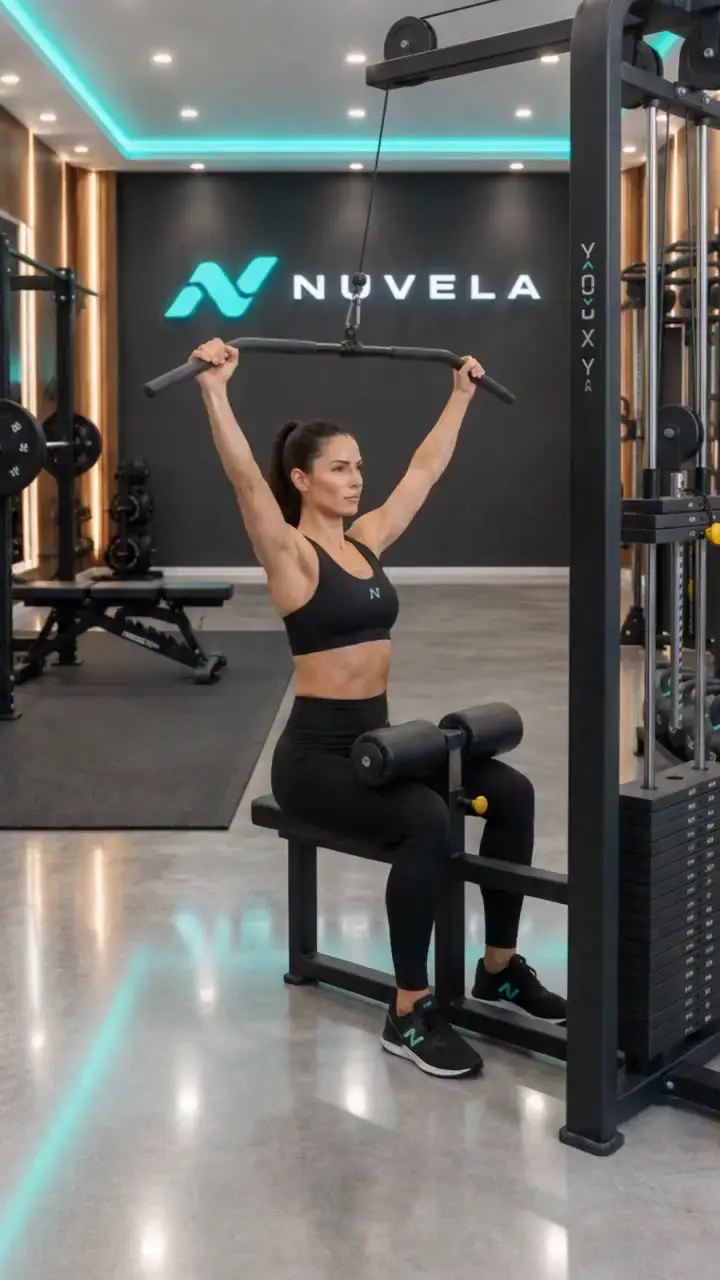
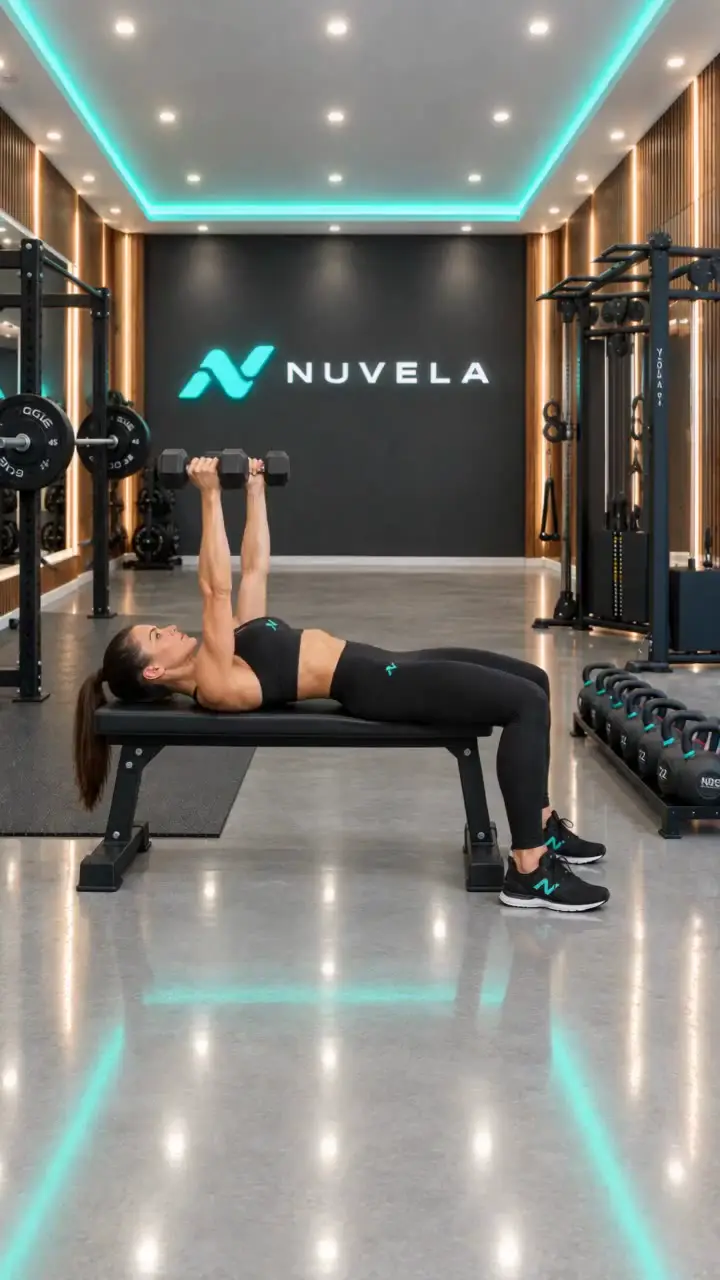
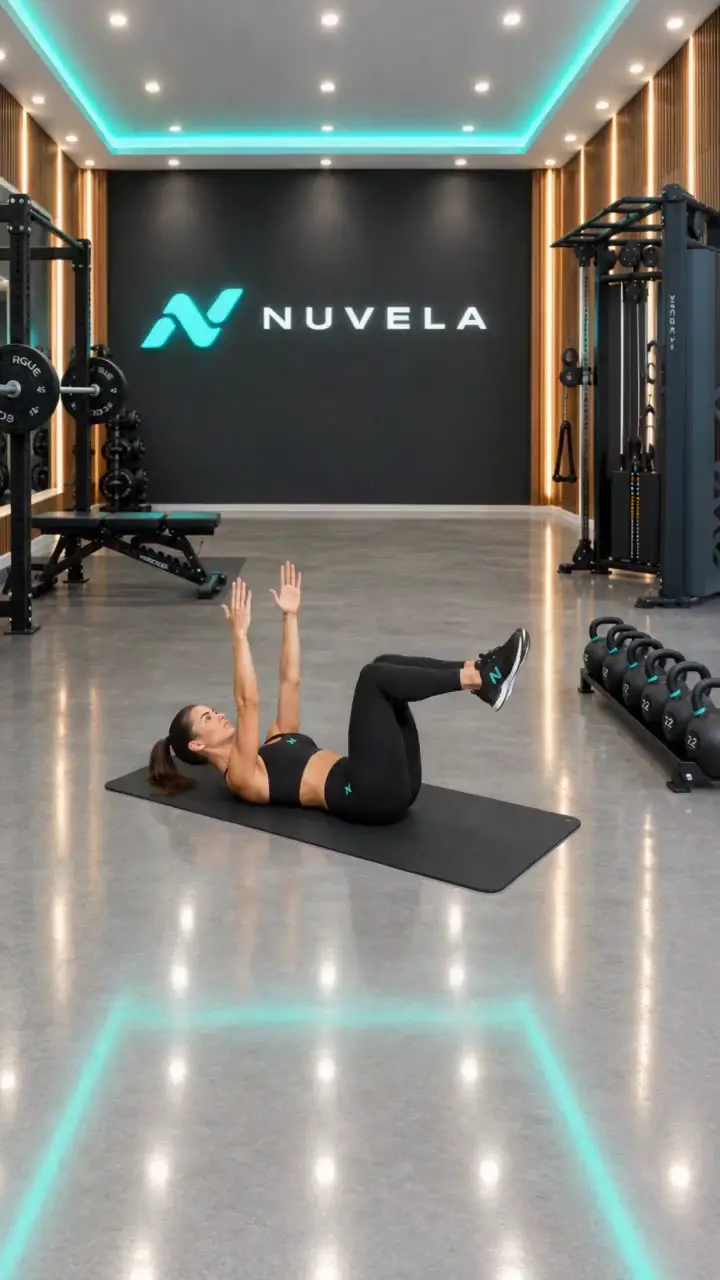
Each workout has six slots, and they cover the legs, hips, back, abdomen, chest, shoulders and arms the CDC lists for muscle-strengthening days:
- A leg push: leg press or goblet squat.
- An upper-body push: chest press or dumbbell bench.
- An upper-body pull: cable row or lat pulldown.
- A hip hinge or leg curl.
- A shoulder or glute move.
- Core.
The dead bug is a slow core move done on your back; keep your lower back flat on the floor as the leg goes out.
One session, minute by minute
Not sure how a 45-minute session actually runs? Here is workout A from week 3, with rests included. Workout B runs the same way.
| Minutes | What you do |
|---|---|
| 0–8 | Warm-up: 5 min easy bike or walk, then 1 light set of 12 on the leg press |
| 8–17 | Leg press 3 × 8–12, 2 min rest between sets |
| 17–26 | Machine chest press 3 × 8–12, 2 min rest |
| 26–32 | Seated cable row 3 × 10–12, 90 sec rest |
| 32–38 | Dumbbell Romanian deadlift 3 × 10–12, 90 sec rest |
| 38–42 | Dumbbell shoulder press 2 × 10–12, 60 sec rest |
| 42–45 | Plank 2 × 30–40 sec, then write down your weights |
If the gym is busy and you wait for a machine, use the wait as your rest, or do the plank between sets of another move. A session that runs to 55 minutes is still a good session.
Good
- Machines guide the path of the weight, so you can focus on effort
- Two workouts are easy to remember
- A missed day just pushes the next workout back one day
Keep in mind
- Machine numbers differ from gym to gym, so write down the machine too
- After about 8 weeks, you'll want more sets and some barbell lifts
Get this week built for your gym.
Plan your workout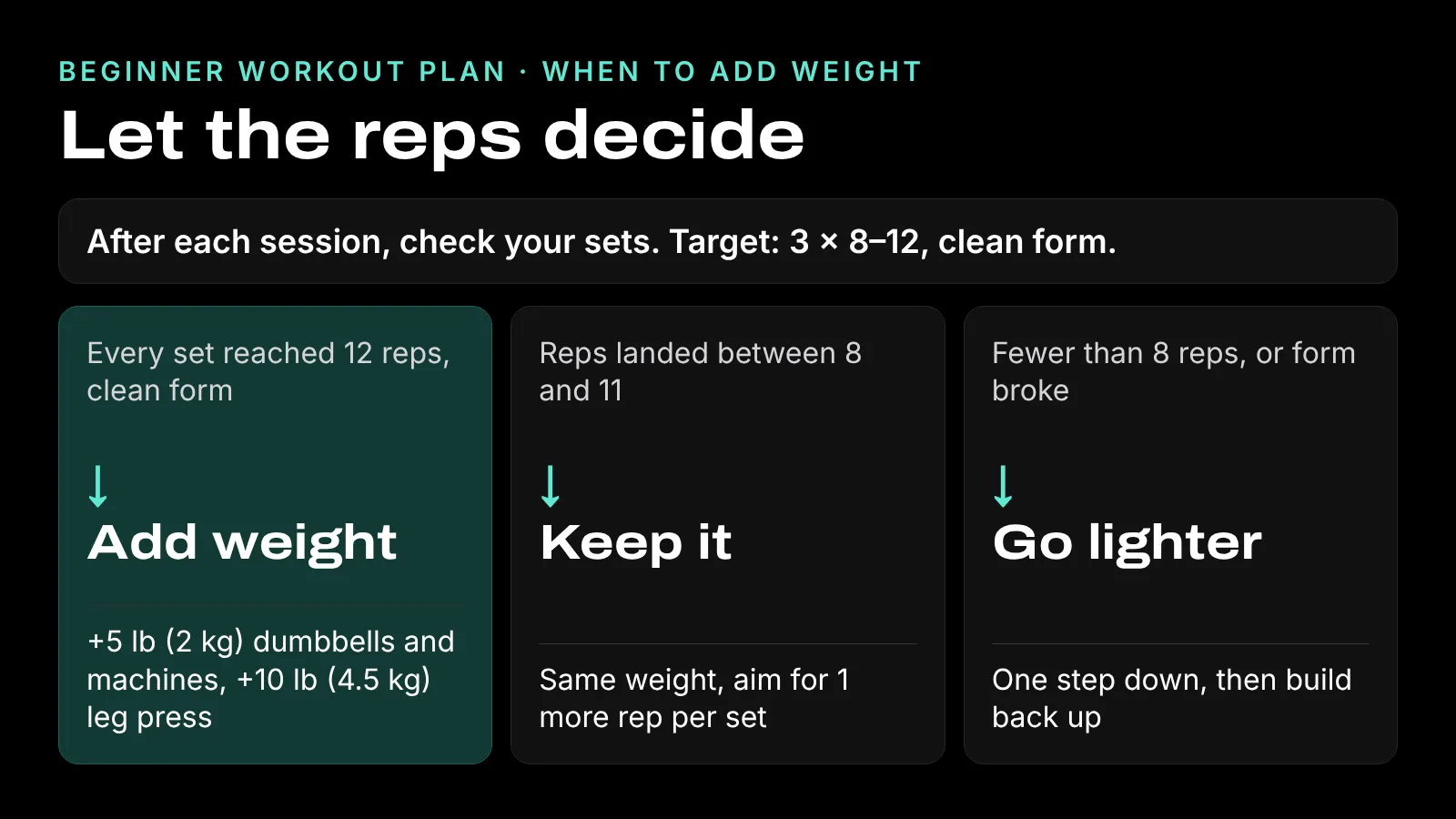
How to pick the weight as a beginner
Start lighter than you think, then let the reps tell you when to go up. In week 1 pick a weight you could lift about 15 or 16 times, and do 12. That leaves 3 or 4 reps in the tank while you learn the move.
From week 3, pick a weight where the last rep of each set is hard but still clean, with 2 or 3 reps left. The CDC counts a set as one where another rep would be hard to do without help; the 2026 ACSM review found you don't need to go all the way to failure.
| After your sets | Next session |
|---|---|
| Every set reached 12 reps with clean form | Add the smallest step: 5 lb (2 kg) on machines and dumbbells, 10 lb (5 kg) on the leg press |
| Reps landed between 8 and 11 | Keep the weight, aim for 1 more rep per set |
| You couldn't reach 8, or form broke | Go one step lighter and build back up |
That add-weight rule follows the 2009 ACSM advice: raise the load 2 to 10% once you can do 1 or 2 reps more than the target.
Example starting weights
These are typical first-week weights for a new lifter, to give you a sense of scale. Lighter is fine. Heavier is fine if the reps stay clean.
| Move | Typical start | Step up |
|---|---|---|
| Goblet squat | One 20 lb (9 kg) dumbbell | 5 lb (2 kg) |
| Leg press | 90 lb (41 kg) on the sled | 10 lb (5 kg) |
| Dumbbell bench press | 15 lb (7 kg) dumbbells | 5 lb (2 kg) each |
| Machine chest press | 30–40 lb (14–18 kg) on the stack | One plate on the stack |
| Dumbbell Romanian deadlift | Two 20 lb (9 kg) dumbbells | 5 lb (2 kg) each |
| Seated shoulder press | 10 lb (5 kg) dumbbells | 2.5–5 lb (1–2 kg) each |
| Lat pulldown and cable row | 40–60 lb (18–27 kg) on the stack | One plate on the stack |
The one rep max calculator is not needed in the first weeks. It becomes useful after week 8, when you start a barbell lift and want to turn a set of 8 into working weights.
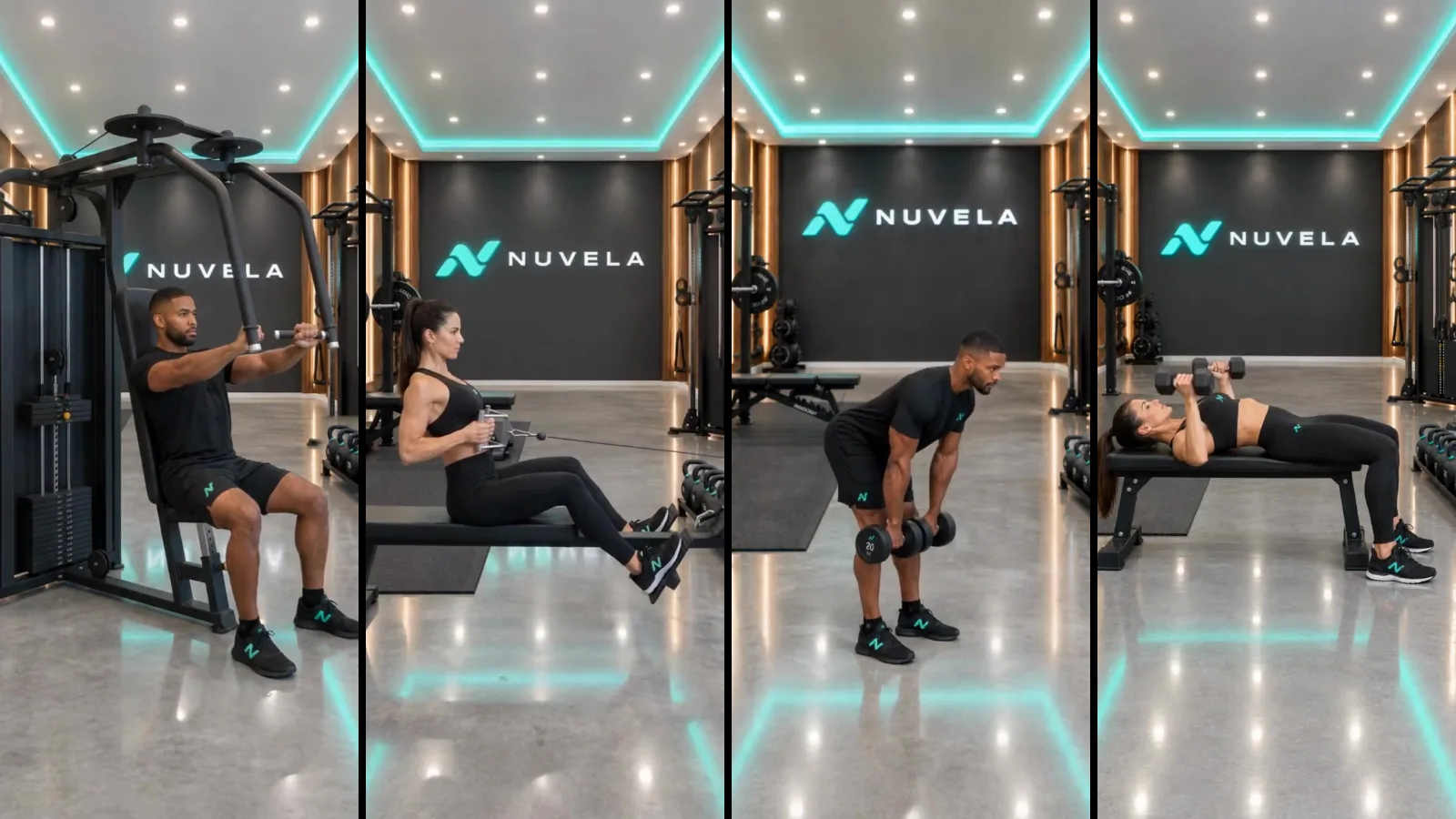
Swaps for a busy gym or a home day
If a machine is taken, swap the move and keep the sets × reps. The 2026 ACSM review found equipment type did not consistently change results.
| Move in the plan | Other gym option | Dumbbells | Bands | Bodyweight |
|---|---|---|---|---|
| Leg press | Smith machine squat | Goblet squat | Band squat | Bodyweight squat × 15–20 |
| Machine chest press | Dumbbell bench press | Dumbbell floor press | Band chest press | Push-up on a bench |
| Seated cable row | Machine row | One-arm dumbbell row | Band row | Inverted row |
| Dumbbell Romanian deadlift | Back extension machine | Dumbbell deadlift | Band RDL | Single-leg RDL |
| Goblet squat | Leg press or box squat | Dumbbell squat | Band squat | Squat to a chair |
| Lat pulldown | Assisted pull-up machine | Dumbbell pullover | Band pulldown | Inverted row |
| Leg curl machine | Seated leg curl | Dumbbell glute bridge | Band leg curl | Glute bridge × 15–20 |
| Plank | Knee plank | — | — | Knee plank, same time |
Training at home with dumbbells? The dumbbell workout plan uses the same three days. Use the swap when a move feels off, and if a move doesn't feel right, check with a doctor before you keep training it.
Who this plan is for
This plan fits anyone who has lifted for less than about six months, or is coming back after a long break. It suits some goals better than others.
| Great fit | Pick something else |
|---|---|
| You've never followed a lifting plan | You've lifted steadily for a year: see the 4 day workout split |
| You can train 3 days, sometimes 2 | You can only train at home: use the home version below |
| You want strength and muscle at a steady pace | You train for a race: lift 2 days, see cardio before or after weights |
| You're returning after months off | You want 5 or 6 days: see push pull legs once you've done 8 weeks here |
Age is not a barrier. The CDC asks every adult for 2 or more days of muscle-strengthening work, and starting at 2 sets of 12 with light weights works at 25 or at 65.
The 8-week beginner workout routine
Change one thing every two weeks: first form, then sets, then weight, then a new lift. Keep the same exercises the whole time so you can see your numbers go up.
| Weeks | Sets × reps | Reps left at the end of a set | Focus |
|---|---|---|---|
| Weeks 1–2 | 2 × 12 | 3–4 | Learn seat settings and form, find your weights |
| Weeks 3–4 | 3 × 8–12 (holds 30–40 sec) | 2–3 | Add the third set, add weight when every set hits 12 |
| Weeks 5–6 | 3 × 8–12 | 2–3 | Keep adding weight; add a 4th set to the first move of each day |
| Weeks 7–8 | 3 × 8–12, first move 4 × 8–10 | 1–3 | Try one barbell lift: Romanian deadlift or bench press |
By week 3 you are at about 9 hard sets per muscle group a week, and by week 5 most muscles are close to 10 or more. The how many sets per muscle group guide explains why that number matters.
One lift across 8 weeks
Here's how the goblet squat might move over the plan. The weight goes up in small steps, and some weeks only the reps go up.
| Week | Sets × reps | Weight |
|---|---|---|
| 1 | 2 × 12 | 20 lb (9 kg) |
| 2 | 2 × 12 | 25 lb (11 kg) |
| 3 | 3 × 10, 10, 9 | 25 lb (11 kg) |
| 4 | 3 × 12 | 25 lb (11 kg) |
| 5 | 4 × 10 | 30 lb (14 kg) |
| 6 | 4 × 12, 12, 11, 10 | 30 lb (14 kg) |
| 7 | 4 × 10 | 35 lb (16 kg) |
| 8 | 4 × 11 | 35 lb (16 kg) |
A full sample week for beginners
Here's what week 3 looks like with lifting, cardio and yoga. Three lifting days, two short cardio sessions, one yoga session and one full rest day.
| Day | Session | Moves, sets × reps | Minutes |
|---|---|---|---|
| Mon | Workout A | Leg press 3 × 8–12 at 90 lb (41 kg) · Machine chest press 3 × 8–12 · Seated cable row 3 × 10–12 · Dumbbell Romanian deadlift 3 × 10–12 with 20 lb (9 kg) dumbbells · Dumbbell shoulder press 2 × 10–12 with 10 lb (5 kg) · Plank 2 × 30 sec | 45 |
| Tue | Cardio | Brisk walk or stationary bike at a pace you can talk at, 25 min | 25 |
| Wed | Workout B | Goblet squat 3 × 8–12 with 20 lb (9 kg) · Lat pulldown 3 × 8–12 · Dumbbell bench press 3 × 10–12 with 15 lb (7 kg) dumbbells · Leg curl 3 × 10–12 · Dumbbell glute bridge 2 × 12–15 with 25 lb (11 kg) · Dead bug 2 × 8 per side | 45 |
| Thu | Yoga | Cat-cow 1 × 8 slow reps · Downward dog 3 × 20 sec · Low lunge 2 × 30 sec per side · Warrior II 2 × 20 sec per side · Child's pose 1 × 60 sec | 20 |
| Fri | Workout A | Same as Monday; add 5 lb (2 kg) where every set reached 12 last time | 45 |
| Sat | Cardio | Walk, bike or elliptical, 30 min | 30 |
| Sun | Rest | Nothing planned | 0 |
That week has about 55 minutes of cardio. To reach the CDC's 150 minutes of moderate activity, add a 10-minute walk after each lifting session and stretch the Saturday session to 45 minutes over the coming weeks.
Do the cardio on separate days or after lifting, not before; the cardio guide linked above explains why. New to the poses? Yoga poses with names shows each one, and hip flexor stretches are a good add-on if you sit all day. For easy cardio at the right effort, see zone 2 heart rate.
The warm-up: 8 minutes before every session
Five minutes of easy cardio, three moving stretches, then one light set of your first exercise. That's enough to start the first working set warm and with the move rehearsed.
| Step | Move | Time or reps |
|---|---|---|
| 1 | Bike, elliptical or treadmill walk, easy pace | 5 min |
| 2 | Leg swings | 10 per leg |
| 3 | Arm circles | 10 each way |
| 4 | World's greatest stretch | 3 per side |
| 5 | First move of the day at about half your working weight | 1 × 10–12 |
The stretches before workout guide has a 10-minute version if you want more. Long holds of 30 seconds or more fit better after the session or on the yoga day.
Form first: rules and cues for every move
Good form means the weight moves the same way on every rep, from the first to the last. These five rules cover every move in the plan.
- Set the machine before the first set. Seat height so the handles or pads line up with the joint that moves.
- Control the lowering. Take about 2 seconds on the way down, then lift with intent.
- Use the full range you can control. Go as deep as you can while your back stays flat and your heels stay down.
- Breathe out on the hard part. Breathe in as the weight comes down, out as you push or pull.
- The last rep should look like the first. If it doesn't, the set is over.
One cue per move is all you need in the first weeks:
| Move | Main cue | Common fault |
|---|---|---|
| Leg press | Feet hip-width, knees track over toes | Lower back lifting off the pad |
| Machine chest press | Shoulder blades back against the pad | Shoulders rolling forward at the end |
| Seated cable row | Pull elbows past your ribs, chest tall | Leaning far back to move the weight |
| Dumbbell Romanian deadlift | Push hips back, dumbbells close to your legs | Rounding the back to reach lower |
| Seated shoulder press | Press up and slightly back, ribs down | Arching the lower back |
| Goblet squat | Elbows inside knees, chest up | Heels lifting at the bottom |
| Lat pulldown | Pull the bar to upper chest, elbows down | Swinging the torso back |
| Dumbbell bench press | Lower to mid-chest, elbows at about 45° | Elbows flared straight out |
| Leg curl | Hips pressed into the pad | Hips lifting to finish the rep |
| Glute bridge | Squeeze glutes at the top for 1 sec | Arching the lower back instead |
| Dead bug | Lower back flat on the floor | Back lifting as the leg goes out |
| Plank | Straight line from head to heels | Hips sagging or piking up |
How to set up each machine
Write down every seat and pad setting in week 1, so the setup takes 10 seconds every time after. Most machines have numbered holes or pins.
| Machine | Seat or pad setting | Check |
|---|---|---|
| Leg press | Back pad so your knees bend to about 90° at the bottom | Back stays flat through the whole rep |
| Machine chest press | Seat so the handles are at mid-chest | Wrists straight, not bent back |
| Seated cable row | Foot plate so your knees are slightly bent | Arms straight at the start without leaning |
| Lat pulldown | Thigh pad snug on top of your thighs | You don't lift off the seat |
| Leg curl | Knee lined up with the machine's pivot, pad just above your heels | Pad doesn't slide up your calves |
| Seated leg curl | Same pivot rule, thigh pad snug | Hips stay down |
Can't find the pin or the number? Ask gym staff on your first visit. Every gym has someone who can show you in a minute.
Your first-week checklist
Most of week 1 is setup: shoes, seat settings, starting weights and a plan for the days. Tick these off and week 2 runs on its own.
| Before | During | After |
|---|---|---|
| Put three days in your calendar, e.g. Mon, Wed, Fri | Warm up 5–10 min | Write down each weight and seat setting |
| Pick shoes with a flat, firm sole | Do 1 light set to test each machine | Note which moves felt easy or hard |
| Bring water and a towel | 2 sets × 12, 3–4 reps left | Plan the next session's A or B |
| Know where the leg press, cable row and dumbbells are | Rest 60 sec–2 min | Sleep and eat as usual; no extra steps needed |
How long should each session take? About 45 minutes, warm-up included. The how long should a workout be guide has a 30-minute version if you are short on time.
Common beginner mistakes and fixes
Almost every beginner stall comes from doing too much too soon, or changing the plan too often.
| Mistake | What happens | Fix |
|---|---|---|
| Starting heavy to keep up with others | Form breaks, soreness lasts days | Week 1 weights you could lift 15–16 times |
| A new routine every week | No way to see progress | Same two workouts for 8 weeks |
| Training 6 days in week 1 | Sessions get missed by week 3 | 3 days, add a 4th only after week 8 |
| Racing through reps | Less work for the muscle, more momentum | 2 seconds down on every rep |
| Skipping the log | You guess the weight each time | Write weight, sets and reps after every move |
| Adding weight when reps are messy | Reps drop and form slips further | Add weight only when every set hits 12 cleanly |
| Copying advanced splits | Each muscle trained once a week | Full body, each muscle 3 times a week |
Machines, dumbbells or barbells for beginners
Start with machines and dumbbells, then add one barbell lift in weeks 7 to 8. Results were similar across equipment in the 2026 ACSM review, so the choice is about what's easiest to learn and set up.
| Machines | Dumbbells | Barbells | |
|---|---|---|---|
| Learning curve | Lowest: the path is fixed | Medium: each arm works on its own | Highest: balance and setup |
| Setup time | 10–20 sec | 10–20 sec | 1–3 min |
| Smallest weight step | One plate on the stack | 5 lb (2 kg) per hand, often | 5 lb (2 kg) with small plates |
| Best use in this plan | Leg press, chest press, rows, pulldown, leg curl | Goblet squat, bench, RDL, shoulder press | From week 7: bench press or RDL |
Good
- Machines let you push hard on day one, on a fixed path
- Dumbbells train each side evenly and work at home too
Keep in mind
- Machines vary between gyms, so your numbers don't transfer
- Heavy dumbbells take more effort to get into position
A 2-day version for busy weeks
Some weeks you'll only make it twice. Do workout A and workout B with at least two days between them, and add one set to the first two moves of each.
| Workout | Moves, sets × reps | Rest |
|---|---|---|
| A (Mon or Tue) | Leg press 4 × 8–12 · Machine chest press 4 × 8–12 · Seated cable row 3 × 10–12 · Dumbbell Romanian deadlift 3 × 10–12 · Seated shoulder press 2 × 10–12 · Plank 2 × 30–40 sec | 90 sec–2 min |
| B (Thu or Fri) | Goblet squat 4 × 8–12 · Lat pulldown 4 × 8–12 · Dumbbell bench press 3 × 10–12 · Leg curl 3 × 10–12 · Dumbbell glute bridge 2 × 12–15 · Dead bug 2 × 8 per side | 90 sec–2 min |
Two days still meets the CDC's minimum of 2 muscle-strengthening days a week. Go back to three days as soon as your week allows.
The home version of the plan
No gym? Keep the same six slots and fill them with dumbbells or bodyweight moves. A pair of adjustable dumbbells covers most of it.
| Slot | Dumbbells, sets × reps | Bodyweight only, sets × reps |
|---|---|---|
| Leg push | Goblet squat 3 × 10–15 | Bodyweight squat 3 × 15–20 |
| Upper push | Dumbbell floor press 3 × 10–12 | Push-up (knees or hands on a bench) 3 × 8–12 |
| Upper pull | One-arm dumbbell row 3 × 10–12 per arm | Inverted row under a sturdy table 3 × 8–12 |
| Hinge | Dumbbell Romanian deadlift 3 × 10–12 | Glute bridge 3 × 15–20 |
| Shoulder or glute | Seated dumbbell press 2 × 10–12 | Bird dog 2 × 8 per side |
| Core | Dead bug 2 × 8–10 per side | Plank 2 × 30–40 sec |
When 15 to 20 reps get easy, slow the lowering to 3 seconds or pick a harder version. The dumbbell workout plan and upper body dumbbell workout build on this home setup.
What to do after week 8
You now have a log, your weights and the habit of three days a week. Pick the next step by what you want more of.
| If you want | Next plan | What changes |
|---|---|---|
| The same layout with more work | 3 day workout split | 3–4 sets per move, one barbell lift a day |
| Shorter sessions, more sets | Upper lower split, 4 days | Each muscle twice a week, 45–55 min |
| A bigger picture of all options | Workout routine | Routines for 2 to 6 days side by side |
| To compare splits first | Workout split | How to pick one |
| More chest or back work | Chest workout or back and bicep workout | One extra focused day |
Every 6 to 10 weeks after that, plan a lighter week with about half the sets. The deload week guide shows how to run it.
Gym routine for beginners, female or male
This plan works for women and men without changes. The moves, sets and progression rules are the same; only your starting weights differ.
| If you want | Change |
|---|---|
| More glute and leg work | Swap the dumbbell glute bridge for a hip thrust, 3 × 8–12, and add 1 set to the goblet squat |
| More upper-body work | Add 2 sets of dumbbell curls and 2 of triceps pushdowns on Wednesday |
| A home-only plan | Use the home version above |
| To train with a partner | Share the same days; see gym workout plan for couples or partner workouts |
For a gym routine for beginners, female or not, who wants more lower-body work later, the workout split for women builds on this plan.
How Nuvela runs your first weeks
Nuvela builds your week from a few questions: your goal, experience, where you train, and your days and minutes. Say you are new, and the plan starts with simple moves and light weights.
- Snap your gear and Nuvela reads photos of your equipment, so the plan only uses what your gym has.
- It sets every weight and adjusts it as you log: the add-weight rule above, done for you.
- Swap any move when a machine is taken, with a video for every move in your plan.
- Train Together keeps one shared streak with a friend, while each of you sets up your own workout.
Open the workout planner to start your first week.
More questions about beginner workout plans
Should beginners do cardio or weights first?
Weights first, then up to 20 minutes of easy cardio, or cardio on separate days. Lifting first gives your working sets the most energy.
Is 45 minutes enough for a beginner workout?
Yes. Six moves at 2 to 3 sets with 60 seconds to 2 minutes of rest fits into 45 minutes, warm-up included. On a 30-minute day, do the first four moves.
Do beginners need a rest day between workouts?
Leave a day between lifting days in the first 8 weeks. Walking, easy cardio or yoga on those days is fine and doesn't count against your recovery.
What if I miss a workout?
Do the next workout in the order, A or B, on your next open day. Don't double up or skip ahead; the plan just moves back a day.
Common questions
What is the best workout plan for beginners?
Three full-body days a week on machines and dumbbells, with two workouts that take turns. Start with 2 sets of 12 and light weights, then move to 3 sets of 8 to 12 by week 3.
How many days a week should a beginner work out?
Three lifting days, with a day off between them. The 2009 ACSM position stand suggests 2 to 3 days a week for those new to lifting. Add walks or easy cardio on other days if you like.
How heavy should a beginner lift?
Light enough to do every rep with clean form and 2 to 3 reps left. Add the smallest step, usually 5 lb (2 kg), when every set reaches the top of the rep range.
What is a good gym routine for beginners, female?
The same plan as above. If you want more glute work, swap the glute bridge for a hip thrust, 3 × 8–12. The muscles and progression rules are the same for women and men.
When should a beginner change their workout routine?
After about 8 weeks, or when progress stalls for 2 to 3 weeks in a row. Then add sets and a barbell lift, or move to a 4-day upper/lower routine.
Sources
- American College of Sports Medicine Position Stand, Progression Models in Resistance Training for Healthy Adults, Medicine and Science in Sports and Exercise (2009). For novices: loads of an 8 to 12 repetition maximum, 2 to 3 days a week; add 2% to 10% load when you can do 1 to 2 reps more than the target.
- CDC, What Counts as Physical Activity for Adults. Muscle-strengthening work counts when it gets hard to do another rep without help; 8 to 12 reps is one set, and 2 or 3 sets bring more benefit; at least 2 days a week.
- American College of Sports Medicine Position Stand, Resistance Training Prescription for Muscle Function, Hypertrophy, and Physical Performance in Healthy Adults: An Overview of Reviews, Medicine and Science in Sports and Exercise (2026). 137 systematic reviews, more than 30,000 participants: training to failure and equipment type did not consistently change results; 2 or more sessions a week enhanced strength.
Related guides
- 3 Day Workout Split: Best Layouts and a Full Plan
- Dumbbell Workout Plan: 3 Days a Week, Home or Gym
- How Long Should a Workout Be? 30, 45 or 60 Min
Exercises in this guide
- Leg press
- Machine chest press
- Seated cable row
- Dumbbell Romanian deadlift
- Seated dumbbell shoulder press
- Plank
- Goblet squat
- Lat pulldown
- Dumbbell bench press
- Lying leg curl
- Glute bridge
- Dead bug
- Smith machine squat
- Bodyweight squat
- Dumbbell floor press
- Push-up
- Machine row
- One-arm dumbbell row
- Band row
- Inverted row
- Dumbbell deadlift
- Single-leg RDL
- Box squat
- Dumbbell squat
- Pull-up
- Dumbbell pullover
- Seated leg curl
- Dumbbell glute bridge
- Brisk walking
- Stationary bike
- Cat-cow
- Downward dog
- Low lunge
- Child's pose
- Elliptical machine
- Leg swings
- Arm circles
- World's greatest stretch
- Bird dog
- Barbell hip thrust
- Dumbbell curl
Try 7 days, no card needed
