
Your zone 2 heart rate is roughly 60 to 70% of your max, and your max is about 220 minus your age. For a 40-year-old that means 108 to 126 beats per minute. Below is the full table by age, a better formula for people over 40, and a week that puts the range to work.
Let Nuvela place your cardio days. Answer a few questions and build your week: strength, cardio and yoga land in one weekly plan, and you choose the mix. Get Nuvela on Google Play.
Range
60–70% of max
Max = 220 − your age.
Check
Talk test
Full sentences, no gasping.
Session
30–60 minutes
Steady, same pace start to end.
Week
3 sessions
About 150 minutes total.
Machine
Bike, incline walk, rower
Whatever you can stay on longest.
The plan
Zone 2 is steady, easy-but-not-lazy cardio at 60 to 70% of your estimated max heart rate. In the common five-zone model, it sits above a warm-up pace and below the point where talking gets hard.
Your zone 2 range by age
Estimated max heart rate = 220 − your age. Zone 2 = 60 to 70% of that number. The last column uses the newer 208 − 0.7 × age formula.
| Age | Zone 2 (220 − age) | Zone 2 (208 − 0.7 × age) |
|---|---|---|
| 20 | 120–140 bpm (max 200) | 116–136 bpm (max 194) |
| 25 | 117–137 bpm (max 195) | 114–133 bpm (max 191) |
| 30 | 114–133 bpm (max 190) | 112–131 bpm (max 187) |
| 35 | 111–130 bpm (max 185) | 110–128 bpm (max 184) |
| 40 | 108–126 bpm (max 180) | 108–126 bpm (max 180) |
| 45 | 105–123 bpm (max 175) | 106–124 bpm (max 177) |
| 50 | 102–119 bpm (max 170) | 104–121 bpm (max 173) |
| 55 | 99–116 bpm (max 165) | 102–119 bpm (max 170) |
| 60 | 96–112 bpm (max 160) | 100–116 bpm (max 166) |
| 65 | 93–109 bpm (max 155) | 98–114 bpm (max 163) |
| 70 | 90–105 bpm (max 150) | 95–111 bpm (max 159) |
Both formulas are averages. Two people of the same age can differ by 10 beats or more, which is why the talk test below matters as much as the table.
One zone 2 session
| Block | Time | Effort | Talk test |
|---|---|---|---|
| Warm-up | 5 min | Easy, building | Chatting is easy |
| Zone 2 | 30–50 min | 60–70% of max | Full sentences, a little effort |
| Cool-down | 5 min | Easy | Chatting is easy |
Your zone 2 week
| Day | Session | Time |
|---|---|---|
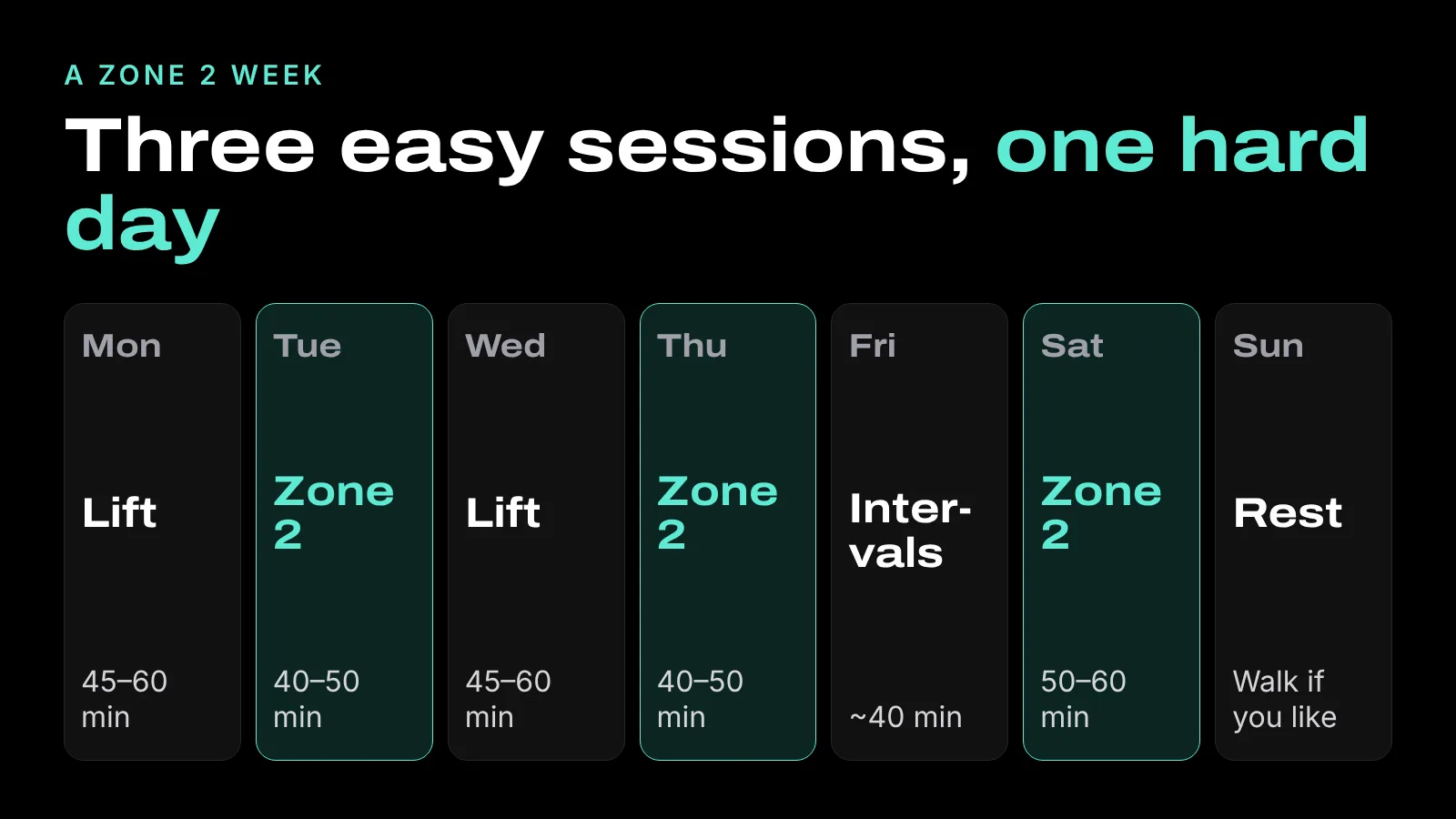
| Monday | Lift: full body | 45–60 min |
| Tuesday | Zone 2 | 40–50 min |
| Wednesday | Lift: full body | 45–60 min |
| Thursday | Zone 2 | 40–50 min |
| Friday | Intervals, like the Norwegian 4x4 | About 40 min |
| Saturday | Zone 2, long | 50–60 min |
| Sunday | Rest | – |
Three zone 2 sessions of 40 to 60 minutes land you right in the 150 to 300 weekly minutes of moderate cardio the U.S. guidelines set for adults. Most of your cardio can be zone 2, but keep one harder day. A 2025 review found zone 2 is not the single best intensity, and harder sessions matter more when your weekly time is short.
The Norwegian 4x4 workout makes a good hard day. For how cardio fits around lifting in a full workout routine, start with the lifting days and fill the gaps. A full-body lifting day can be as simple as a goblet squat, a dumbbell bench press and a lat pulldown, 3 × 8–12 each.
Get this week built for your gym.
Plan your workout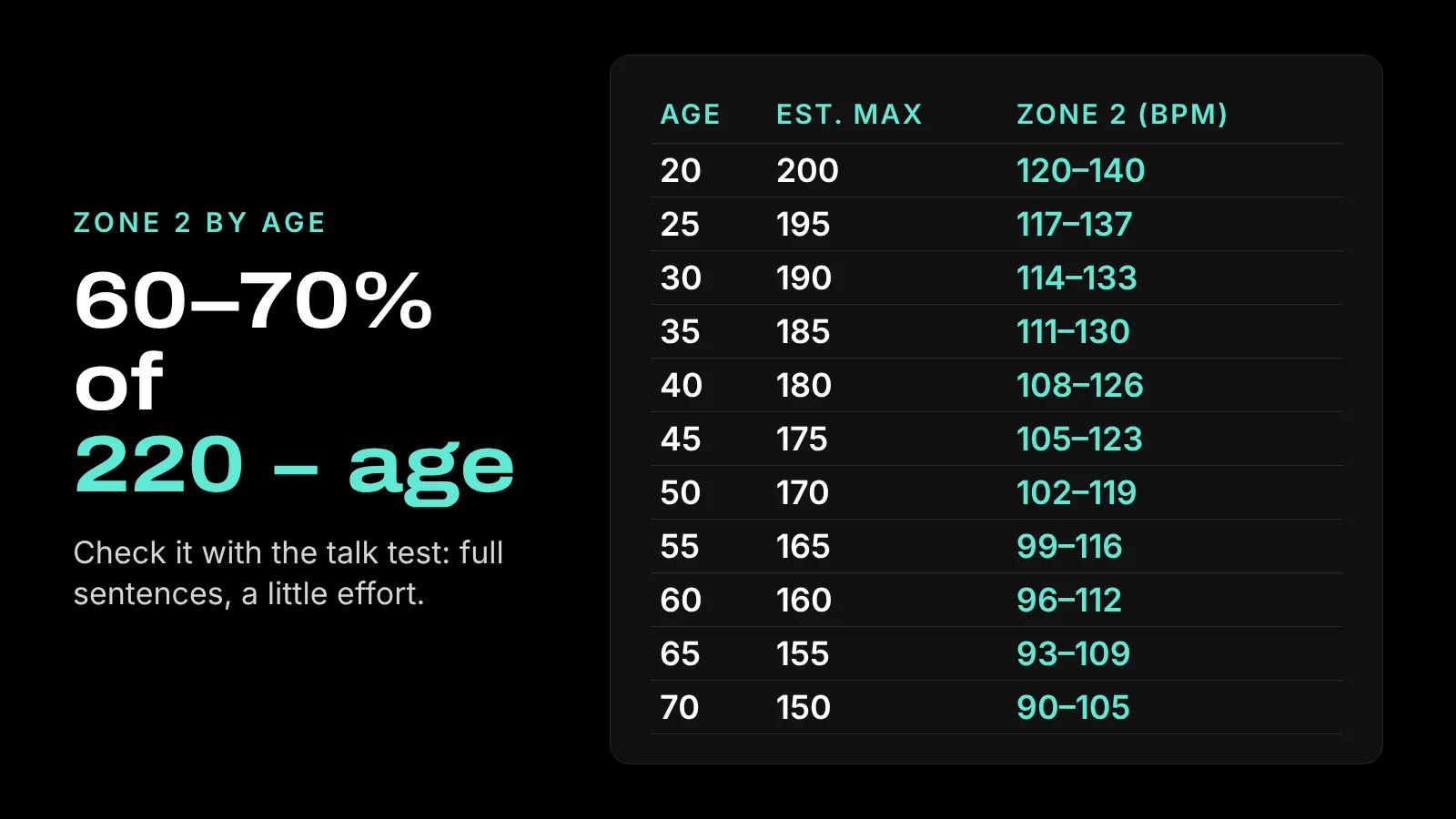
How to pick the weight, pace and machine for zone 2
You don't lift a weight in zone 2, but you still pick a load: the speed, incline or resistance. Set it so your heart rate lands in your range after 10 minutes and stays there.
- Start by feel. Pick a pace where you can talk in full sentences but would rather not sing.
- Check at minute 10. Heart rate climbs slowly at easy paces. Below range: add 1% incline or one resistance level. Above range: slow down.
- Hold it. If your heart rate drifts up late in the session, slow down a little to stay in range.
No heart rate monitor? Use the talk test. A 2022 review found the point where talking first gets uncertain matches the ventilatory threshold, the top of easy cardio. Stay just below it. On the 6 to 20 effort scale, that review matched the threshold to about 10 to 11.
| Machine | Typical zone 2 setting to start | What to adjust |
|---|---|---|
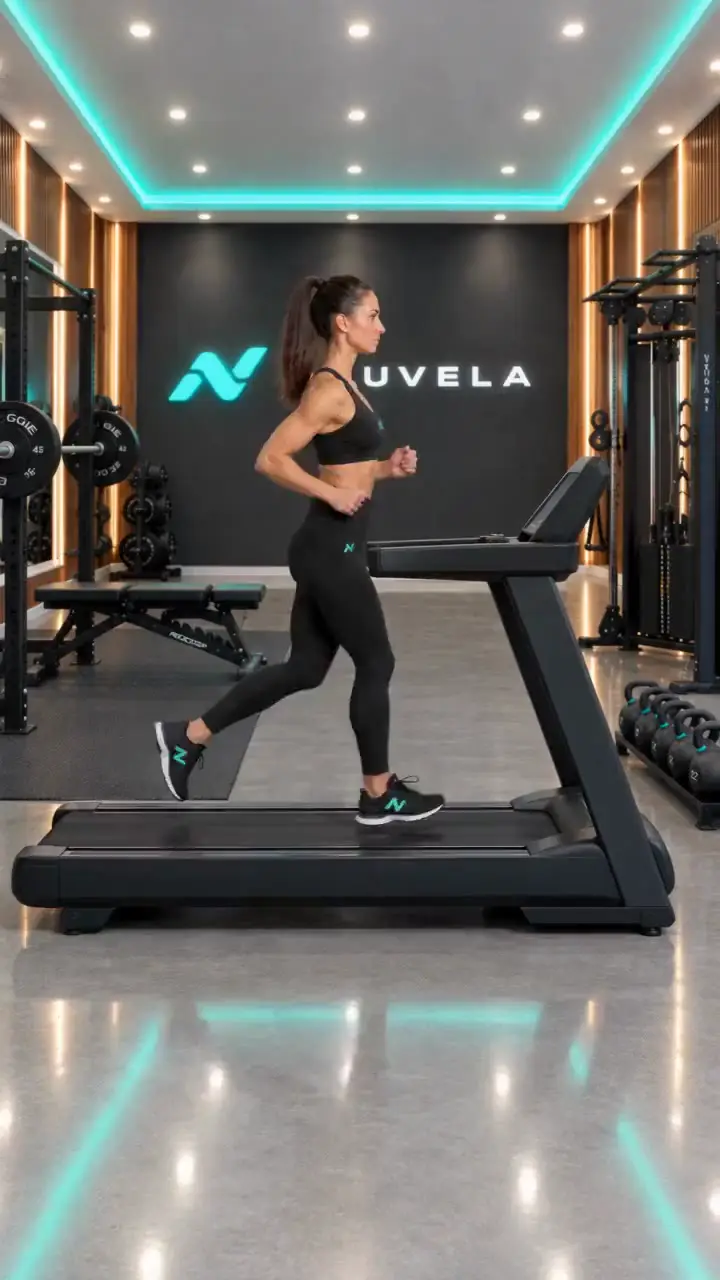
| Treadmill walk | 3.0–3.5 mph, 4–8% incline | Incline first, then speed |
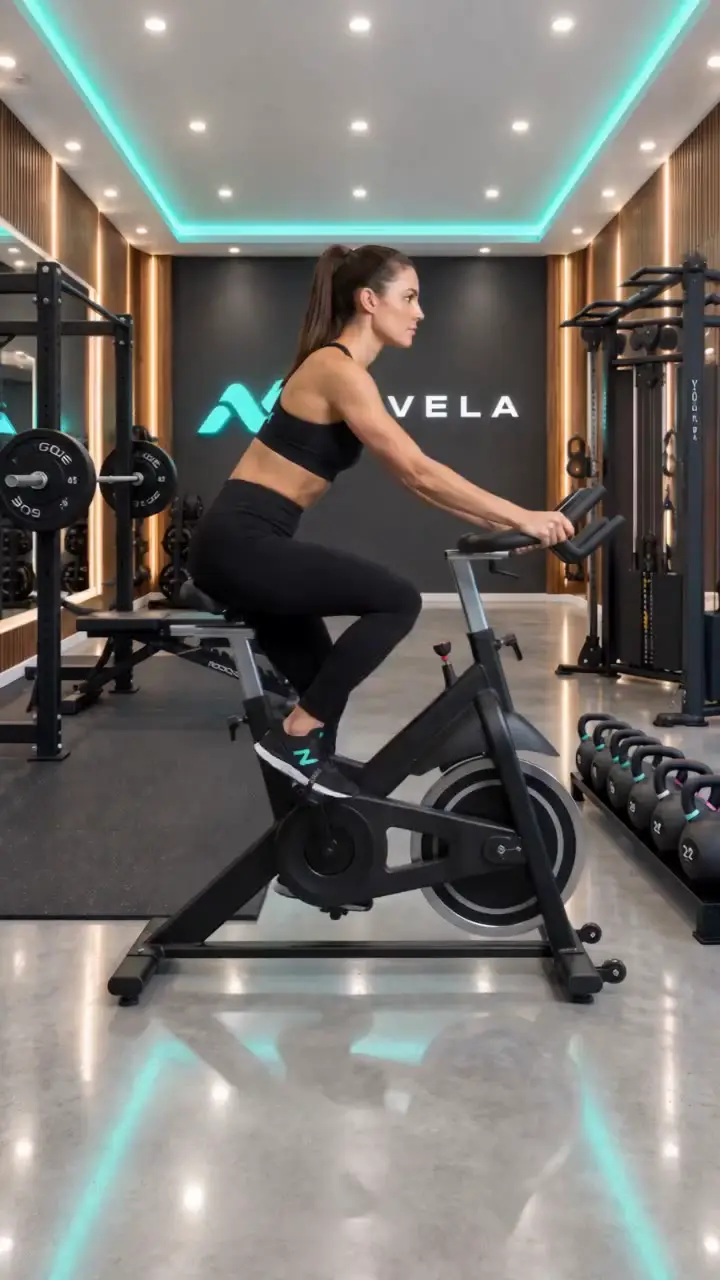
| Bike | Moderate resistance, 80–90 rpm | Resistance |
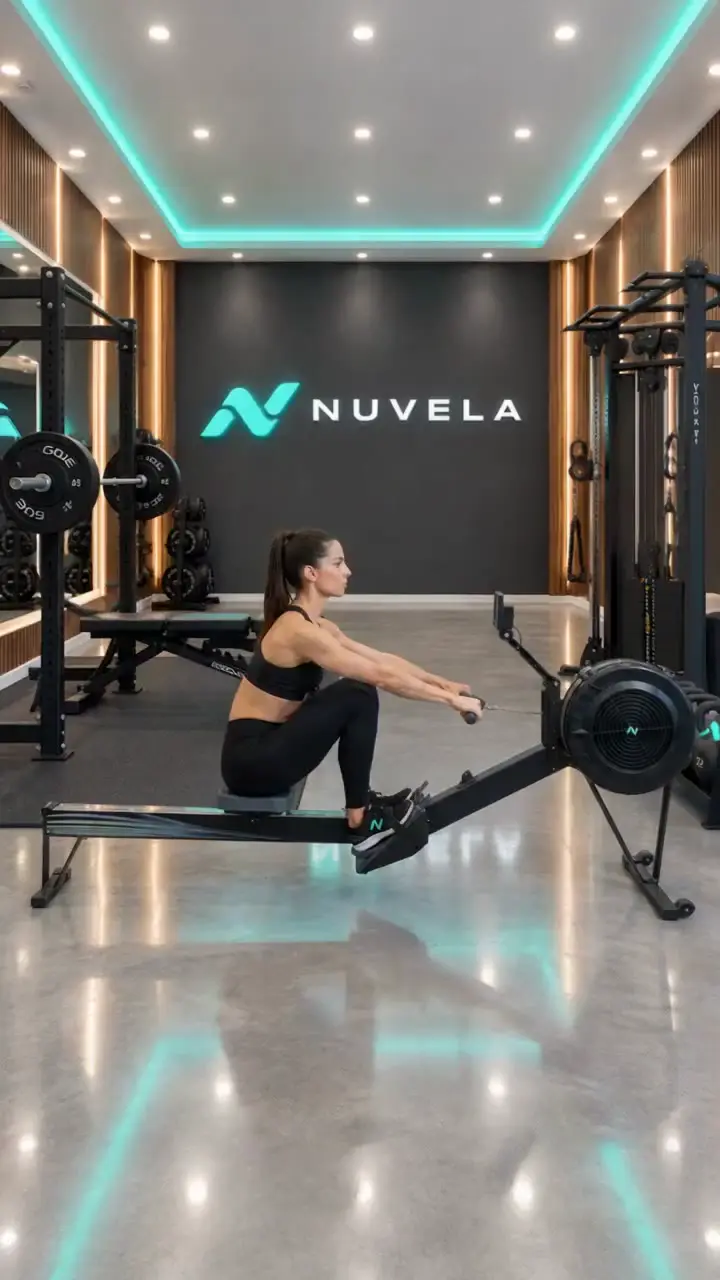
| Rower | 18–22 strokes a minute, smooth | Push harder per stroke |
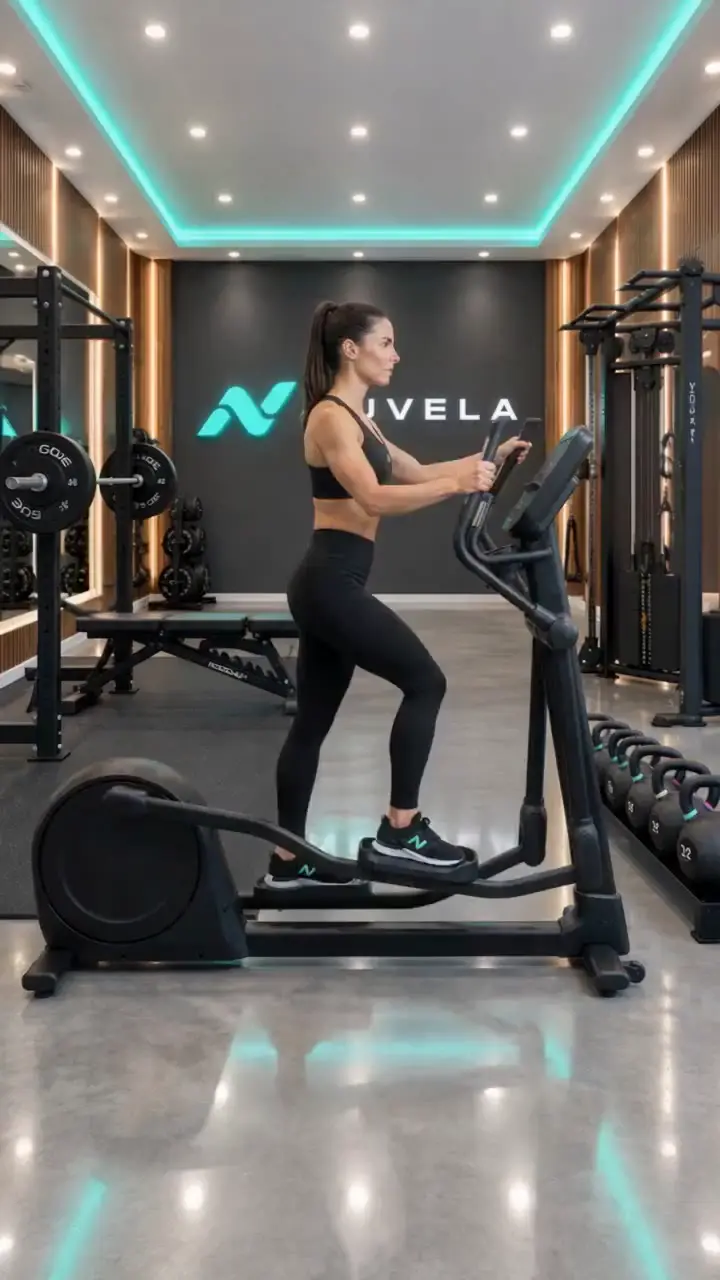
| Elliptical | Moderate resistance, steady stride | Resistance or incline |
| Easy jog | Conversation pace | Walk breaks if heart rate climbs |
A weighted vest or a backpack is the one place "weight" shows up. Start walking without it; once a 4–8% incline at 3.5 mph keeps you below range, a 10 lb (5 kg) vest is a simple next step before you jog.
Swaps: which machine for zone 2
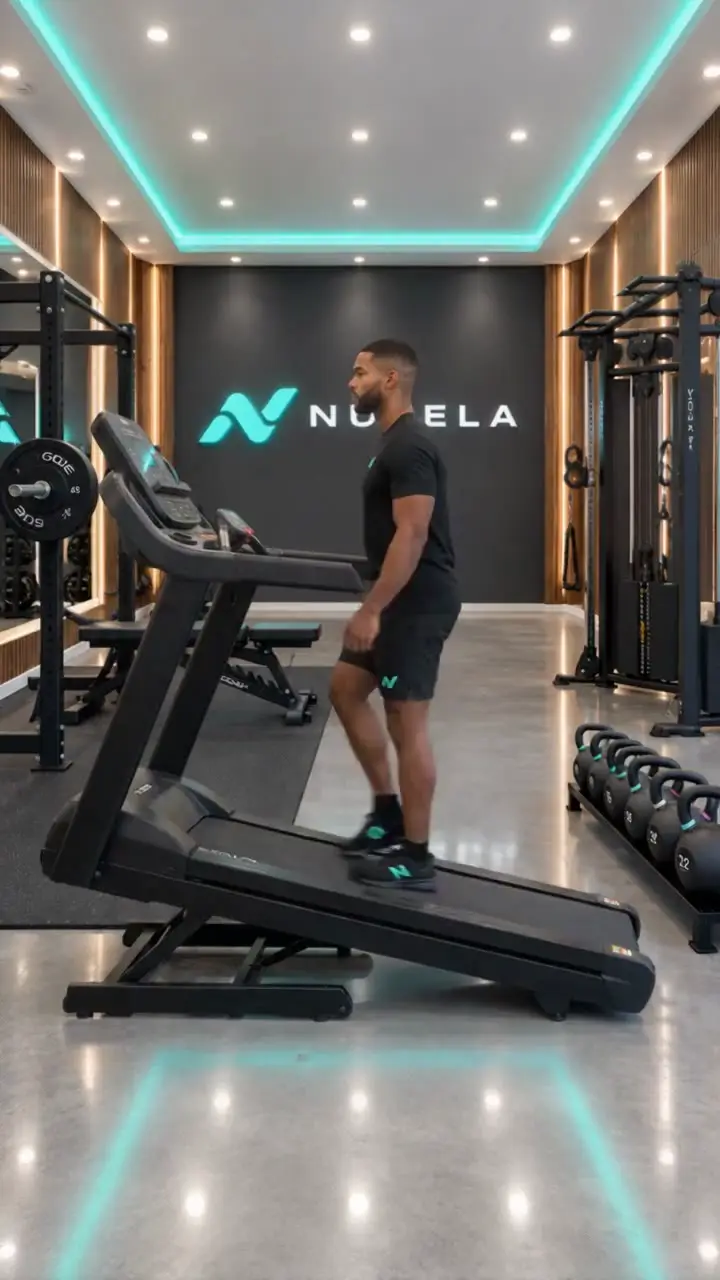
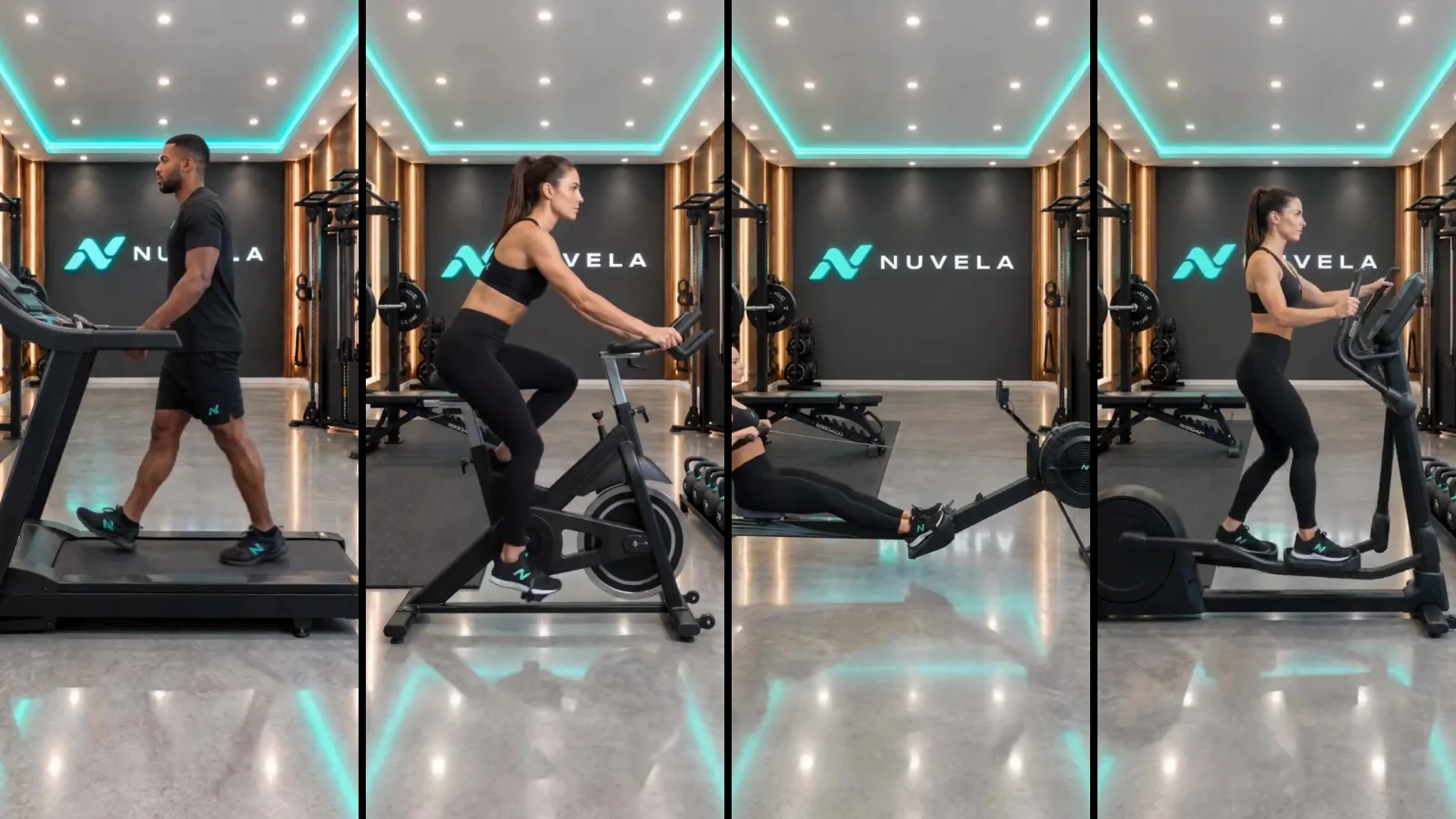
Any machine works if your heart rate stays in range for 30 minutes or more. Pick the one you can stay on longest. Brisk walking on an incline, the stationary bike and the elliptical are the easiest to hold steady.
| If you can't use | Swap to | Same time and range? |
|---|---|---|
| Treadmill | Outdoor walk with hills | Yes |
| Running | Incline walk at 6–10% | Yes |
| Upright bike | Recumbent bike | Yes |
| Rowing machine | Elliptical | Yes |
| Any machine for 50 min | Two 25-minute blocks on two machines | Yes |
| A gym | Brisk outdoor walk or easy ride | Yes |
Good
- Bikes and incline walks keep heart rate steady with little skill
- Splitting a long session across two machines keeps it fresh
Keep in mind
- Easy jogging can push heart rate above range fast
- Rowing pace is harder to hold steady for beginners
Lifting the same day? Our guide on cardio before or after weights explains the order. Traveling? A hotel gym workout usually has a treadmill or bike that works for zone 2.
Zone 2 plans by level
Start with the time you can repeat every week, not the time that sounds impressive. These are standard starting points; all of them stay at 60 to 70% of your max.
| Level | Sessions a week | Time per session | Weekly zone 2 | Harder day |
|---|---|---|---|---|
| New to cardio | 2–3 | 20–30 min | 40–90 min | None for the first 4 weeks |
| Some cardio | 3 | 30–45 min | 90–135 min | 1, short intervals |
| Regular | 3–4 | 40–60 min | 120–240 min | 1 |
| Endurance goal | 4–5 | 45–90 min | 180–300 min+ | 1–2 |
If you're new, it's normal for an incline walk to be enough. Many people find their heart rate leaves zone 2 within minutes of jogging; walking keeps you in range while your fitness catches up.
Short on time
Three 20-minute sessions still count. The 2025 review is clear that when weekly time is short, harder work matters more, so a 30-minute week might look like this:
- Day 1: 20 min zone 2 on a bike.
- Day 2: 20 min of intervals, for example 4 × 2 min hard, 2 min easy.
- Day 3: 20 min zone 2 incline walk.
For more ways to fit training into a small window, see how long should a workout be.
A 12-week zone 2 progression
Add time first, then a fourth session, and leave the heart rate range alone. Your range stays the same; what changes is how much work you do inside it.
| Weeks | Zone 2 sessions | Time each | Weekly zone 2 | Harder day |
|---|---|---|---|---|
| 1–2 | 3 | 25–30 min | 75–90 min | None |
| 3–4 | 3 | 30–40 min | 90–120 min | None |
| 5–6 | 3 | 40 min | 120 min | 1 short interval session |
| 7–8 | 3 | 40–50 min | 120–150 min | 1 |
| 9 | 2 | 30 min | 60 min | None (an easier week) |
| 10–12 | 3 (one long) | 45, 45, 60 min | 150 min | 1 |
Week 9 drops the load on purpose, the same idea as a deload week in lifting. After week 12, keep 150 minutes or grow toward 300, the top of the U.S. guideline range.
Track one simple marker: the pace or incline you hold at the same heart rate. If 120 bpm meant 3.2 mph at 5% in week 1 and means 3.5 mph at 6% in week 10, your fitness moved.
Zone 2 vs the other heart rate zones
Most watches and gym machines use five zones based on percent of max heart rate. Zone 2 is the highest zone where you can still hold a real conversation.
| Zone | % of max | Feels like | Talk test | Typical use |
|---|---|---|---|---|
| 1 | 50–60% | Very easy | Easy chatting | Warm-up, cool-down |
| 2 | 60–70% | Easy, steady | Full sentences | Long steady cardio |
| 3 | 70–80% | Comfortably hard | Short phrases | Tempo work |
| 4 | 80–90% | Hard | A few words | Intervals like the 4x4 |
| 5 | 90–100% | All-out | No talking | Short sprints |
Good
- Zone 2: easy to repeat 3 or more times a week
- Zone 2: fits after lifting without draining your next session
Keep in mind
- Zone 2 only: less fitness per minute than harder work on short weeks
- Zone 4–5: needs more rest, so 1–2 sessions a week is plenty
The Norwegian 4x4 workout lives in zone 4. A good week mixes mostly zone 2 with a little zone 4, rather than spending every session in zone 3.
How to measure zone 2 without guessing
Use two checks: a number and a feeling. When they disagree, trust the talk test and slow down.
| Method | How it works | Good for | Watch for |
|---|---|---|---|
| Chest strap | Reads heart rate from the chest | Most steady readings | Strap needs to sit snug |
| Wrist watch | Optical sensor on the wrist | Easy, always on | Can lag in the first minutes and on the rower |
| Machine grips | Hand sensors on treadmills and bikes | No gear needed | You have to hold them still |
| Talk test | Say a full sentence out loud | Anywhere, no gear | Easy to drift up if you stop talking |
| Effort scale (6–20) | Rate how hard it feels | Pairs with any machine | Stay just under 10–11 |
Find your own max (optional)
The tables are averages. If your numbers never seem to match how you feel, look at the highest heart rate your watch has recorded during a hard interval session. If it's well above the table, base your 60 to 70% on that number instead.
Common zone 2 mistakes and fixes
Most people drift too hard. Zone 2 feels almost too easy, and that is the point.
| Mistake | What happens | Fix |
|---|---|---|
| Checking heart rate at minute 2 | It reads low, so you speed up and overshoot | Set by feel, check at minute 10 |
| Holding treadmill handrails | Heart rate drops, so the setting lies | Hands off; lower the incline instead |
| Jogging because walking "feels lazy" | Heart rate jumps into zone 3 | Incline walk until jogging stays in range |
| Doing every session in zone 3 | Each session feels hard, none is easy | Split it: mostly zone 2, one zone 4 day |
| Zone 2 only, every week | Fitness moves slowly on short weeks | Keep one harder day |
| Changing machines every session | Hard to compare numbers | Use one main machine for 4 weeks |
Hot gyms also push heart rate up at the same pace. On a warm day, slow down to stay in range rather than chasing last week's speed.
Who zone 2 training is for
Almost anyone who does cardio can use it. It suits some goals better than others.
| You are | Zone 2 share of your cardio | Why |
|---|---|---|
| New to cardio | Nearly all of it, for 4 weeks | Easy to repeat, builds the habit |
| Lifting 3–4 days a week | 2–3 sessions, plus 1 harder | Fits around leg days without draining them |
| Training for a race | Most of your weekly minutes | Lets you add weekly minutes without wearing you out |
| Short on time (under 90 min a week) | About half | Harder sessions give more per minute |
| Training with a partner | Any | Walking side by side keeps you both talking |
Training with someone else? Two people can share an incline walk even at different fitness levels; one simply sets a steeper incline. See our partner workouts for more ideas.
How Nuvela plans zone 2 days
Nuvela puts strength, cardio and yoga in one weekly plan, and you choose the mix. Answer a few questions about your goal, experience, where you train, and your days and minutes, and your week is built around them.
- Gym, home, no equipment, or on the road: the plan uses what you have.
- Swap any move, for example the rower to the bike when it's taken.
- A video for every move in your plan.
To see where zone 2 sessions fit your own week, use the workout planner.
More questions about zone 2 heart rate
Can I do zone 2 on the same day as lifting?
Yes, after your lifting or later in the day. Zone 2 is easy enough that it rarely affects the next session. Keep the hard interval day away from heavy leg days.
Does zone 2 count toward the 150 minutes?
Yes. Zone 2 is moderate-intensity cardio, the kind the U.S. guidelines count toward 150 to 300 minutes a week.
Common questions
What is zone 2 heart rate for my age?
About 60 to 70% of 220 minus your age. At 40 that's 108 to 126 beats per minute; at 60, 96 to 112. Use the table above, and check it with the talk test.
How long should a zone 2 workout be?
30 to 60 minutes, after a 5-minute warm-up. Three sessions a week reach about 150 minutes. See how long a workout should be for busy weeks.
Is walking zone 2?
Often, yes, especially on an incline. A brisk walk at 4 to 8% incline puts many people in range. If your heart rate stays low, add incline before speed.
Why is my zone 2 so slow?
Easy pace feels slow at first. Keep the range anyway. Many people find the same heart rate comes at a faster pace or steeper incline after a few weeks.
Is zone 2 better than intervals?
No, they do different jobs. A 2025 review found zone 2 is not the single best intensity. Do most sessions easy and keep one harder day a week.
Sources
- Age-predicted maximal heart rate revisited, Journal of the American College of Cardiology (2001). 351 studies and 18,712 adults: max heart rate ≈ 208 − 0.7 × age; the common 220 − age equation reads too low in older adults.
- An Examination and Critique of Subjective Methods to Determine Exercise Intensity: The Talk Test, Feeling Scale, and Rating of Perceived Exertion, Sports Medicine (2022). The talk test and RPE are valid markers of the ventilatory threshold; the point where talking first gets uncertain matches that threshold, and RPE 10 to 11 on the 6–20 scale matches it too.
- Much Ado About Zone 2: A Narrative Review Assessing the Efficacy of Zone 2 Training for Improving Mitochondrial Capacity and Cardiorespiratory Fitness in the General Population, Sports Medicine (2025). Defines zone 2 as low-intensity exercise below the lactate threshold; concludes current evidence does not show it is the best single intensity, and harder sessions matter more when weekly training time is low.
- Top 10 Things to Know About the Second Edition of the Physical Activity Guidelines for Americans, U.S. Department of Health and Human Services. Adults need at least 150 to 300 minutes of moderate-intensity aerobic activity a week, plus muscle-strengthening activity at least 2 days a week.
Related guides
- 12-3-30 Workout: How to Build Up and Do It Right
- Cardio Before or After Weights? Pick by Your Goal
- Norwegian 4x4 Workout: How to Do It Right
Exercises in this guide
- Stationary bike
- Rowing machine
- Elliptical machine
- Goblet squat
- Dumbbell bench press
- Lat pulldown
- Brisk walking
- Recumbent bike
Try 7 days, no card needed
