

The Norwegian 4x4 is four hard 4-minute efforts with 3 easy minutes between them. You run, ride or row at 85 to 95% of your max heart rate, then keep moving gently until the next round. With warm-up and cool-down, one session fits in about 40 minutes.
Fit the 4x4 around your lifting. Tell Nuvela your goal and your days, and build your week: strength, cardio and yoga land in one weekly plan, with the mix you choose. Get Nuvela on Google Play.
Warm-up
10 min easy
Building to moderate.
Hard
4 × 4 min
85–95% of max heart rate.
Easy
3 min between
About 70%, keep moving.
Cool-down
5 min
Easy.
Total
About 40 minutes
16 minutes of hard work.
The plan
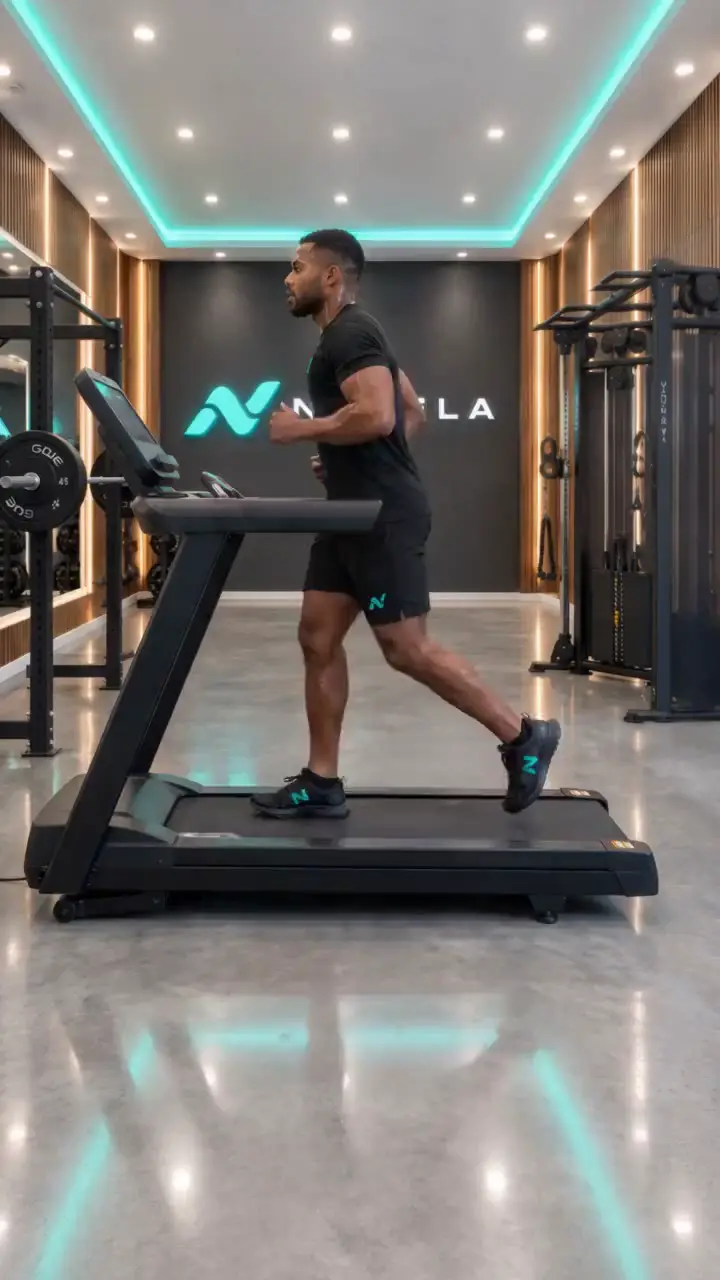
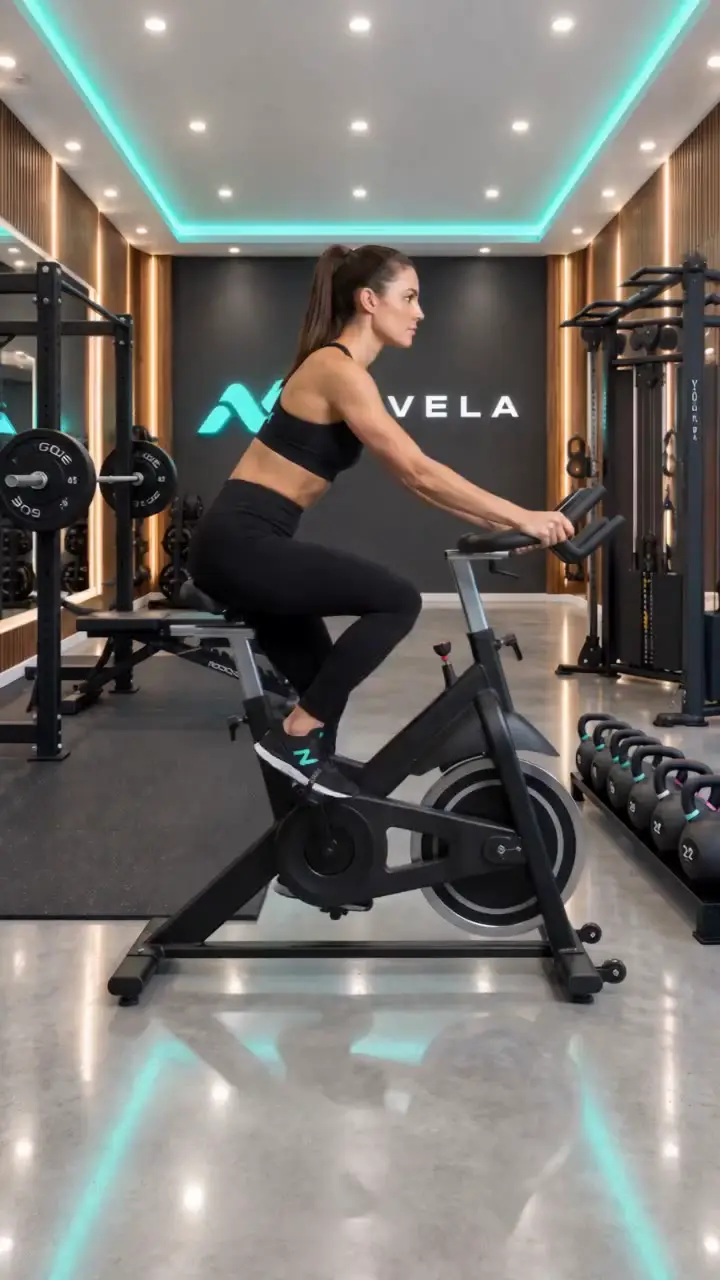
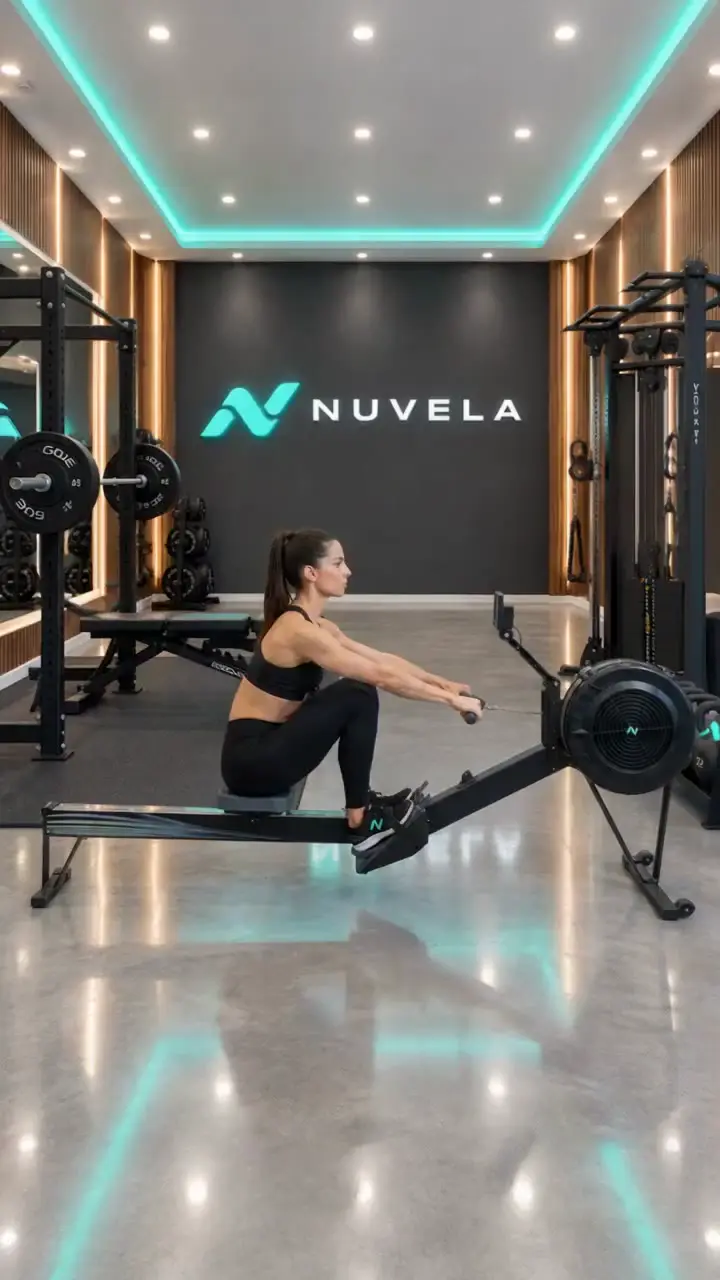
One session, about 40 minutes. Run it on a treadmill, bike, rower or outdoors on a hill.
| Block | Time | Effort | What it feels like |
|---|---|---|---|
| Warm-up | 10 min | Easy, building to moderate | You can talk in full sentences |
| Interval 1 | 4 min | 85–95% of max heart rate | Hard, a few words at a time |
| Recovery | 3 min | About 70% | Easy jog, spin or walk, keep moving |
| Interval 2 | 4 min | 85–95% | Same pace as interval 1 |
| Recovery | 3 min | About 70% | Keep moving |
| Interval 3 | 4 min | 85–95% | Same pace |
| Recovery | 3 min | About 70% | Keep moving |
| Interval 4 | 4 min | 85–95% | Same pace, last one |
| Cool-down | 5 min | Easy | Slow down until you can talk easily, then stretch if you like |

That's 16 minutes of hard work. The original 2007 study used 90 to 95% of max heart rate, 3 sessions a week for 8 weeks, and VO2max went up 7.2%. Steady running with the same total work, at 70% or 85% of max, raised it less.
The same study also tested 15-second bursts with 15 seconds of rest. Those raised VO2max 5.5%, so the long 4-minute version came out ahead.
How it fits a lifting week
| Day | Session |
|---|---|
| Monday | Lift: lower body |
| Tuesday | Norwegian 4x4 |
| Wednesday | Lift: upper body |
| Thursday | Easy cardio, 30 min, or yoga |
| Friday | Lift: full body |
| Saturday | Norwegian 4x4 or a long easy walk |
| Sunday | Rest |
Keep the 4x4 away from the day before a heavy leg session. Lifting the same day? Lift first, then do the intervals, or split them by a few hours. Our guide on cardio before or after weights explains the order.
Get this week built for your gym.
Plan your workout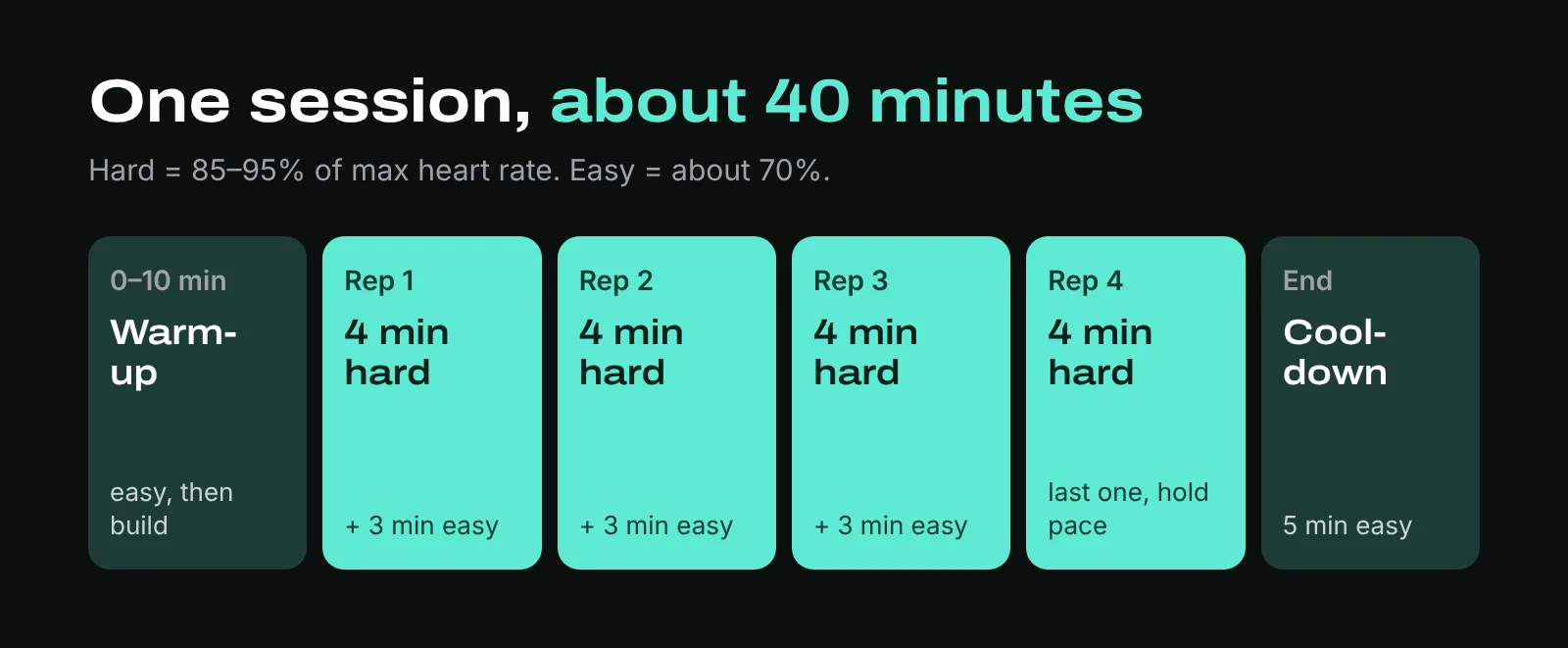
How to pick the weight of each interval: pace, incline and heart rate
The pace is right when your heart rate lands at 85 to 95% of max by the second or third minute of each interval, and you can hold it for all four.
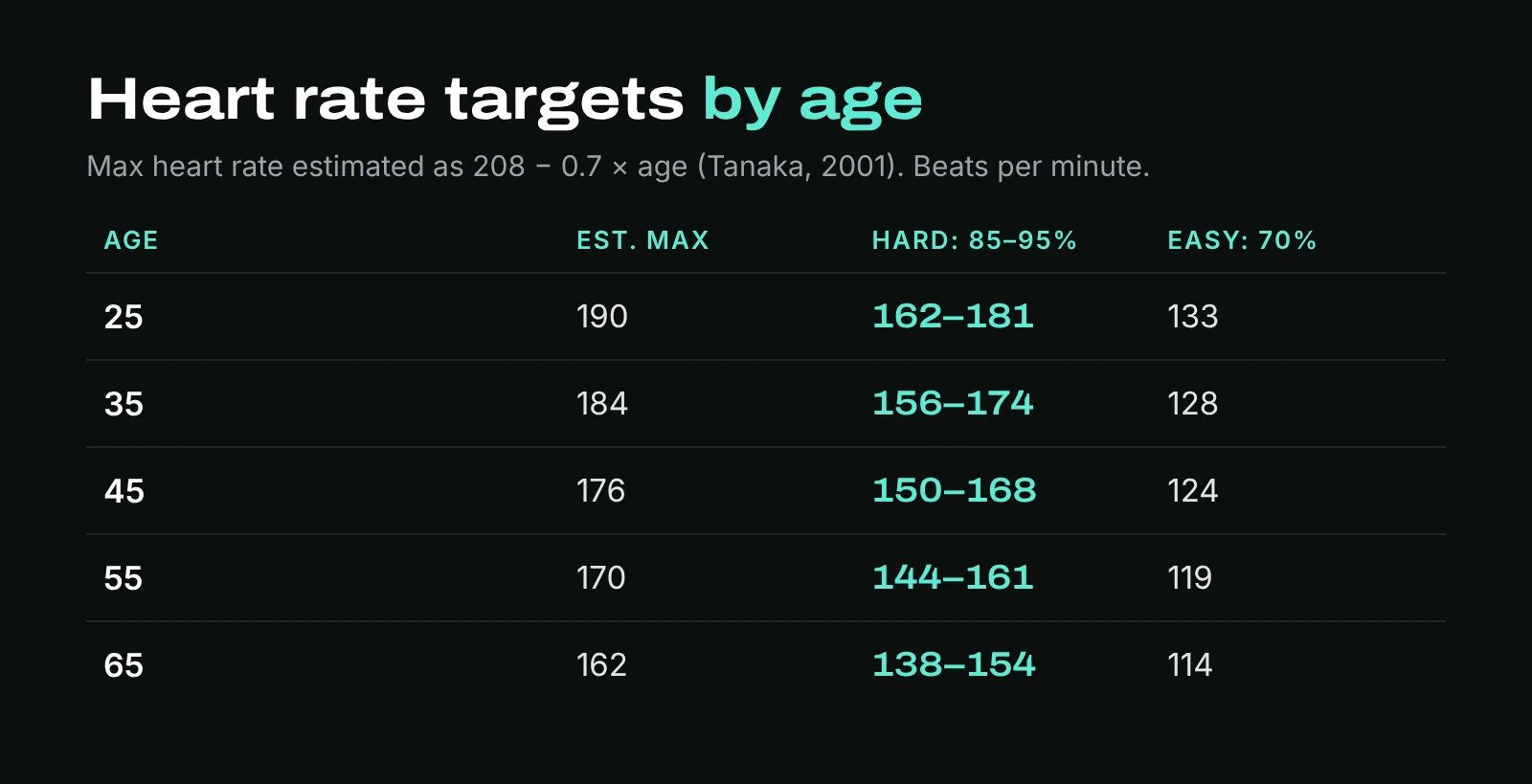
Step 1: estimate your max heart rate. Use 208 − 0.7 × your age.
That formula came from 351 studies and 18,712 adults. The old 220 − age rule reads too low in older adults.
| Age | Est. max | Hard: 85–95% | Easy: 70% |
|---|---|---|---|
| 25 | 190 | 162–181 | 133 |
| 35 | 184 | 156–174 | 128 |
| 45 | 176 | 150–168 | 124 |
| 55 | 170 | 144–161 | 119 |
| 65 | 162 | 138–154 | 114 |
Step 2: pick a starting pace. Without a heart rate monitor, go by talk: in the hard minutes you can say a few words, not a sentence. On a 1 to 10 effort scale, aim for 8 to 9.
Step 3: don't chase the number in minute one. Heart rate climbs slowly. If you sprint until the watch says 90%, you'll fade by minute three.
Start at the pace you can hold, and let the number come to you.
Step 4: adjust next time. If interval four was easy, add 0.3 mph (0.5 km/h) or 1% incline on the treadmill, or 10 watts on the bike. If you couldn't finish it, slow down next time.
Effort without a watch
| Block | Talk test | Effort, 1 to 10 |
|---|---|---|
| Warm-up | Full sentences | 3–5 |
| Hard minutes | A few words at a time | 8–9 |
| Easy minutes | Short sentences again by minute 2 | 4–5 |
| Cool-down | Easy chat | 2–3 |
The 4x4 is cardio, so no barbell numbers here. For the lifting days around it, the one rep max calculator turns a recent set into working weights.
Swaps for every machine
Any machine works if it gets your heart rate into the hard range. Pick the one that suits your legs that week.
| Machine | How to set the hard minutes | How to set the easy minutes |
|---|---|---|
| Treadmill | Run, or walk fast at 8–12% incline | Walk at 0–3% incline |
| Stationary bike | High resistance, 80–95 rpm | Light resistance, easy spin |
| Rowing machine | Strong strokes, 26–30 per minute | Easy strokes, 18–20 per minute |
| Elliptical | High resistance and fast stride | Low resistance |
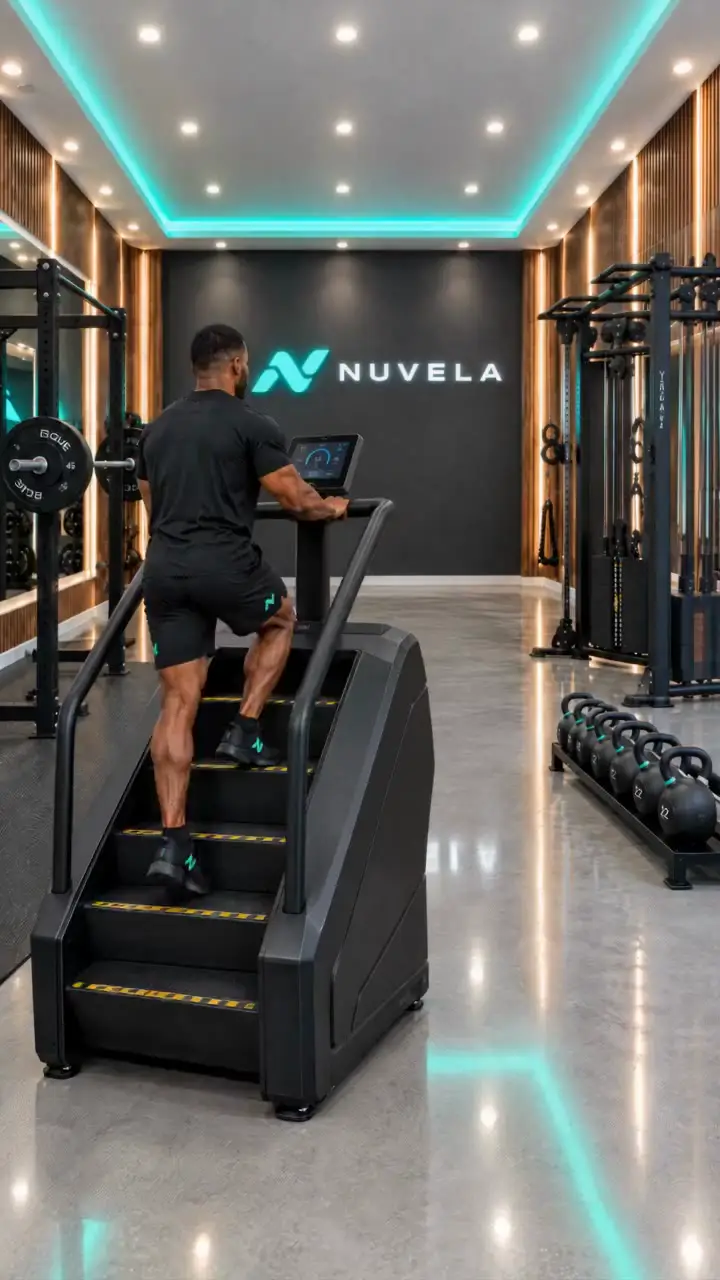
| Stair climber | A steady step pace you can hold for 4 minutes | Slowest setting, or step off and walk |
| Outdoors | Run or walk uphill for 4 minutes | Jog or walk back down |
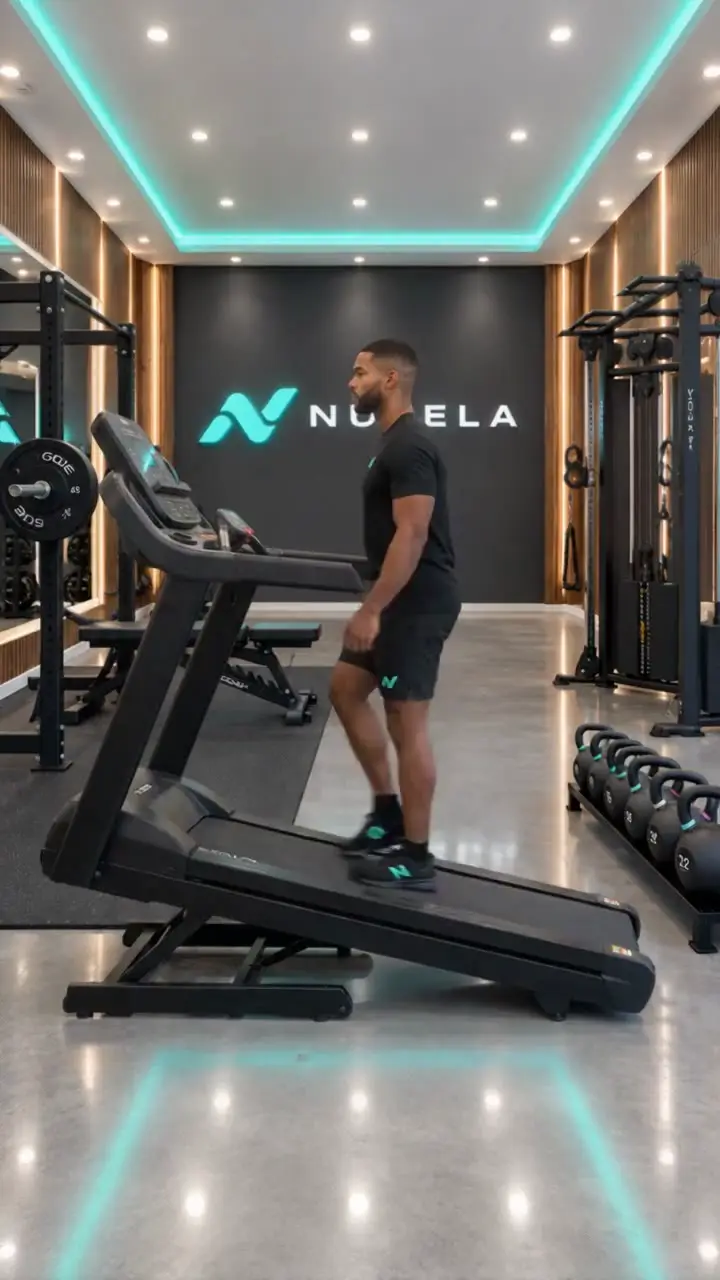
An incline walk works well if running isn't for you. The goal is the heart rate range, not the speed. A 2015 meta-analysis of 28 studies found intervals raised VO2max by 5.5 mL/kg/min compared with no training, and a little more than steady cardio.
Good
- Works on a treadmill, bike, rower, elliptical or a hill
- An incline walk works if running isn't for you
Keep in mind
- Some people can't get their heart rate high enough on a recumbent bike; try the upright bike or rower
- Keep the 4x4 away from the day before a heavy leg session

Starting settings by level
Use these as a first guess, then let your heart rate correct them. Two people of the same age can need very different speeds.
| Level | Treadmill, hard minutes | Treadmill, easy minutes | Bike, hard minutes |
|---|---|---|---|
| New to cardio | Walk 3.5–4.0 mph (5.6–6.4 km/h) at 8–12% incline | Walk 3.0 mph (4.8 km/h), 0–2% | Resistance you can push at 80 rpm |
| Some running | Run 5.5–6.5 mph (8.9–10.5 km/h), 1% incline | Walk or jog 3.5–4.5 mph (5.6–7.2 km/h) | Resistance that holds 85–90 rpm |
| Regular runner | Run 7.0–9.0 mph (11.3–14.5 km/h), 1% incline | Jog 4.5–5.5 mph (7.2–8.9 km/h) | Resistance that holds 90–95 rpm |
On the rower, keep the damper around 4 to 6 and push harder each stroke instead of rowing faster. Keep your stroke rate in the 26 to 30 range from the swaps table.
Example: one treadmill session at age 45
Max heart rate is about 176, so the hard minutes aim for 150–168 and the easy minutes for about 124. This runner has some running behind them.
| Minutes | Setting | Target heart rate |
|---|---|---|
| 0–10 | Walk 3.5 mph (5.6 km/h), then jog 5.0 mph (8.0 km/h) | Under 130 |
| 10–14 | Run 6.0 mph (9.7 km/h), 1% incline | 150–168 by minute 2–3 |
| 14–17 | Walk 3.5 mph (5.6 km/h), 0% | Down toward 124 |
| 17–21 | Run 6.0 mph (9.7 km/h), 1% | 150–168 |
| 21–24 | Walk 3.5 mph (5.6 km/h) | About 124 |
| 24–28 | Run 6.0 mph (9.7 km/h), 1% | 150–168 |
| 28–31 | Walk 3.5 mph (5.6 km/h) | About 124 |
| 31–35 | Run 6.0 mph (9.7 km/h), 1% | 150–168 |
| 35–40 | Slow walk | Under 110 |
If the heart rate tops out under 150 in interval two, add 1% incline for intervals three and four. If it goes over 168 early, drop 0.3 mph (0.5 km/h).
The 6-week build-up for beginners
If you have never done hard intervals, build up to the full session over 6 weeks. Keep the 3-minute easy breaks the whole time.
| Weeks | Intervals | Hard effort | Sessions a week |
|---|---|---|---|
| 1–2 | 3 × 3 min | 80–85% of max | 1 |
| 3–4 | 3 × 4 min | 85–90% | 1–2 |
| 5–6 | 4 × 4 min | 85–95% | 2 |
| 7 on | 4 × 4 min, faster pace or more incline | 85–95% | 2–3 |
Do your other cardio as easy sessions: a brisk walk, an easy bike ride or a short jog where you can still talk.
If you already run or ride a few times a week, you can start at weeks 3–4.
Warm-up and cool-down
Ten minutes of warm-up is part of the session, not an extra. It lets you hit the hard pace in interval one without fading.
| Minutes | Warm-up | Effort |
|---|---|---|
| 0–5 | Easy walk, spin or row | 3–4 out of 10 |
| 5–8 | Steady, a little faster | 5–6 |
| 8–10 | Two 30-second pickups to almost interval pace | 7, then easy |
| Minutes | Cool-down | Effort |
|---|---|---|
| 0–3 | Walk, spin or row easily | 2–3 |
| 3–5 | Slow walk until you can talk in full sentences | 1–2 |
| After | Optional: standing quad stretch and couch stretch, 30 sec per side | Light |
How often to do it: sample weeks
For most people who also lift, 1 or 2 sessions a week is plenty. The 2007 study used 3 a week, with no lifting on top.
If you lift 3 days a week
Use the full-body days from our 3 day workout split.
| Day | Session |
|---|---|
| Monday | Full body A |
| Tuesday | Norwegian 4x4 on the bike |
| Wednesday | Full body B |
| Thursday | Easy cardio, 30–40 min |
| Friday | Full body A |
| Saturday | Norwegian 4x4 on the treadmill or a hill |
| Sunday | Rest or yoga |
If you lift 4 days a week
The days come from our upper lower split.
| Day | Session |
|---|---|
| Monday | Lower |
| Tuesday | Upper, then 4x4 on the rower |
| Wednesday | Easy cardio or rest |
| Thursday | Lower |
| Friday | Upper |
| Saturday | Norwegian 4x4 |
| Sunday | Rest |
If you lift 5 or 6 days a week
On a push pull legs week, do one 4x4 after a push or pull day, never before legs. That's it.
For a 30-minute yoga option on easy days, see yoga for strength. Picking a lifting layout first? Start with our workout split guide.
Norwegian 4x4 vs other cardio
The 4x4 is a middle option: harder than steady cardio, steadier than sprints.
| Session | How it runs | Time | Best for |
|---|---|---|---|
| Norwegian 4x4 | 4 × 4 min hard, 3 min easy | About 40 min | Raising VO2max with a clear structure |
| Steady easy cardio | 30–60 min at a talking pace | 30–60 min | Building a base, easy days |
| Sprint intervals | 10 × 30 sec hard, 60–90 sec easy | 20–25 min | Short sessions, upper-body days |
| 15/15 intervals | 15 sec hard, 15 sec easy, repeated | 25–35 min | Variety; 5.5% VO2max gain in the 2007 study |
| Long walk or hike | 45–60 min easy | 45–60 min | Weekends, a partner, rest-day movement |
Good
- Clear structure: four rounds, one target
- Works on any cardio machine
- The 2007 study saw a larger gain than steady training of the same total work
Keep in mind
- Hard: plan it on a day you are fresh
- Not a replacement for all easy cardio
Common mistakes and fixes
Most bad 4x4 sessions start too fast.
| Mistake | What happens | Fix |
|---|---|---|
| Sprinting the first minute | You fade by interval three | Start at the pace you can hold for all four |
| Stopping in the easy minutes | Heart rate drops too far | Keep walking, spinning or rowing at about 70% |
| Skipping the warm-up | Interval one feels awful | 10 minutes, with two short pickups |
| Doing it the day before legs | Squats feel heavy | Move it after an upper day, or two days before legs |
| Three or four sessions plus lifting | Lifts stall, legs stay heavy | Drop to 1–2 a week and keep the rest easy |
| Chasing speed on a new machine | Numbers don't match | Go by heart rate, not the display |
How to track your progress
Write down the same three things every session: machine, average pace or watts in each hard interval, and your heart rate at the end of interval four.
| Sign | What it means | Next step |
|---|---|---|
| Same pace, lower heart rate | You're fitter | Add 0.3 mph (0.5 km/h), 1% incline or 10 watts |
| Interval four easier than interval one | You started too slow | Start a little faster next time |
| Couldn't finish interval four | You started too fast | Slow the first interval |
| No change after 4 weeks | Pace too easy or too few sessions | Check heart rate, add a second session |
Every 4 to 6 weeks, take an easier week with one session and lighter lifting. Our deload week guide shows how.
Who the 4x4 is for
It suits people who already do some cardio and want a harder session that is easy to follow.
- Lifters who want one structured cardio session a week without long runs.
- Runners and riders who want a set workout on top of easy miles.
- Busy people: 40 minutes covers warm-up to cool-down. See how long a workout should be.
- Training partners: two people can share a treadmill row or bike pair and match the clock, like in our partner workouts.
Totally new to exercise? Start with easy walks and the 6-week build-up first. If a move doesn't feel right, check with a doctor before you keep training it.
How Nuvela fits the 4x4 into your week
In the Nuvela app, strength, cardio and yoga sit in one weekly plan, and you choose the mix. Tell it your goal, experience, where you train, and how many days and minutes you have, and it builds the week around your lifting.
- A video for every move in your plan.
- Swap any move, for example the treadmill for the bike.
- Train Together keeps one shared streak with a partner.
To see where intervals land in your own week, use the workout planner.
More questions about the Norwegian 4x4
Can I do the Norwegian 4x4 on the same day as lifting?
Yes, after lifting or a few hours apart. Put it on an upper-body day, not before squats or deadlifts. Keep the lifting to your normal sets and do the intervals last.
Do I need a heart rate monitor?
No, but it helps. The talk test works: a few words at a time in the hard minutes, short sentences again by the end of the easy minutes.
Common questions
What is the Norwegian 4x4 workout?
An interval session from Norwegian research: 4 minutes hard at 85 to 95% of max heart rate, then 3 minutes easy at about 70%, done 4 times. With warm-up and cool-down it takes about 40 minutes.
How many times a week should you do the Norwegian 4x4?
The 2007 study used 3 sessions a week for 8 weeks. If you also lift 3 or more days a week, 1 or 2 sessions is a good start, with easy cardio on other days.
Can you do the Norwegian 4x4 on a bike or treadmill?
Yes, on any machine that gets your heart rate to 85 to 95% of max. A bike or rower is easier on your legs the day after a heavy squat session.
Is the Norwegian 4x4 HIIT?
It's a form of interval training, but longer and steadier than sprint HIIT. You work at a pace you can hold for 4 minutes, not an all-out effort.
How long does it take to see results from the Norwegian 4x4?
In the 2007 study, VO2max rose 7.2% after 8 weeks of 3 sessions a week. Log every session: the same pace at a lower heart rate is the sign it's working.
Sources
- Aerobic high-intensity intervals improve VO2max more than moderate training, Medicine and Science in Sports and Exercise (2007). 40 moderately trained men, 3 sessions a week for 8 weeks: 4 × 4 minutes at 90 to 95% of max heart rate with 3 minutes at 70% raised VO2max 7.2%; 15/15 intervals 5.5%; both beat steady training of the same total work.
- Effectiveness of High-Intensity Interval Training (HIT) and Continuous Endurance Training for VO2max Improvements: A Systematic Review and Meta-Analysis of Controlled Trials, Sports Medicine (2015). 28 studies, 723 healthy adults: intervals raised VO2max by 5.5 mL/kg/min vs no training and 1.2 mL/kg/min more than steady endurance training.
- Age-predicted maximal heart rate revisited, Journal of the American College of Cardiology (2001). 351 studies and 18,712 adults: max heart rate ≈ 208 − 0.7 × age; 220 − age reads too low in older adults.
Related guides
- 12-3-30 Workout: How to Build Up and Do It Right
- Cardio Before or After Weights? Pick by Your Goal
- Zone 2 Heart Rate: Your Range by Age and a Plan
Exercises in this guide
- Stationary bike
- Rowing machine
- Elliptical machine
- Recumbent bike
- Brisk walking
- Standing quad stretch
- Couch stretch
Try 7 days, no card needed
