
A good back and bicep workout starts heavy on the back and ends with curls. Do one vertical pull, two or three rows, then three curl variations: 18 working sets in about 55 minutes. Every row and pulldown warms up your biceps on the way.
Get your pull day built for you. Answer a few questions and build your week: Nuvela picks the moves, sets and starting weights and adjusts them as you log. Get Nuvela on Google Play.
Vertical pull
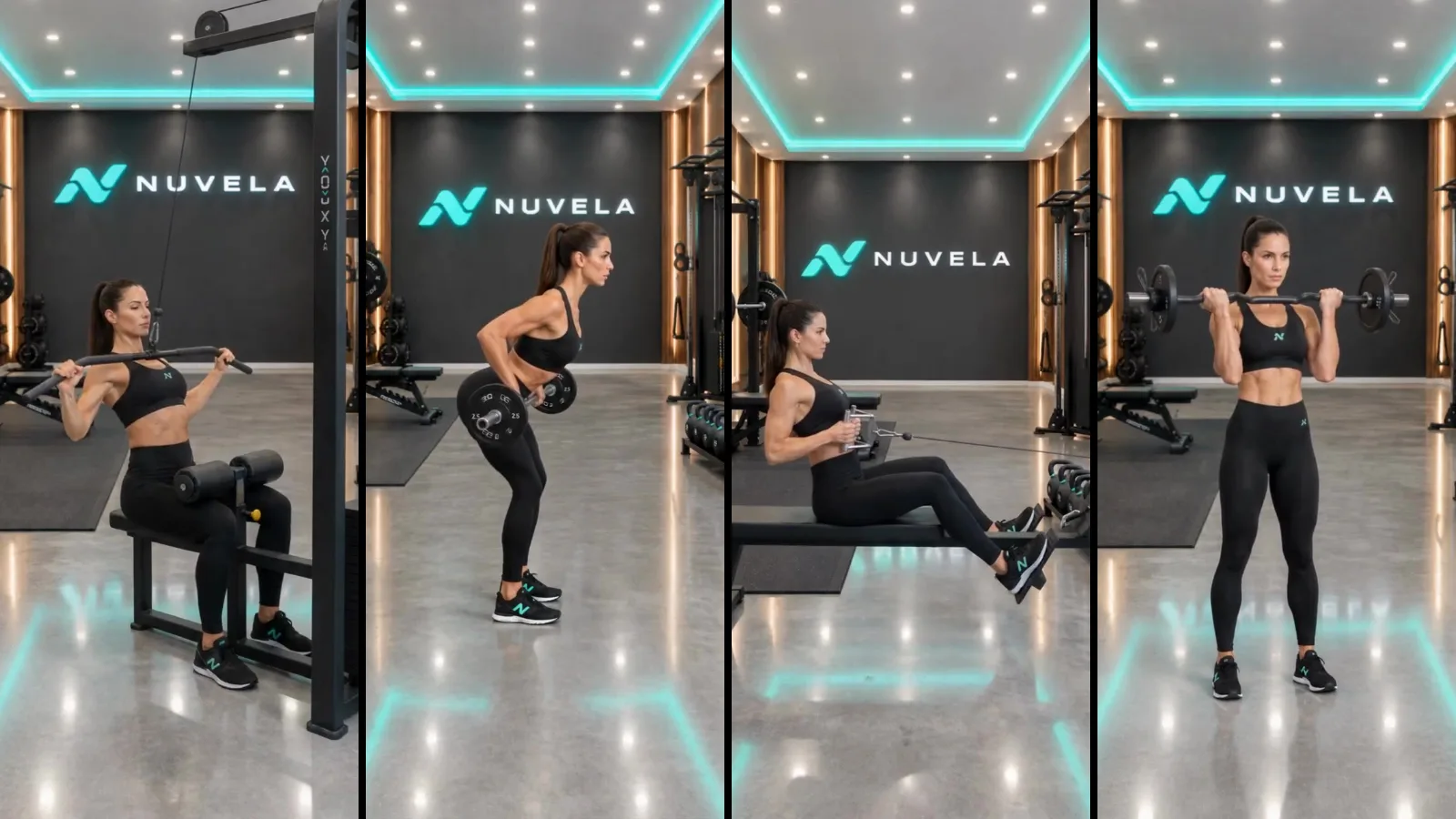
Lat pulldown or pull-up
Overhand grip, 3 × 6–10.
Heavy row
Barbell row
The strength move of the day, 3 × 8–10.
Mid back
Seated cable row
Squeeze for one second, 3 × 10–12.
Biceps base
EZ-bar curl
Heaviest curl, 3 × 8–12.
Long head
Incline dumbbell curl
Arms behind you, 2 × 10–12.
Forearms too
Hammer curl
Thumbs up, 2 × 10–12.
The plan
Seven moves, 18 working sets, about 55 minutes. Back comes first while you are fresh. Curls come last, when your biceps are already warm from every pull.
| # | Exercise | Sets × reps | Rest |
|---|---|---|---|
| 1 | Lat pulldown, overhand grip (or pull-up) | 3 × 6–10 | 2 min |
| 2 | Barbell row | 3 × 8–10 | 2 min |
| 3 | Seated cable row | 3 × 10–12 | 90 s |
| 4 | One-arm dumbbell row | 2 × 10–12 each | 60 s |
| 5 | EZ-bar curl | 3 × 8–12 | 90 s |
| 6 | Incline dumbbell curl | 2 × 10–12 | 60 s |
| 7 | Hammer curl | 2 × 10–12 | 60 s |
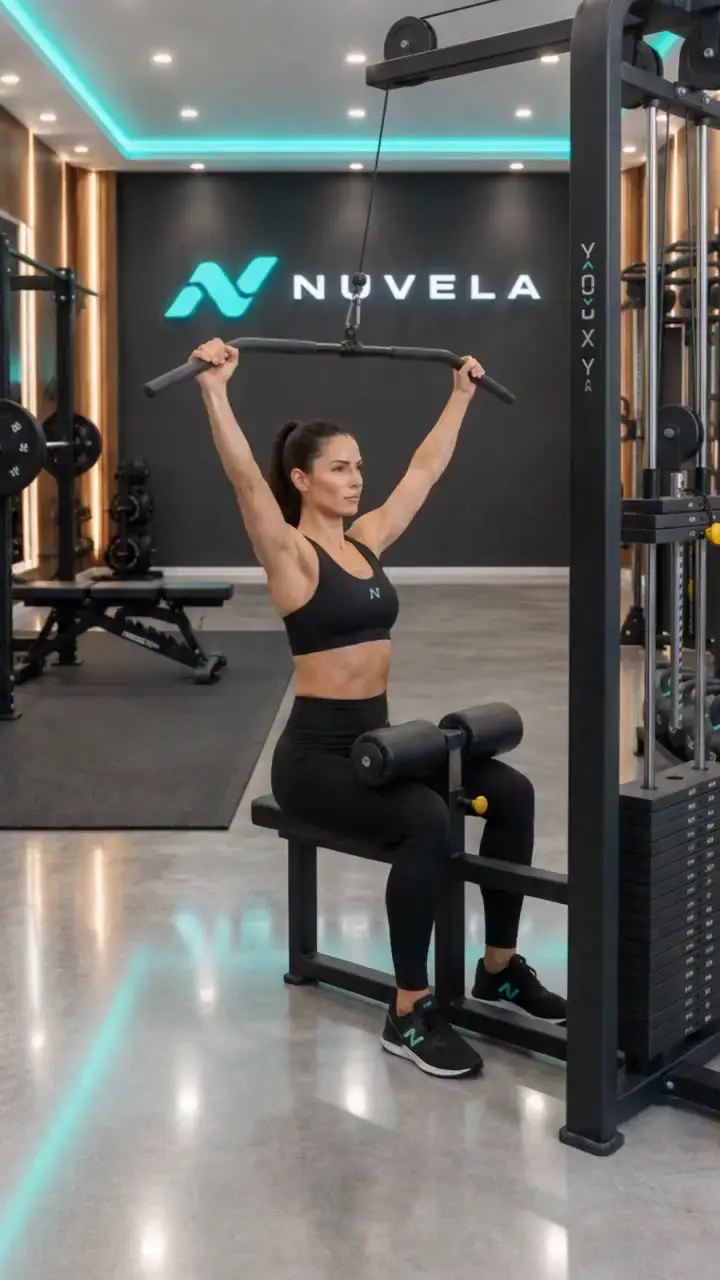
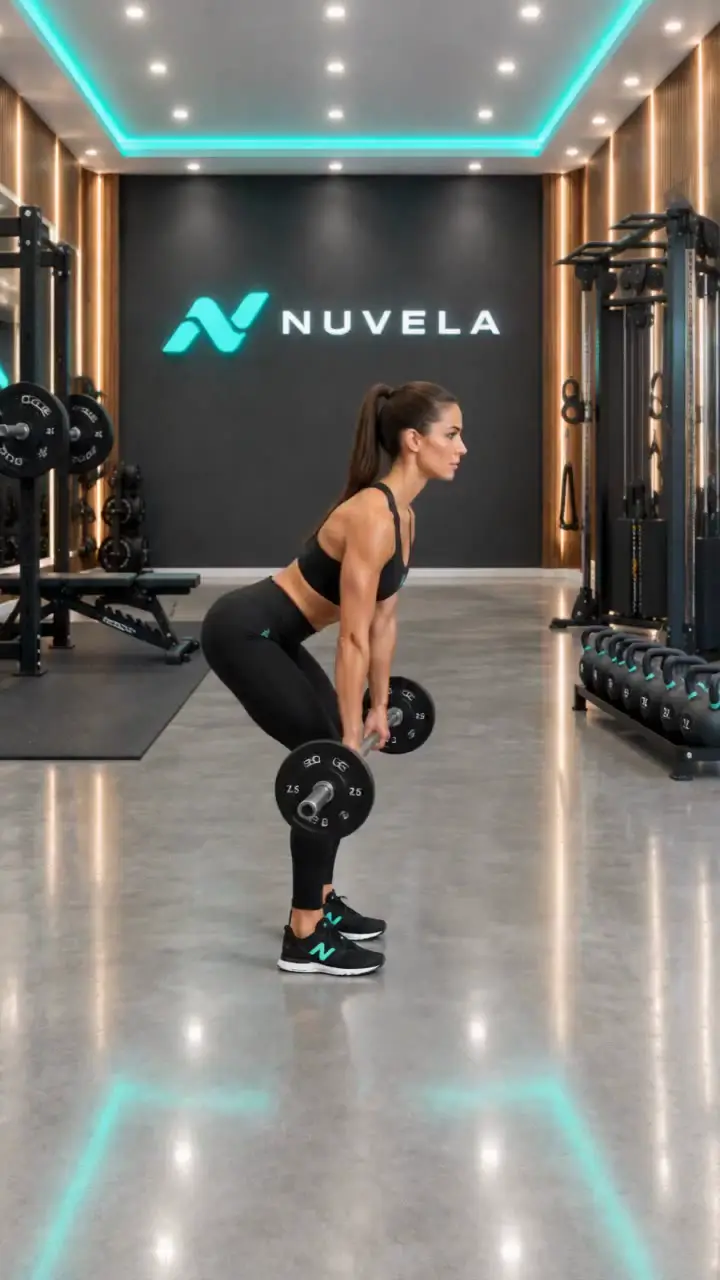
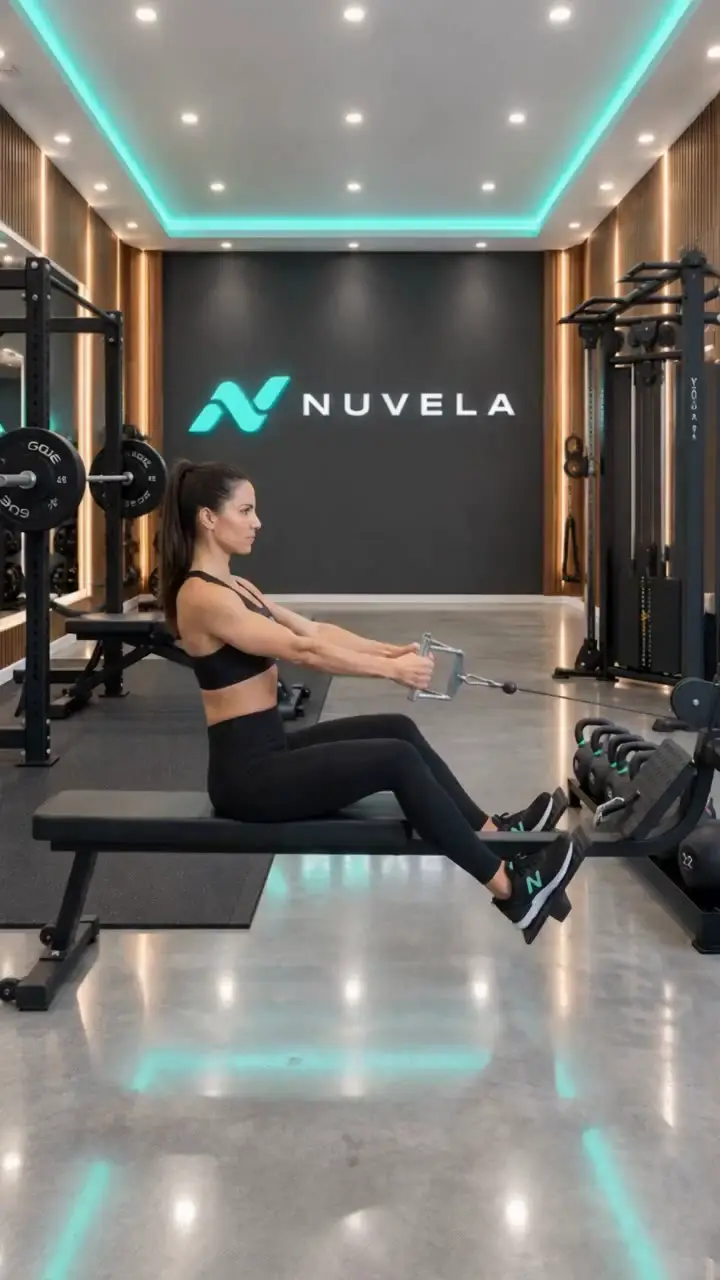
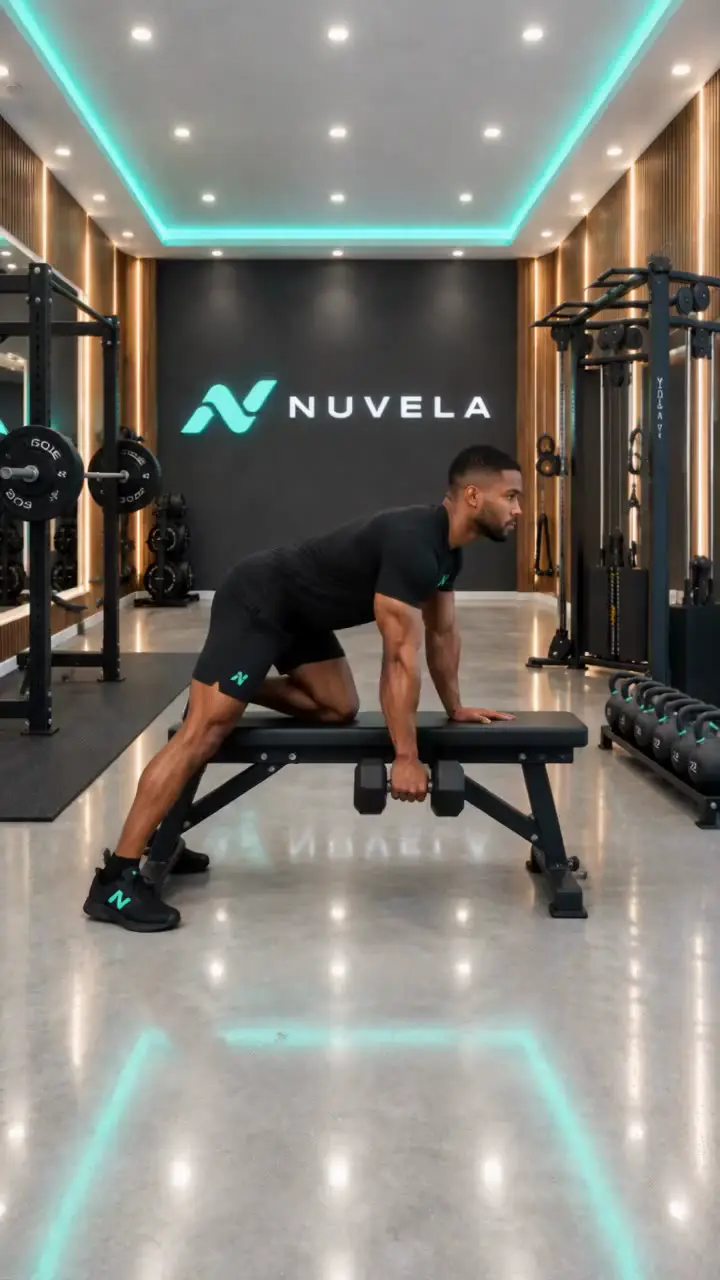
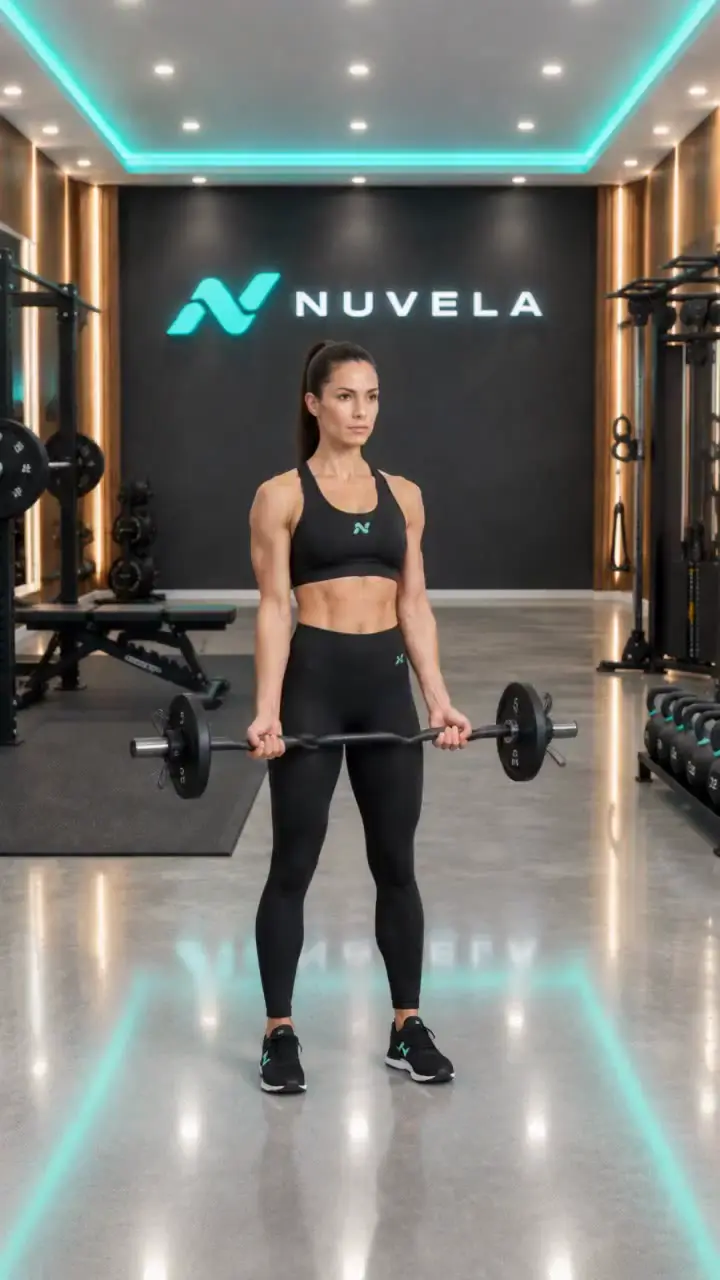
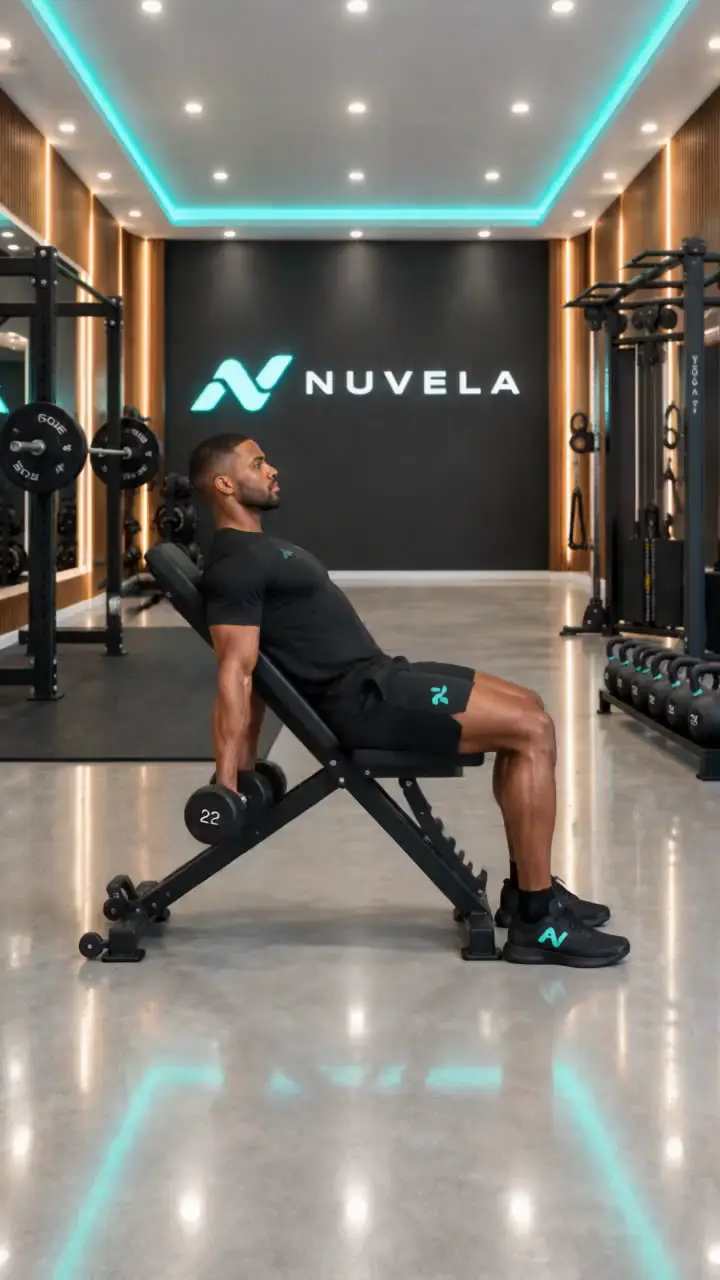
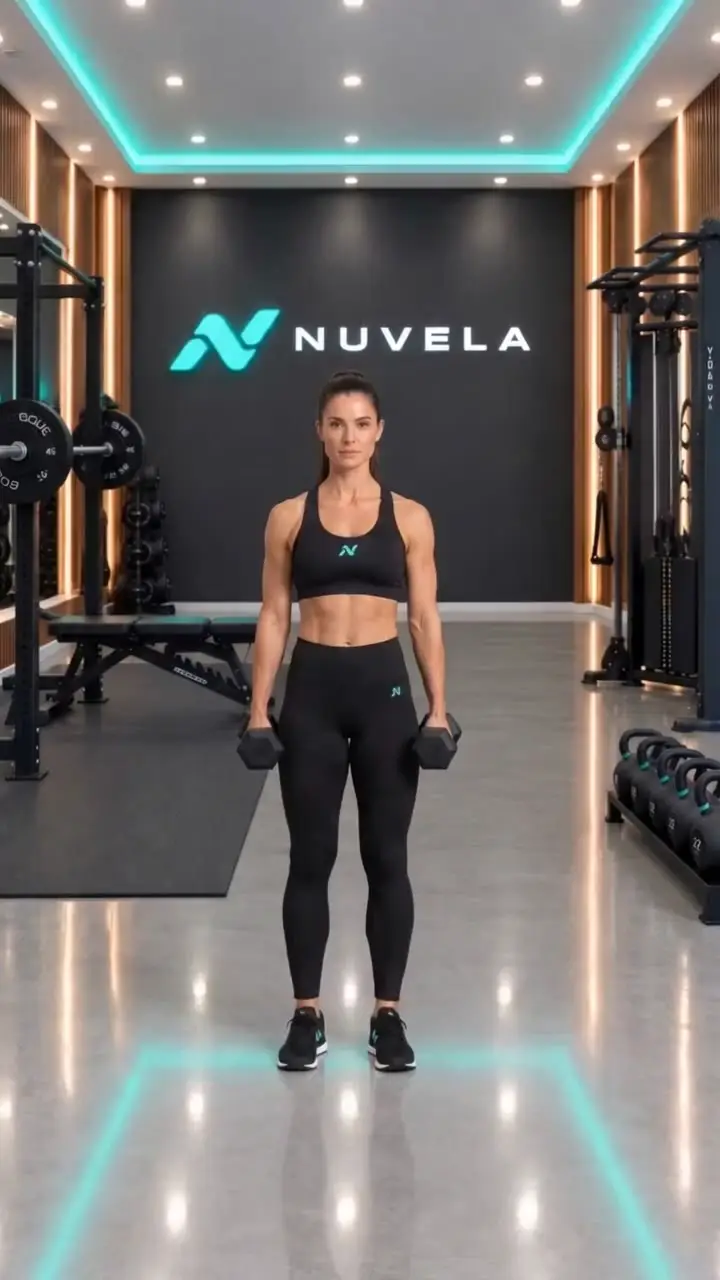
Each move has its own job: the lat pulldown or pull-up pulls from above, the barbell row is the heavy horizontal pull, the seated cable row adds a squeeze for the mid back, and the one-arm dumbbell row evens out the sides. The incline dumbbell curl stretches the biceps with your arms behind you, and the hammer curl adds the forearms.
Why back before biceps
Every pulldown and row bends your elbows, so your biceps already work hard during the back half. Tired biceps first would cap how much you can pull with your back.
- Grip: in a 2010 study, an overhand grip on the pulldown gave more lat activity than an underhand one. Grip width made no difference.
- Biceps during back work: grip type did not change biceps activity in that same study. Use the grip you can load well.
- Where it fits: this is the pull day of a push pull legs week. See how pull days fit a full workout routine.
The session, minute by minute
| Minutes | What you do |
|---|---|
| 0–6 | Warm-up: rower, band pull-aparts, 1 light pulldown set |
| 6–14 | Lat pulldown 3 × 6–10, 2 min rest |
| 14–22 | Barbell row 3 × 8–10, 2 min rest |
| 22–28 | Seated cable row 3 × 10–12, 90 s rest |
| 28–33 | One-arm dumbbell row 2 × 10–12 each side |
| 33–40 | EZ-bar curl 3 × 8–12, 90 s rest |
| 40–48 | Incline curl 2 × 10–12, hammer curl 2 × 10–12 |
| 48–55 | Spare time for a busy gym, then log your weights |
Get this week built for your gym.
Plan your workout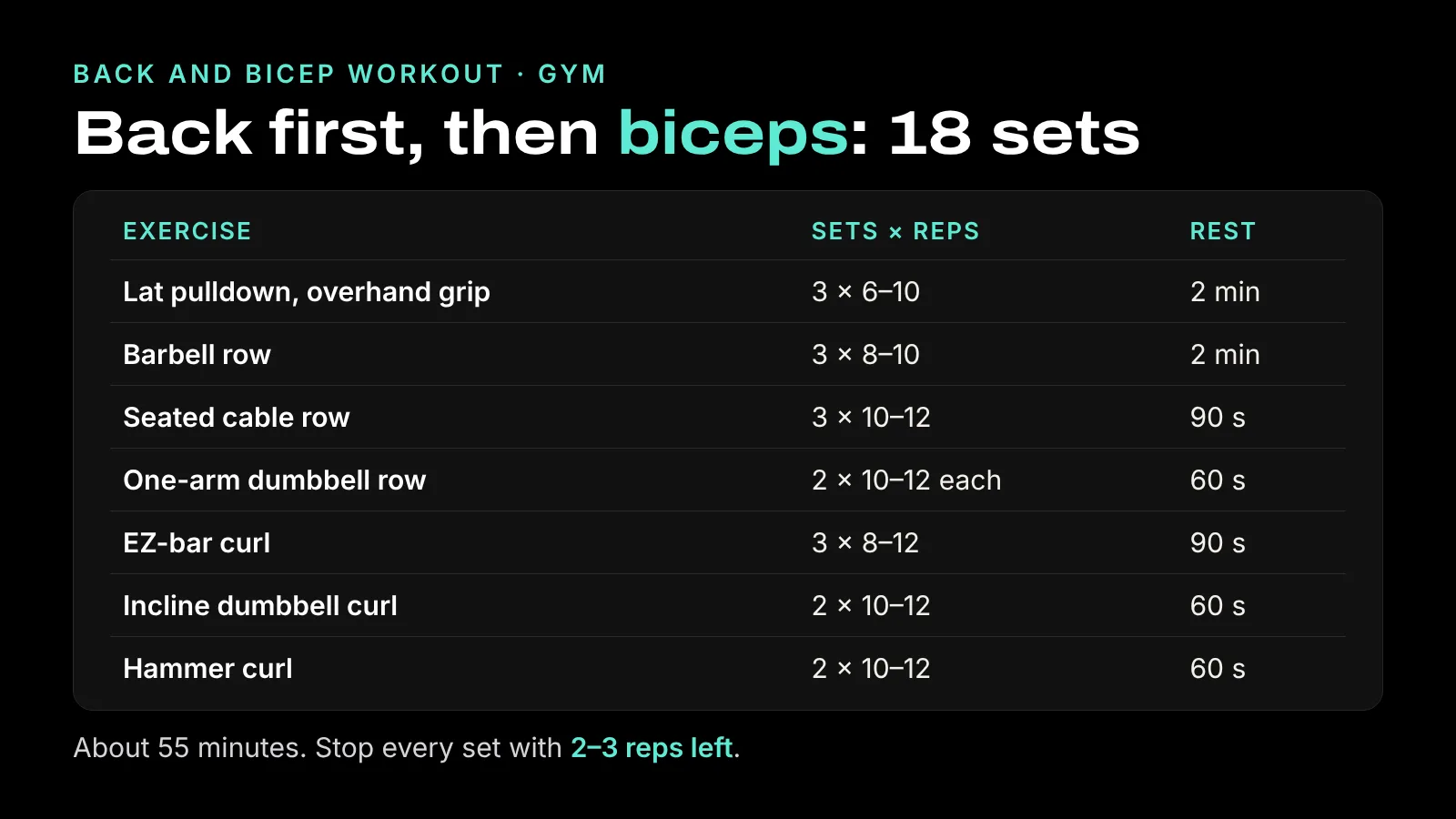
How to pick the weight, reps and rest
Choose a weight you could lift 2 or 3 more times at the end of the set. The ACSM guidelines say going to failure is not required.
| Move | Target reps | First-session test | Go up when |
|---|---|---|---|
| Lat pulldown | 6–10 | A weight you can pull 12 times | All sets hit 10, one plate |
| Barbell row | 8–10 | Empty 45 lb (20 kg) bar for 12, then add 10 lb (5 kg) at a time | All sets hit 10, add 5 lb (2 kg) |
| One-arm dumbbell row | 10–12 | A dumbbell you can row 14 times | All sets hit 12, next dumbbell |
| EZ-bar curl | 8–12 | A weight you can curl 14 times | All sets hit 12, add 5 lb (2 kg) |
| Incline curl, hammer curl | 10–12 | Dumbbells you can curl 14 times | All sets hit 12, next pair |
Many lifters land on 15 to 25 lb (7 to 11 kg) dumbbells for incline and hammer curls. Your log matters more than any table. When the top of the range gets easy on every set, add weight.
Double progression, with real numbers
Stay in the rep range and add reps before weight. Here is how a lat pulldown moves over a few weeks:
| Session | Weight | Reps (3 sets) | Next time |
|---|---|---|---|
| 1 | 100 lb (45 kg) | 8, 8, 7 | Same weight |
| 3 | 100 lb (45 kg) | 9, 9, 8 | Same weight |
| 5 | 100 lb (45 kg) | 10, 10, 10 | Add one plate |
| 6 | 110 lb (50 kg) | 8, 7, 7 | Same weight, build back to 10s |
Want a rough starting number for the barbell row from a lift you already know? Plug a recent set into the one rep max calculator and start your sets of 8–10 at about 70% of that.
Rest times
- Heavy pulls (moves 1–2): 2 minutes, so the next set is as strong as the first.
- Rows and the first curl: 90 seconds.
- Last two curls: 60 seconds. Smaller muscles recover faster.
Swaps for busy stations
Keep the same sets and reps; only the tool changes. Pick the swap that is closest to the original pull.
| If you can't do | Swap to | Sets × reps |
|---|---|---|
| Lat pulldown | Pull-up or assisted pull-up | 3 × 6–10 |
| Barbell row | Chest-supported row, T-bar row or Pendlay row | 3 × 8–10 |
| Seated cable row | Machine row | 3 × 10–12 |
| One-arm dumbbell row | One-arm cable row | 2 × 10–12 each |
| EZ-bar curl | Straight barbell curl or cable curl | 3 × 8–12 |
| Incline dumbbell curl | Preacher curl | 2 × 10–12 |
| Hammer curl | Rope hammer curl on a cable | 2 × 10–12 |
Swaps by equipment
| Setup | Back moves | Biceps moves |
|---|---|---|
| Full gym | As written | As written |
| Dumbbells only | One-arm row, seal row, dumbbell pullover | Dumbbell curl, incline curl, hammer curl |
| Cables only | Pulldown, cable row, straight-arm pulldown | Cable curl, rope hammer curl |
| Bands and a bar | Pull-up, inverted row, band row | Band curl, band hammer curl |
Only have dumbbells? Use back workouts with dumbbells and arm workouts with dumbbells. Want the back half on one station? Try the cable back workout.
Good
- Pull-ups: bodyweight only, hard to beat for lats
- Pulldown: easy to set the weight for any level
Keep in mind
- Pull-ups: hard to get 6 reps at first
- Pulldown: stack numbers differ from gym to gym
How often to train back and biceps
Twice a week beats once for most people. A 2016 meta-analysis found training a muscle twice a week led to more growth than once, with the same total sets.
| Days you train | How to use this plan | Back sets a week | Biceps sets a week |
|---|---|---|---|
| 3 or 4 | Once a week, as written | 11 | 7 |
| 5 or 6 | Twice a week, as written both times | 22 | 14 |
| Short week | Moves 1, 2, 3 and 5 only | 9 | 3 |
Back gets about 11 sets in this one session, past the roughly 10 weekly sets per muscle the 2026 ACSM guidelines name for growth. Biceps get 7 direct sets plus all the rowing. For how many sets make sense across a whole week, see how many sets per muscle group.
Muscles this workout trains
Pulling from above and pulling toward you train different parts of the back, so the plan uses both. The curls then finish the three muscles that bend your elbow.
| Muscle | Where it is | Moves that train it most |
|---|---|---|
| Lats | Sides of the back, armpit to lower back | Pulldown, pull-up, one-arm row, straight-arm pulldown |
| Mid back (rhomboids, middle traps) | Between the shoulder blades | Barbell row, seated cable row |
| Rear delts | Back of the shoulders | Rows with elbows wide, face pull |
| Biceps | Front of the upper arm | EZ-bar curl, incline curl, every row and pulldown |
| Brachialis | Under the biceps | Hammer curl, reverse curl |
| Forearms (brachioradialis) | Top of the forearm | Hammer curl, heavy rows |
Two cues decide which part of the back works hardest:
- Elbows close to your sides: more lats. Use this on the one-arm row and the pulldown.
- Elbows out at about 45 degrees: more mid back and rear delts. Use this on the barbell row and cable row with a wide handle.
Want to add more forearm work later? A reverse curl or Zottman curl at 2 × 12 can replace the hammer curl every other week.
Warm-up in 6 minutes
Warm up the pull, not just your body temperature. Six minutes is enough before the first heavy set.
| Step | What you do | Time or reps |
|---|---|---|
| 1 | Rowing machine, easy pace | 3 min |
| 2 | Band pull-aparts | 1 × 15 |
| 3 | Dead hang from the pull-up bar | 1 × 20–30 s |
| 4 | Lat pulldown with about half your working weight | 1 × 12–15 |
| 5 | Lat pulldown, about 75% of your working weight | 1 × 5 |
Back and bicep workout variations
Same idea, different tools and time limits. Each one keeps the back-then-biceps order.
Dumbbell back and bicep workout (home or gym)
| Exercise | Sets × reps | Rest |
|---|---|---|
| One-arm dumbbell row | 3 × 10–12 each | 60 s |
| Seal row or chest-supported dumbbell row | 3 × 10–12 | 90 s |
| Dumbbell pullover | 2 × 12 | 60 s |
| Dumbbell curl | 3 × 10–12 | 60 s |
| Incline dumbbell curl | 2 × 10–12 | 60 s |
| Hammer curl | 2 × 10–12 | 60 s |
Cable and machine version
| Exercise | Sets × reps | Rest |
|---|---|---|
| Lat pulldown | 3 × 8–12 | 2 min |
| Seated cable row | 3 × 10–12 | 90 s |
| Straight-arm pulldown | 2 × 12–15 | 60 s |
| Face pull | 2 × 15 | 60 s |
| Cable curl | 3 × 10–12 | 60 s |
| Rope hammer curl | 2 × 12 | 60 s |
35-minute express
| Exercise | Sets × reps | Rest |
|---|---|---|
| Pull-up or lat pulldown | 3 × 6–10 | 90 s |
| Seated cable row | 3 × 10–12 | 90 s |
| EZ-bar curl + hammer curl, back to back | 3 × 10 + 10 | 90 s after the pair |
The express day trims the session to 12 sets. Use it on weeks when you'd otherwise skip pull day.
Progression: beginner to advanced
Add moves and sets only when the current plan stops moving. The middle row is the plan above.
| Level | Back moves | Curl moves | Working sets | Time |
|---|---|---|---|---|
| Beginner (first 2–3 months) | Pulldown 3 × 10–12, cable row 3 × 10–12, one-arm row 2 × 10–12 | Dumbbell curl 2 × 10–12, hammer curl 2 × 10–12 | 12 | 40 min |
| Intermediate | As in the plan | As in the plan | 18 | 55 min |
| Advanced | Add a rack pull 3 × 5 first; rows to 4 sets | Add a concentration curl 2 × 12 | 22–24 | 65–70 min |
Every 4 to 8 weeks of hard progress, a lighter week helps you keep going. A deload week cuts the sets roughly in half while you keep the same moves.
Common mistakes and fixes
Most back-day mistakes come from pulling with the arms instead of the back.
| Mistake | What it looks like | Fix |
|---|---|---|
| Swinging the barbell row | Torso rises with every rep | Lighter weight, torso still, pull to the belly button |
| Arms-only pulldown | Elbows stay behind the bar | Think "elbows down to your back pockets" |
| Shrugging every row | Shoulders creep to your ears | Shoulders down first, then pull |
| Half reps on the pulldown | Bar stops at your forehead | Pull to the top of your chest |
| Elbows drifting on curls | Elbows swing forward at the top | Pin elbows at your sides; lower the weight |
| Curls before rows | Weak grip on the heavy back sets | Keep curls at the end |
| Every set to failure | Reps crash after set 1 | Stop with 2 or 3 reps left |
Grip often gives out before your back does on rows. Straps are fine on the heavy rows; skip them on curls so your forearms still do some work.
Where back and biceps fit in your week
Put this day 48 hours or more away from your other pulling day. Here is how it sits in common splits.
| Split | Where this workout goes | Pairs well with |
|---|---|---|
| Push pull legs | Pull day, once or twice a week | Chest and tricep workout on push day |
| Bro split | Back day; curls move to arm day | 5 days, one muscle group each |
| Upper lower split | Take moves 1, 3 and 5 into each upper day | Bench and overhead press |
| 3 days a week | Moves 1, 2, 5 on one full-body day | Squats and presses the same day |
A sample push pull legs week
| Day | Session |
|---|---|
| Monday | Push: chest, shoulders, triceps |
| Tuesday | Pull: this back and bicep workout |
| Wednesday | Legs |
| Thursday | Rest or easy cardio |
| Friday | Push |
| Saturday | Pull: this workout again, or the 35-minute express |
| Sunday | Rest |
How Nuvela builds a back and biceps day
Your week is built from a few questions: goal, experience, where you train, and your days and minutes. Snap your gear and Nuvela reads the photos of your equipment, so the plan uses the cables and bars your gym has.
- Weights: Nuvela sets every weight and adjusts it as you log.
- Swaps: swap any move when the rack is taken.
- Videos: a video for every move in your plan.
Use the workout planner and see where your pull day lands.
More questions about back and bicep workouts
Should I do deadlifts on back and bicep day?
You can, as the first move, but you don't need to. If you add a conventional deadlift, do 3 × 5 first and drop the barbell row so your lower back isn't doing two heavy hinges in one session.
How long should a back and bicep workout take?
About 55 minutes for the full plan, 35 for the express version. The 2-minute rests on the first two moves take most of the time.
Common questions
Is it good to train back and biceps together?
Yes. Every row and pulldown already uses your biceps, so pairing them saves time. Do back first, then curls.
How many exercises for back and biceps?
About 4 back moves and 2 or 3 curls. This plan uses 7 moves and 18 sets in about 55 minutes.
How many sets of biceps after back?
About 6 to 8 direct sets. Your biceps already worked in the rows, so 7 sets of curls is plenty for one day.
Should I train back and biceps twice a week?
If you train 5 or 6 days, yes. A 2016 meta-analysis found twice a week built more muscle than once with the same total sets.
Are pull-ups or lat pulldowns better on back day?
Either works as the vertical pull. Use pull-ups if you can do 6 or more clean reps; otherwise the pulldown lets you set a weight that fits. A chin-up grip is fine too, as grip type didn't change biceps activity in the 2010 study.
Sources
- American College of Sports Medicine, Resistance Training Position Stand infographic (March 2026). About 10 sets per muscle group a week for muscle growth, each muscle at least 2 days a week, 2 to 3 sets per exercise for strength; training to failure is not required.
- Grip width and forearm orientation effects on muscle activity during the lat pull-down, Journal of Strength and Conditioning Research (2010). 12 men, 4 grips at 70% of 1RM: an overhand (pronated) grip gave more lat activity than an underhand grip, grip width made no difference, and grip type did not change biceps activity.
- Effects of Resistance Training Frequency on Measures of Muscle Hypertrophy: A Systematic Review and Meta-Analysis, Sports Medicine (2016). 10 studies, equal volume: training a muscle twice a week led to more growth than once a week (effect size 0.49 vs 0.30).
Related guides
- Arm Workouts With Dumbbells: Biceps + Triceps Plan
- Back Workouts With Dumbbells: Home and Gym Plan
- Cable Back Workout: 6 Moves, Sets and Reps
Exercises in this guide
- Lat pulldown
- Pull-up
- Seated cable row
- One-arm dumbbell row
- Incline dumbbell curl
- Hammer curl
- T-bar row
- Pendlay row
- Machine row
- Barbell curl
- Cable curl
- Preacher curl
- Seal row
- Dumbbell pullover
- Dumbbell curl
- Straight-arm pulldown
- Inverted row
- Band row
- Face pull
- Reverse curl
- Zottman curl
- Rowing machine
- Dead hang
- Rack pull
- Concentration curl
- Conventional deadlift
- Chin-up
Try 7 days, no card needed
