
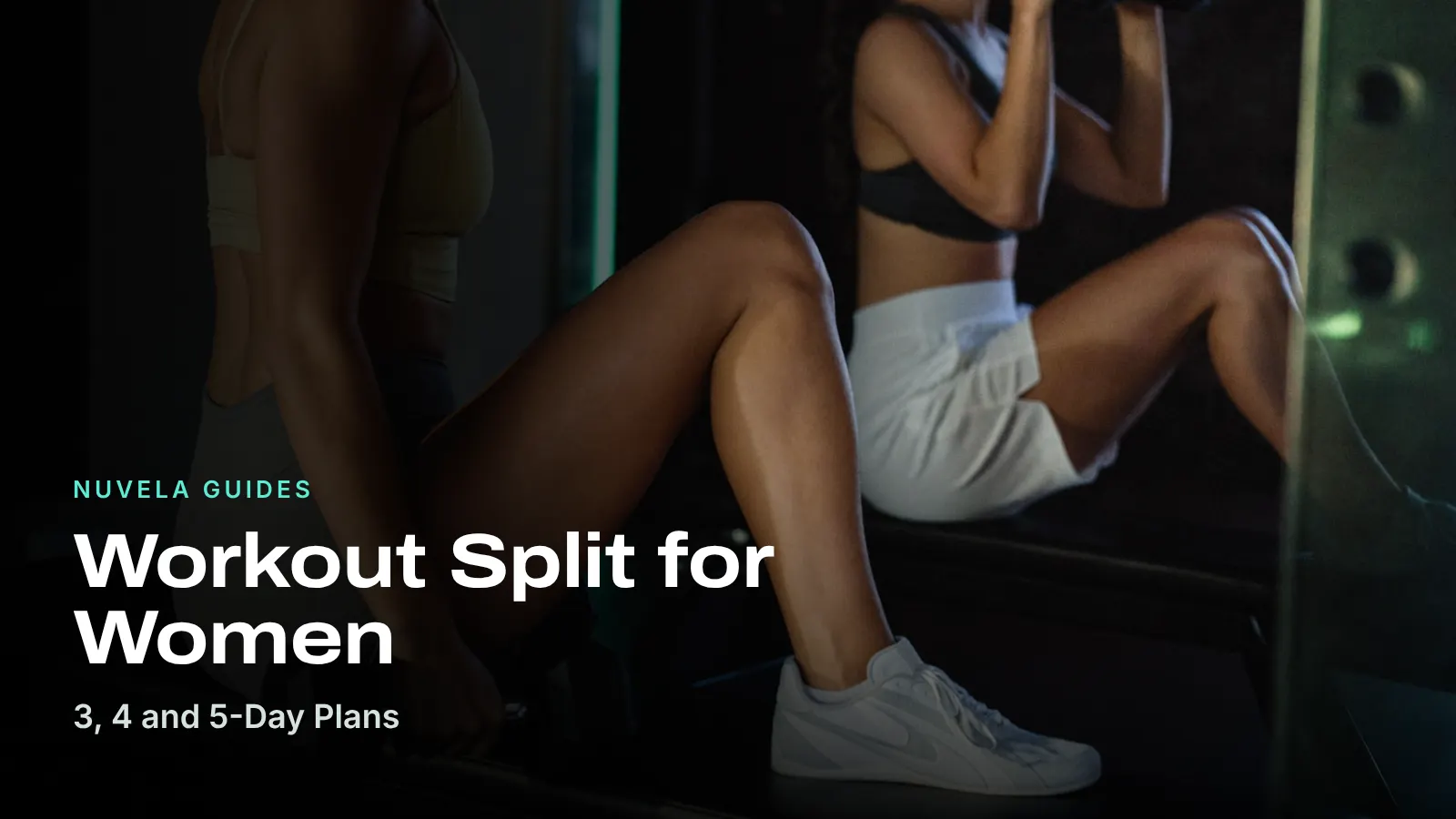
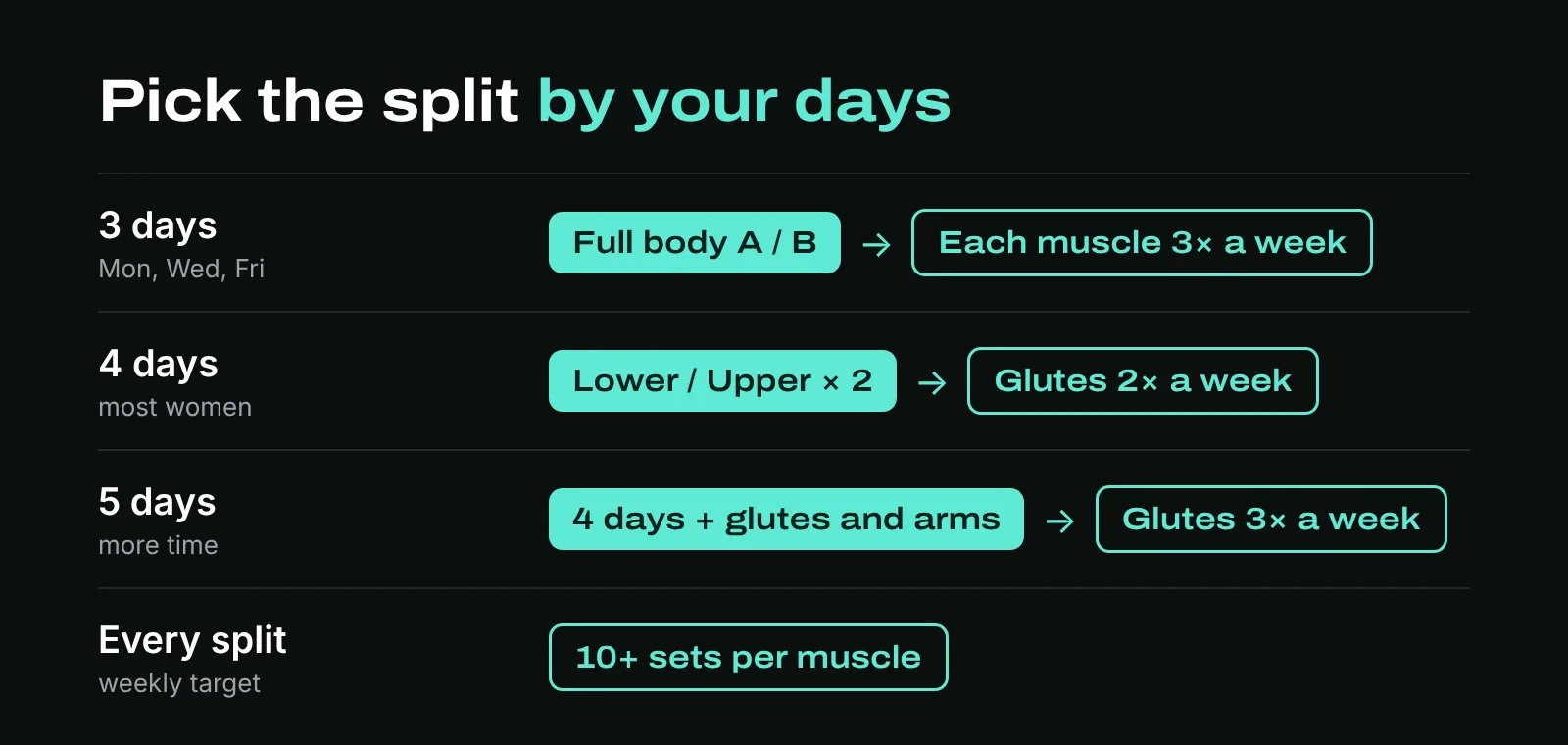
For most women, the best split is 4 days a week: two lower-body days with a glute focus and two upper-body days. With 3 days, train full body; with 5, add a glutes-and-arms day. Every version trains each muscle twice a week.
Get your split built around your week. Pick your days, your gym or your home setup, and build your week: Nuvela chooses the moves, sets the starting weights and raises them as you log. Get Nuvela on Google Play.
3 days
Full body A and B
Beginners, busy weeks.
4 days
Lower / upper / lower / upper
Most women, with a glute and leg focus.
5 days
Plus glutes and arms
More time, more volume.
Every split
Each muscle twice a week
10 or more hard sets, 2 to 3 reps left.
The plan
Women and men respond to lifting in much the same way. A 2020 meta-analysis found similar muscle growth and lower-body strength gains in men and women on the same program, and larger relative upper-body strength gains in women. A 2020 review of 24 studies in women found that training frequency and volume shaped strength gains.
So the rules are the same for everyone:
- Train each muscle group at least twice a week.
- Aim for 10 or more hard sets per muscle per week, the volume the 2026 ACSM position stand linked to more muscle.
- End each set with 2 to 3 reps left in the tank.
Pick your split by the days you have:
| Days a week | Split | Who it suits |
|---|---|---|
| 3 | Full body, workouts A and B alternating | Beginners, busy weeks |
| 4 | Lower / upper / lower / upper | Most women, with a glute and leg focus |
| 5 | Lower / upper / lower / upper / glutes and arms | More time, more volume |
The 4-day lower/upper split with a glute focus
Train Monday, Tuesday, Thursday and Friday. Use Wednesday and the weekend for cardio, yoga or rest.
Day 1, lower (glutes and hamstrings)
| Exercise | Sets × reps |
|---|---|
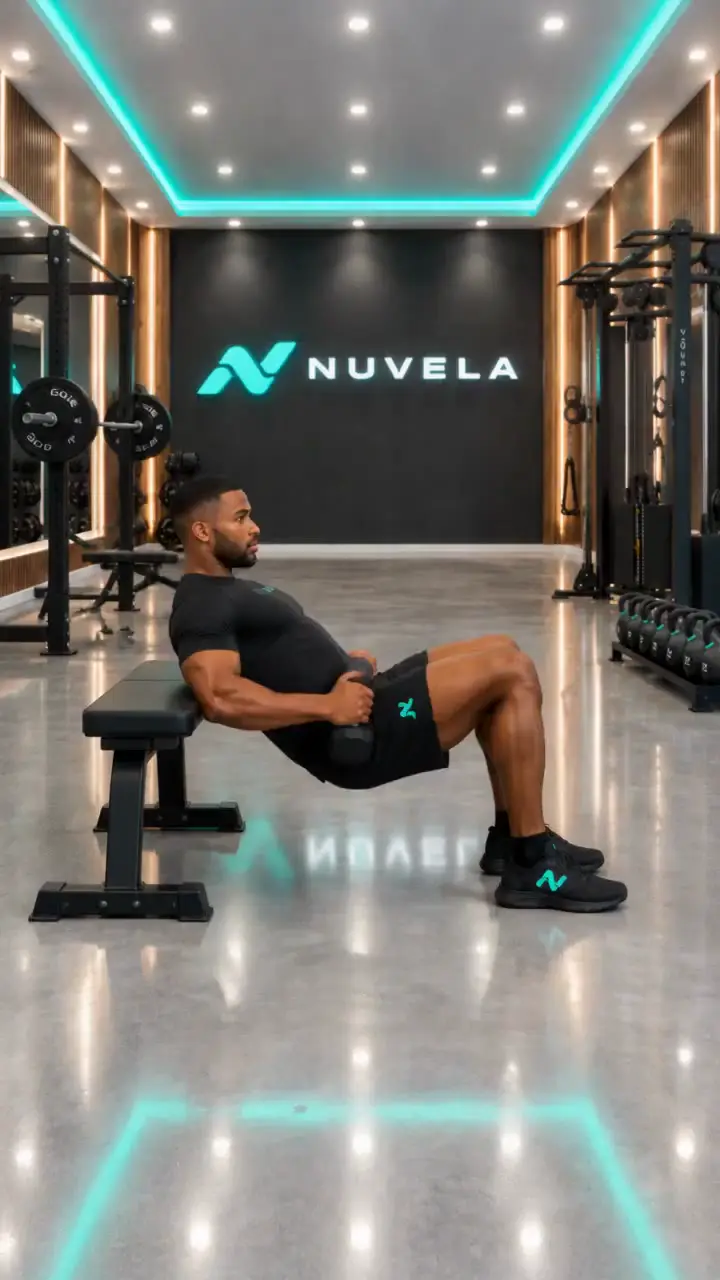
| Barbell or dumbbell hip thrust | 4 × 8–12 |
| Romanian deadlift | 3 × 8–10 |
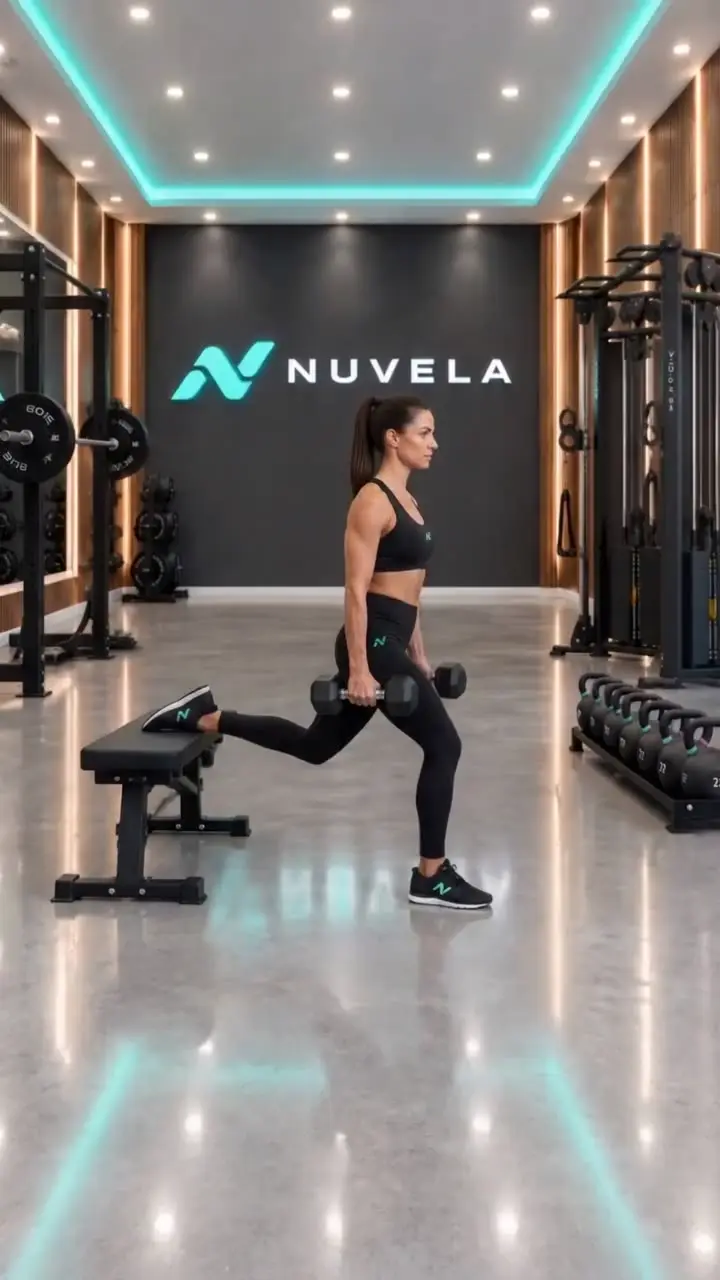
| Bulgarian split squat | 3 × 8–10 per leg |
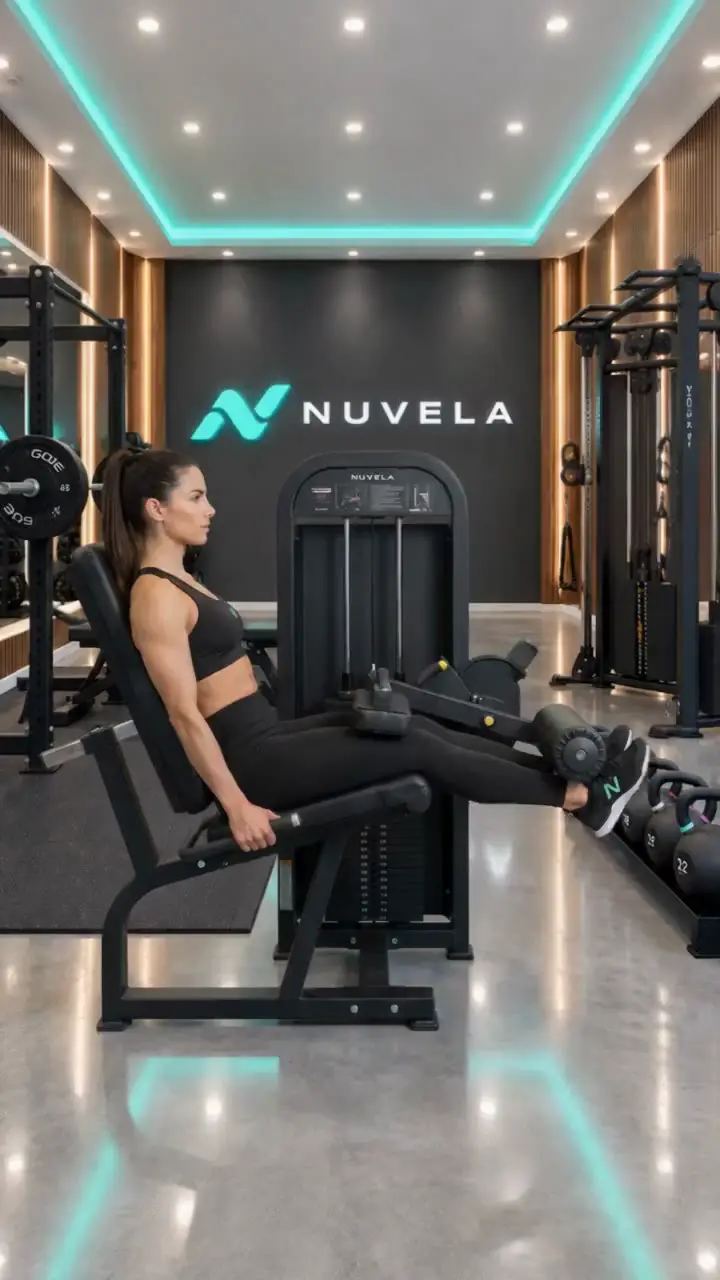
| Seated leg curl | 3 × 10–12 |
| Cable kickback | 2 × 12–15 per leg |
| Standing calf raise | 2 × 12–15 |
Day 2, upper
| Exercise | Sets × reps |
|---|---|
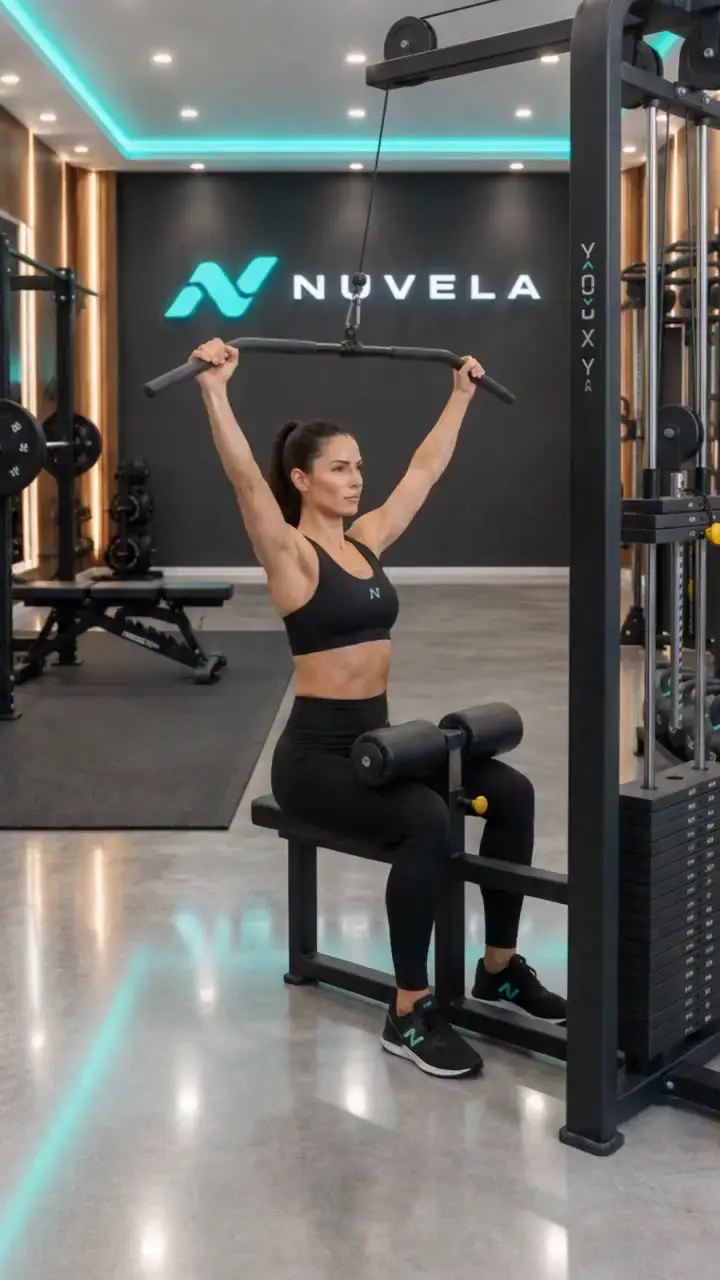
| Lat pulldown | 3 × 8–12 |
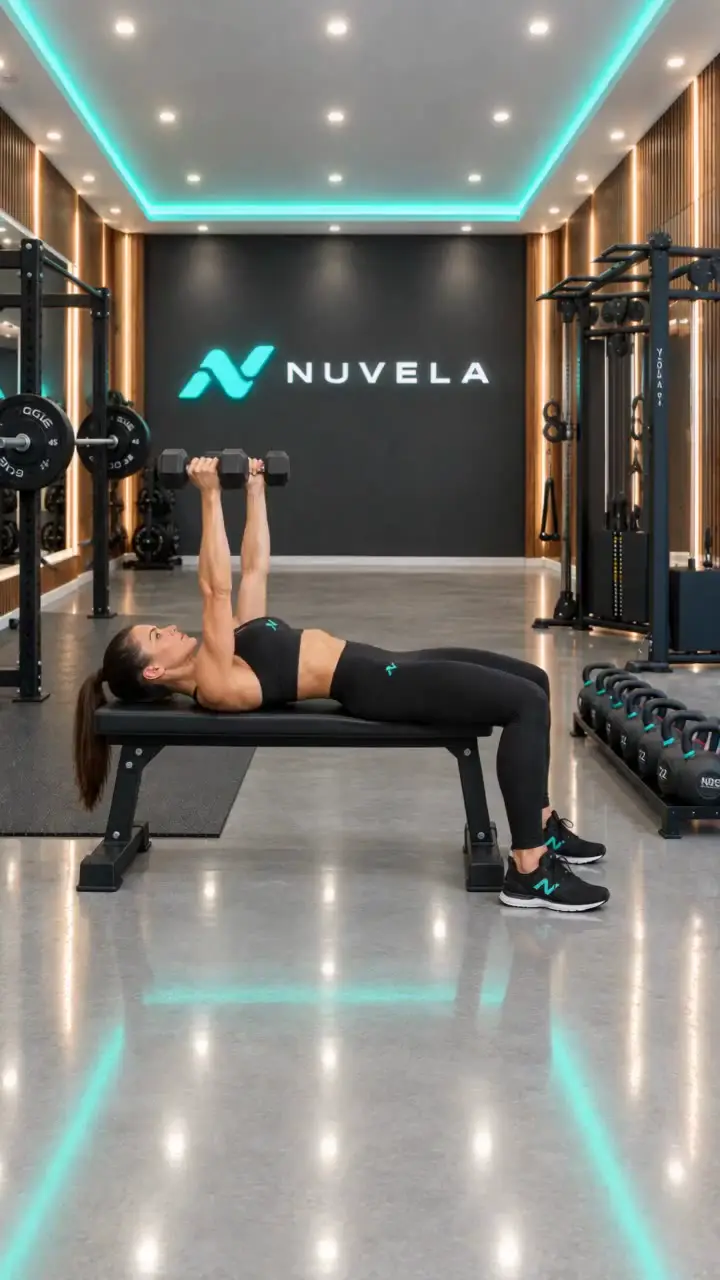
| Dumbbell bench press | 3 × 8–12 |
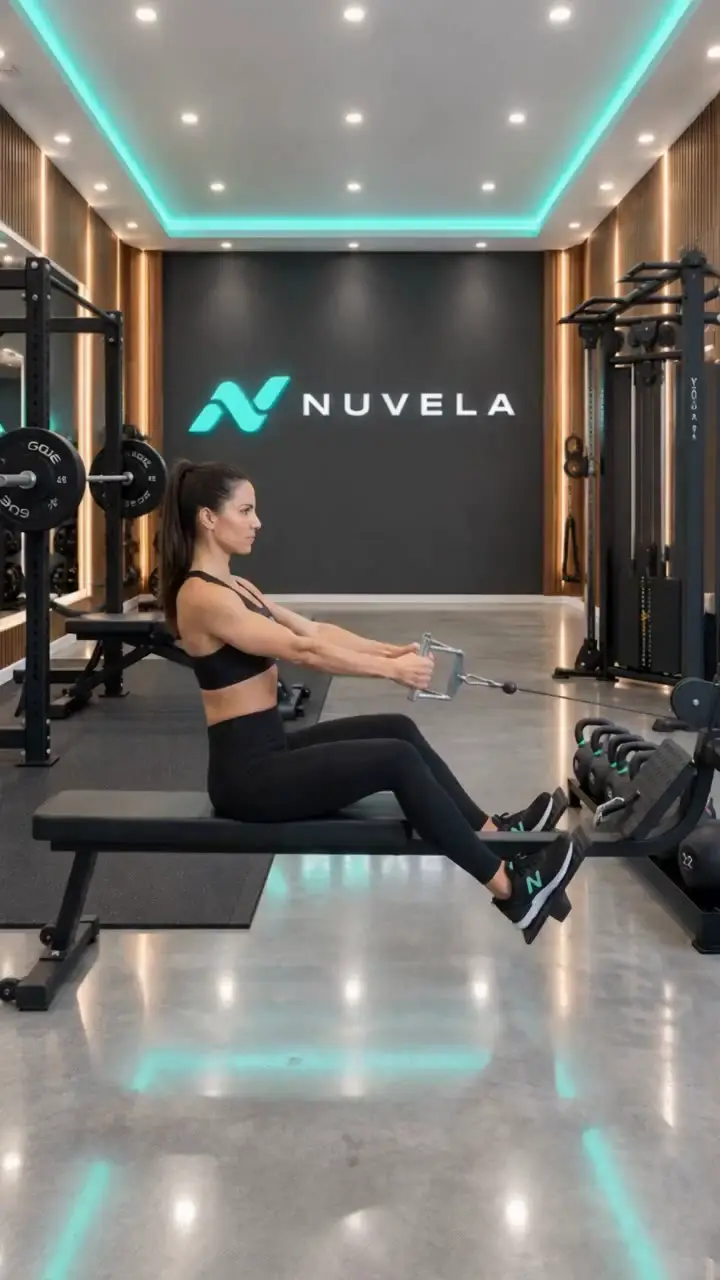
| Seated cable row | 3 × 10–12 |
| Dumbbell shoulder press | 3 × 8–12 |
| Dumbbell lateral raise | 2 × 12–15 |
| Dumbbell curl + cable triceps pushdown | 2 × 12 each |
Day 3, lower (quads and glutes)
| Exercise | Sets × reps |
|---|---|
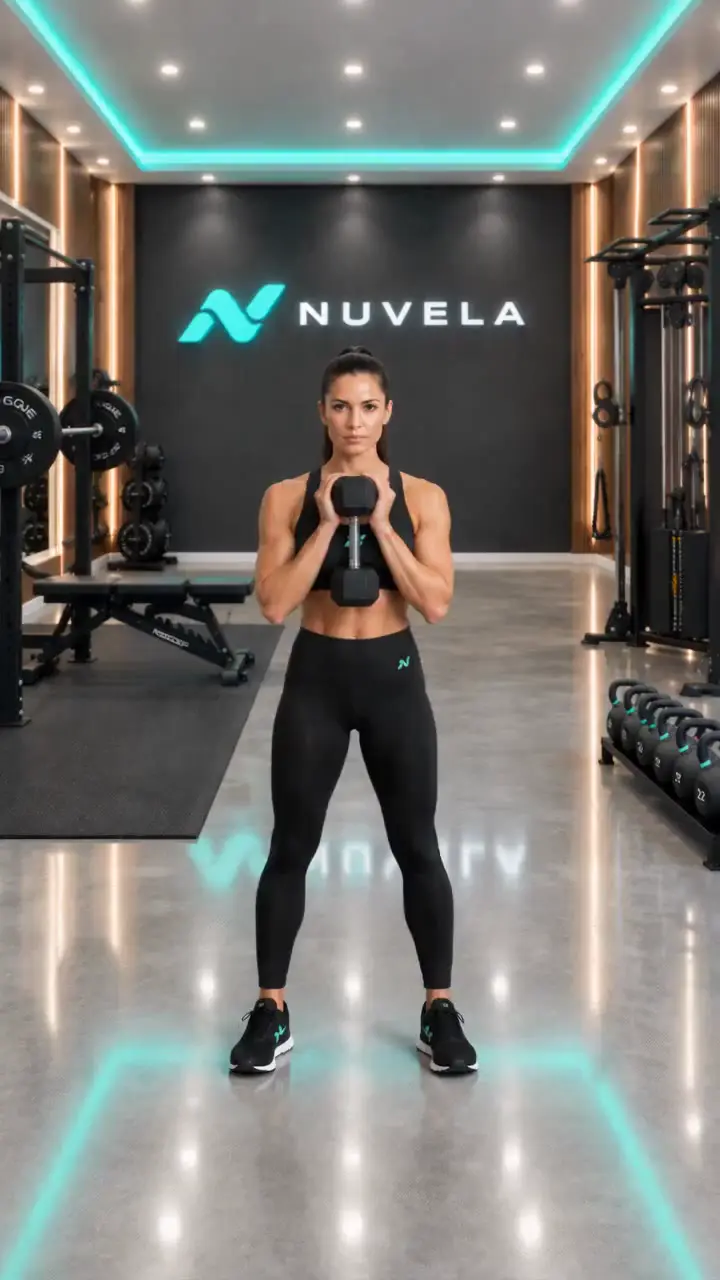
| Goblet squat or back squat | 4 × 6–10 |
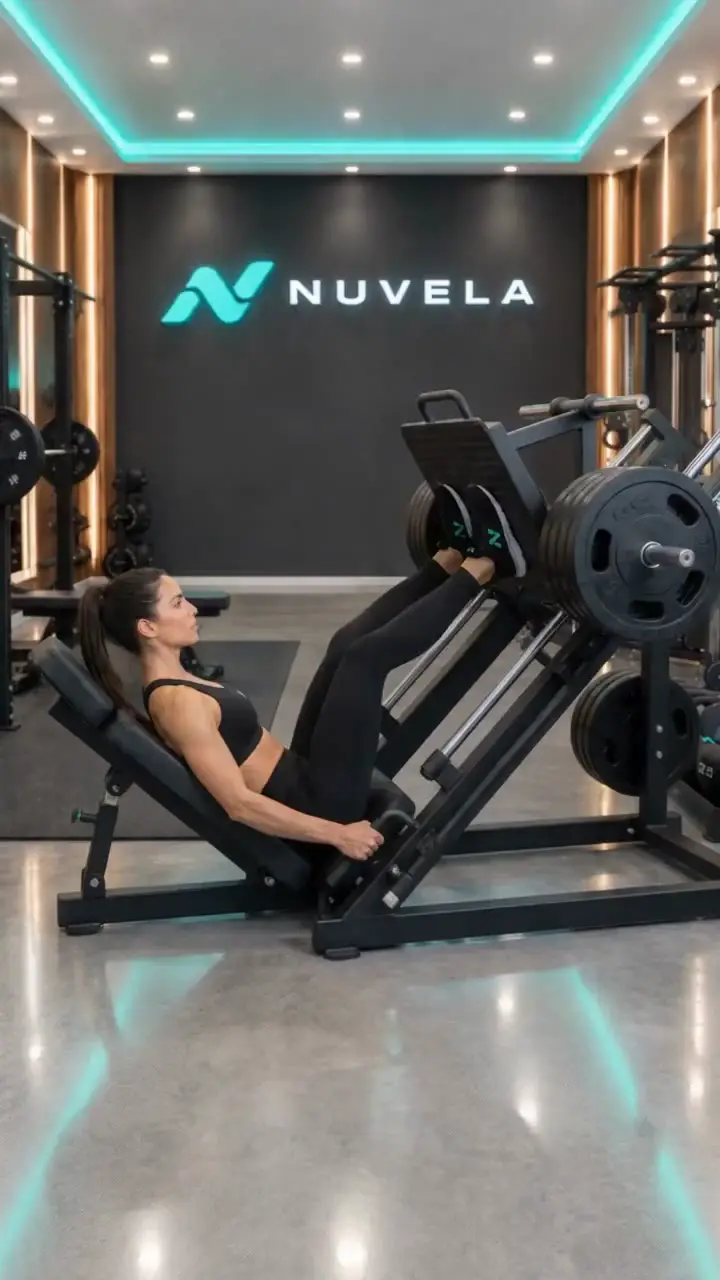
| Leg press | 3 × 10–12 |
| Walking lunge | 3 × 10 per leg |
| Hip abduction machine | 3 × 12–15 |
| Leg extension | 2 × 12–15 |
| Dead bug | 2 × 8 per side |
Day 4, upper
| Exercise | Sets × reps |
|---|---|
| One-arm dumbbell row | 3 × 10 per arm |
| Incline dumbbell press | 3 × 8–12 |
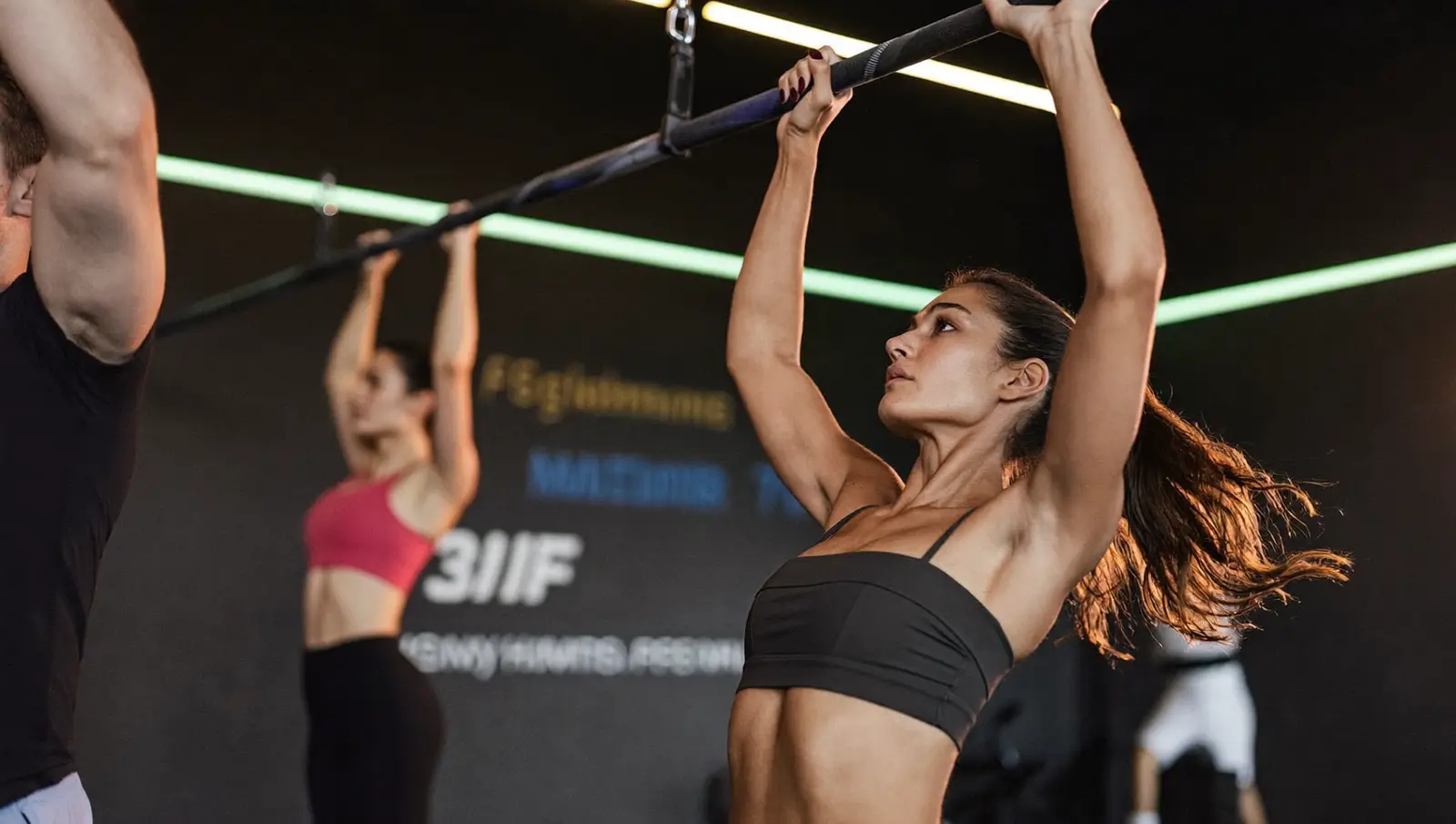
| Assisted pull-up or lat pulldown | 3 × 6–10 |
| Cable face pull | 2 × 12–15 |
| Push-up, from the floor or a bench | 2 × 8–15 |
| Plank | 2 × 30–45 sec |
That's about 25 sets a week that train the glutes directly or through squats, lunges and hinges, and 6 to 12 sets for each upper-body muscle group. Newer to the four days? See our upper lower split for how the days fit together, and our workout split guide for every other layout.
Get this week built for your gym.
Plan your workout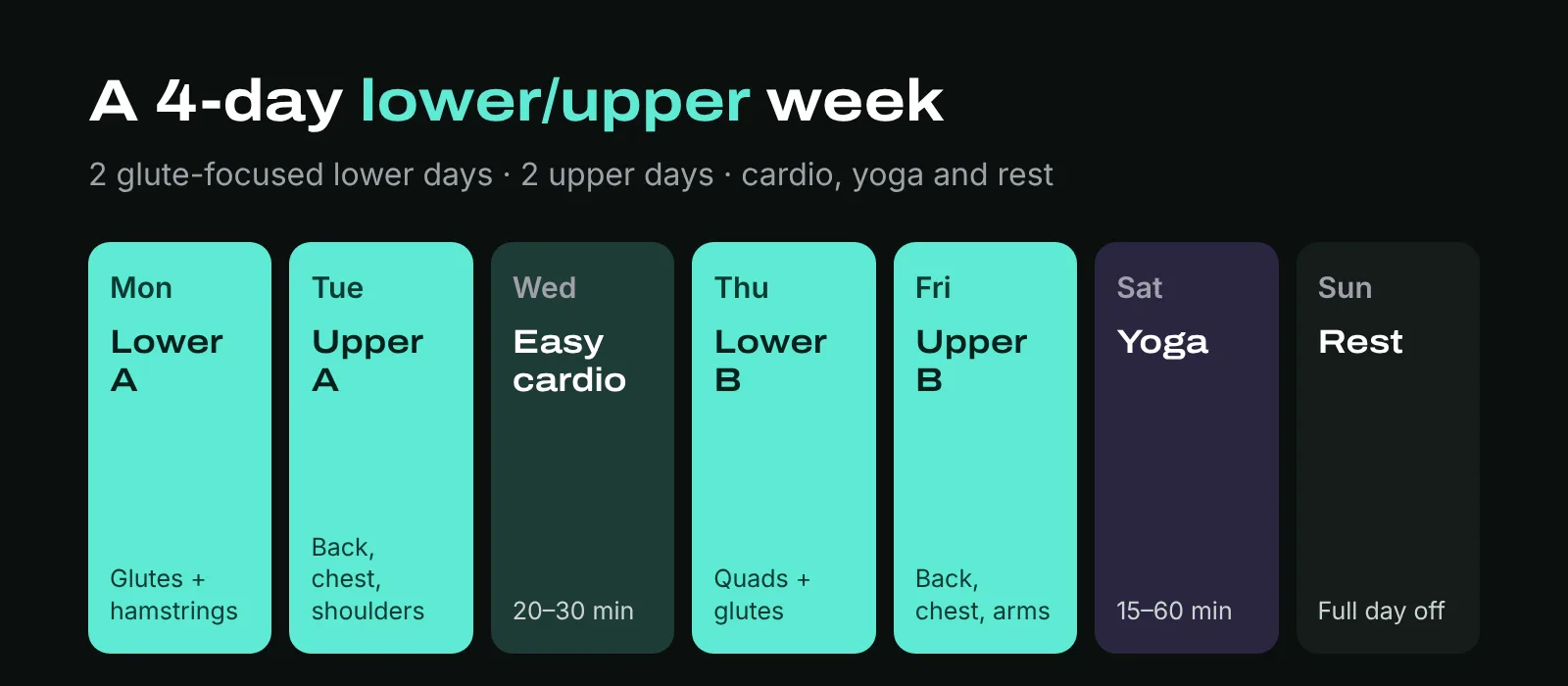
How to pick the weight, reps and rest
Use the same rule on every exercise: pick a weight you could lift 2 or 3 more times at the end of the set.
Common first-week starting points, then adjust after the first set:
| Exercise | Starting weight | Rest |
|---|---|---|
| Goblet squat | A 15–25 lb (7–11 kg) dumbbell | 90 sec–2 min |
| Hip thrust | A 25–35 lb (11–16 kg) dumbbell, or an empty 45 lb (20 kg) barbell with a pad | 2 min |
| Dumbbell bench press | 10–20 lb (5–9 kg) per hand | 90 sec–2 min |
| Romanian deadlift | 15–25 lb (7–11 kg) dumbbells per hand | 2 min |
| Lat pulldown | 40–60 lb (18–27 kg) on the stack | 90 sec |
| Lateral raise | 5–10 lb (2–5 kg) per hand | 60 sec |
Not sure what a heavy set looks like for you? The one rep max calculator turns a recent set into a working weight.
When every set hits the top of the rep range, go up by the smallest jump you have: usually 5 lb (2 kg) on dumbbells, 5–10 lb (2–5 kg) on hip thrusts, squats and the leg press.
Example: you hip thrust 95 lb (43 kg) for 4 × 12 with 2 reps left. Next session, load 100 lb (45 kg) and work back up from 8 reps.
Swaps when your gym or setup is different
| If you don't have | Swap to | Sets × reps |
|---|---|---|
| A barbell and bench for hip thrusts | Dumbbell glute bridge on the floor | 4 × 12–15 |
| Leg press | Goblet squat | 3 × 10–12 |
| Hip abduction machine | Banded lateral walk, or standing hip abduction | 3 × 15 steps each way |
| Cable stack for kickbacks | Banded kickback | 2 × 15 per leg |
| Lat pulldown or assisted pull-up | Band-assisted pull-up or one-arm dumbbell row | 3 × 8–10 |
| Steady balance on split squats | Reverse lunge holding a rack | 3 × 8 per leg |
| A seated leg curl | Dumbbell Romanian deadlift, slower lowering | 3 × 10–12 |
Swaps by level
| Move in the plan | New to lifting | Some experience | Experienced |
|---|---|---|---|
| Hip thrust | Glute bridge on the floor, 3 × 12–15 | Dumbbell hip thrust, 4 × 8–12 | Barbell hip thrust, 4 × 6–10 |
| Squat | Goblet squat to a box, 3 × 10 | Goblet squat, 4 × 8–10 | Back squat, 4 × 6–8 |
| Bulgarian split squat | Reverse lunge holding a rack, 3 × 8 per leg | Bulgarian split squat, bodyweight to 15 lb (7 kg) dumbbells | Heavier dumbbells, 3 × 8 per leg |
| Pull-up | Lat pulldown, 3 × 10–12 | Assisted pull-up, 3 × 6–10 | Pull-up, 3 × 5–8 |
| Push-up | Push-up from a bench, 2 × 8–12 | Push-up from the floor, 2 × 8–15 | Feet on a bench, 3 × 8–12 |
Move one column to the right only when every set of the current version reaches the top of its rep range with clean form. One harder move at a time keeps the rest of the week steady.
The 3-day and 5-day versions
3 days (Mon, Wed, Fri): alternate A and B, so week one is A-B-A and week two is B-A-B. More detail is in our 3 day workout split.
| Workout A | Sets × reps | Workout B | Sets × reps |
|---|---|---|---|
| Goblet squat | 3 × 8–10 | Romanian deadlift | 3 × 8–10 |
| Dumbbell bench press | 3 × 8–12 | Dumbbell shoulder press | 3 × 8–12 |
| Lat pulldown | 3 × 10–12 | One-arm dumbbell row | 3 × 10 per arm |
| Hip thrust | 3 × 10–12 | Walking lunge | 3 × 10 per leg |
| Plank | 2 × 30–45 sec | Dead bug | 2 × 8 per side |
5 days: the 4 days above, plus a fifth day on Saturday. For other 5-day layouts, see our 5 day workout split.
| Day 5, glutes and arms | Sets × reps |
|---|---|
| Hip thrust | 3 × 10–12 |
| Cable kickback | 3 × 12–15 per leg |
| Hip abduction machine | 3 × 15 |
| Dumbbell curl | 3 × 10–12 |
| Overhead dumbbell triceps extension | 3 × 10–12 |
Good
- A fifth day adds sets
- It can help if you've stopped progressing
Keep in mind
- If 5 days means missed sessions, the 4-day plan wins
Want to compare all 4-day layouts first? Our 4 day workout split lays out three of them.
A full sample week with cardio and yoga
Four lifting days, two cardio sessions, one yoga session and one day fully off.
| Day | Session | Length |
|---|---|---|
| Monday | Lower: glutes and hamstrings | 50–60 min |
| Tuesday | Upper | 45–55 min |
| Wednesday | Easy cardio, 30 min, or the Norwegian 4x4 | 30–40 min |
| Thursday | Lower: quads and glutes | 50–60 min |
| Friday | Upper | 45–55 min |
| Saturday | Yoga, or a long walk | 30–60 min |
| Sunday | Rest | – |
Doing cardio on a lifting day? Lift first, then keep it short. Our guide to cardio before or after weights explains why. For Saturday, try yoga for strength, a 30-minute session.
Weekly sets per muscle on the 4-day plan
Every muscle lands at or above 10 weekly sets once you count compound lifts. Helper muscles get half a set, the counting rule from our guide on how many sets per muscle group.
| Muscle | Direct sets | Half sets from other lifts | Weekly total |
|---|---|---|---|
| Glutes | 9 (hip thrust, kickback, abduction) | Squats, lunges, RDL, split squats: 16 half sets = 8 | 17 |
| Quads | 12 (squat, leg press, lunge, extension) | Split squats: 3 half sets = 1.5 | 13.5 |
| Hamstrings | 6 (RDL, leg curl) | – | 6 |
| Back | 12 (pulldowns, rows) | Face pulls: 2 half sets = 1 | 13 |
| Chest | 8 (bench, incline, push-up) | – | 8 |
| Shoulders | 7 (press, raise, face pull) | Chest presses and push-ups: 8 half sets = 4 | 11 |
Hamstrings and chest sit under 10. That's the trade-off of a glute focus. Add 2 sets of leg curl on Day 3 or 2 sets of push-ups on Day 2 if you want them higher.
Glute focus or balanced: which version to run
Run the glute-focused version if glutes and legs are your main goal; run a balanced one if you want even work everywhere.
| Version | Lower days | Upper days | Who it suits |
|---|---|---|---|
| Glute focus (this plan) | Hip thrust first, plus kickbacks and abduction | 6 moves each | Glutes and legs are the priority |
| Balanced | Squat or RDL first, fewer glute isolation sets | 6–7 moves, more chest and arm work | Even strength across the body |
| Upper focus | Lower days with 4–5 moves | Extra pull-up, row and arm sets | You want more back and arm strength |
Switching is simple: on a balanced week, swap Day 1's kickbacks for 2 more sets of Romanian deadlifts and move hip thrusts to the second move.
The home version with dumbbells
The same 4 days work at home with a pair of adjustable dumbbells and a bench or sturdy step. For a full home plan, see our dumbbell workout plan.
| Day | Moves | Sets × reps |
|---|---|---|
| Lower 1 | Dumbbell hip thrust, Romanian deadlift, Bulgarian split squat, single-leg glute bridge | 4 × 10–12, 3 × 10, 3 × 10 per leg, 2 × 12 per leg |
| Upper 1 | One-arm row, floor or bench press, shoulder press, lateral raise, curl | 3 × 10–12 each |
| Lower 2 | Goblet squat, reverse lunge, dumbbell squat, side-lying leg raise | 4 × 10, 3 × 10 per leg, 3 × 12, 2 × 15 per leg |
| Upper 2 | Dumbbell pullover, incline press, push-up, hammer curl | 3 × 10–12, 3 × 10, 2 × max, 2 × 12 |
Typical home dumbbells: 15–30 lb (7–14 kg) for lower-body moves and 10–20 lb (5–9 kg) for upper-body ones. If the heaviest pair gets easy, slow the lowering to 3 seconds or add reps up to 15.
The warm-up: 8 minutes before every session
Warm up the muscles you are about to train, then do one or two light sets of the first move.
| Minutes | Lower days | Upper days |
|---|---|---|
| 0–4 | Easy bike or incline walk | Easy rower or bike |
| 4–6 | Bodyweight glute bridge 2 × 10, clamshell 1 × 10 per side | Arm circles 20, band pull-apart 2 × 12 |
| 6–8 | Bodyweight squat 1 × 10, walking lunge 1 × 6 per leg | Push-up from a bench 1 × 8, light pulldown 1 × 12 |
| Then | First move: 1 set at 50%, 1 set at 75% of your working weight | Same |
How to progress over 12 weeks
Add reps first, then weight, and take an easier week every 4 to 6 weeks.
| Weeks | Focus | What changes |
|---|---|---|
| 1–2 | Learn the moves | 3 reps left in every set |
| 3–6 | Build | 2 reps left; add 5 lb (2 kg) when all sets hit the top of the range |
| 7 | Easier week | Same moves, about half the sets |
| 8–11 | Build again | Start a little heavier than week 3; 1–2 reps left on the last set |
| 12 | Easier week, then review | Keep moves that are still climbing; swap the ones that stalled |
Our deload week guide shows how to run the easier weeks.
Common mistakes and fixes
Most stalls come from weights that stay the same or sessions that get skipped.
| Mistake | Fix |
|---|---|
| Same weights for months | Log every set and add weight when all sets hit the top of the range |
| Only glute moves, no upper days | Keep both upper days: back and shoulders matter for every lift |
| Very light sets with lots of reps | Pick a weight that leaves 2–3 reps, 8–15 reps per set |
| A new program every 2 weeks | Run the same plan for at least 8–12 weeks |
| 5 days planned, 3 done | Switch to the 3- or 4-day version |
| Skipping the warm-up sets | Two light sets of the first move, every session |
How Nuvela builds your split
Nuvela builds your week from a few questions: your goal, your experience, where you train, and your days and minutes. It works for the gym, home, no equipment, or on the road. Training at home? Snap your gear, and your plan is built around the equipment in the photo.
- Nuvela sets every weight and adjusts it as you log.
- Swap any move, and get a video for every move.
- Strength, cardio and yoga go in one weekly plan, and you choose the mix.
- Train Together keeps one shared streak with a friend; see our partner workouts.
To see your own week, use the workout planner. Training with a partner? The gym workout plan for couples shows how two people share one bench on the same days, each with their own weights.
More questions about workout splits for women
Can I do this split at home?
Yes, with adjustable dumbbells and a bench or step. Use the home version above with the same sets and reps, and swap machines for dumbbell moves.
How long until I change my split?
Run it for at least 8 to 12 weeks. Change single moves that stop progressing, not the whole plan. Switch splits when your days change, for example from 4 to 3.
Common questions
What is the best workout split for women?
For most women, a 4-day lower/upper split: two lower days and two upper days. It trains every muscle twice a week and leaves room for cardio or yoga. With only 3 days, do full body.
Should women train differently than men?
Not really. A 2020 meta-analysis found similar muscle growth and lower-body strength gains in men and women on the same program. Choose exercises by your goals, such as more glute work, not by sex.
How many days a week should a woman lift weights?
Three to four days is enough for most. The 2026 ACSM position stand found strength was enhanced by training at least 2 sessions a week, and muscle growth by 10 or more sets per muscle per week.
Can I train glutes every day?
You don't need to. In a 2019 meta-analysis, training frequency didn't meaningfully change muscle growth when weekly sets were equal. Two or three glute days a week, with about 10 to 20 hard sets in total, covers it.
Is a 5-day split better than a 4-day split?
Only if you'll do it. A fifth day adds sets, which can help if you've stopped progressing. If 5 days means missed sessions, the 4-day plan wins.
Sources
- Sex Differences in Resistance Training: A Systematic Review and Meta-Analysis, Journal of Strength and Conditioning Research (2020). Same program: no difference between men and women in muscle growth (10 studies) or lower-body strength (23 studies); larger relative upper-body strength gains in women.
- The Effect of Resistance Training in Women on Dynamic Strength and Muscular Hypertrophy: A Systematic Review with Meta-analysis, Sports Medicine (2020). 24 studies in women: large strength gains and a medium effect on muscle size; training frequency and volume moderated strength gains.
- American College of Sports Medicine Position Stand, Resistance Training Prescription for Muscle Function, Hypertrophy, and Physical Performance in Healthy Adults, Medicine and Science in Sports and Exercise (2026). Strength enhanced by at least 2 sessions a week and 2 to 3 sets; muscle growth by 10 or more sets a week; near failure or 2 to 3 reps in reserve.
- How many times per week should a muscle be trained to maximize muscle hypertrophy? A systematic review and meta-analysis, Journal of Sports Sciences (2019). 25 studies: with weekly volume equal, training frequency did not meaningfully change muscle growth, so frequency can follow personal preference.
Related guides
- 3 Day Workout Split: Best Layouts and a Full Plan
- Glute Workout at the Gym: 6 Moves, Exact Sets
- Upper Lower Split: 4-Day Plan With Sets and Reps
Exercises in this guide
- Dumbbell hip thrust
- Dumbbell Romanian deadlift
- Bulgarian split squat
- Seated leg curl
- Standing calf raise machine
- Lat pulldown
- Dumbbell bench press
- Seated cable row
- Seated dumbbell shoulder press
- Dumbbell lateral raise
- Dumbbell curl
- Goblet squat
- Back squat
- Leg press
- Leg extension
- Dead bug
- One-arm dumbbell row
- Incline dumbbell press
- Pull-up
- Face pull
- Push-up
- Plank
- Glute bridge
- Standing hip abduction
- Banded kickback
- Barbell hip thrust
- Single-leg glute bridge
- Dumbbell squat
- Dumbbell pullover
- Hammer curl
- Clamshell
- Arm circles
- Bodyweight squat
Try 7 days, no card needed
